
Approaching the sun without burning has always been an impossible dream. Until today. There NASA has just released the most close images ever made of the suntaken from the probe Parker Solar Probe at a dizzying distance: 6.1 million kilometersor 3.8 million miles. A trifle, if we think that the earth is about 150 million.
It was December 24, 2024. While we prepared the dinner, Parker touched the sun crownthe external atmosphere of our star, traveling at a record speed of almost 700,000 km/h. The images collected in those days are now public and show us a lively, violent, dynamic sun. It is beautiful.
Inside the sun wind: what the new images show
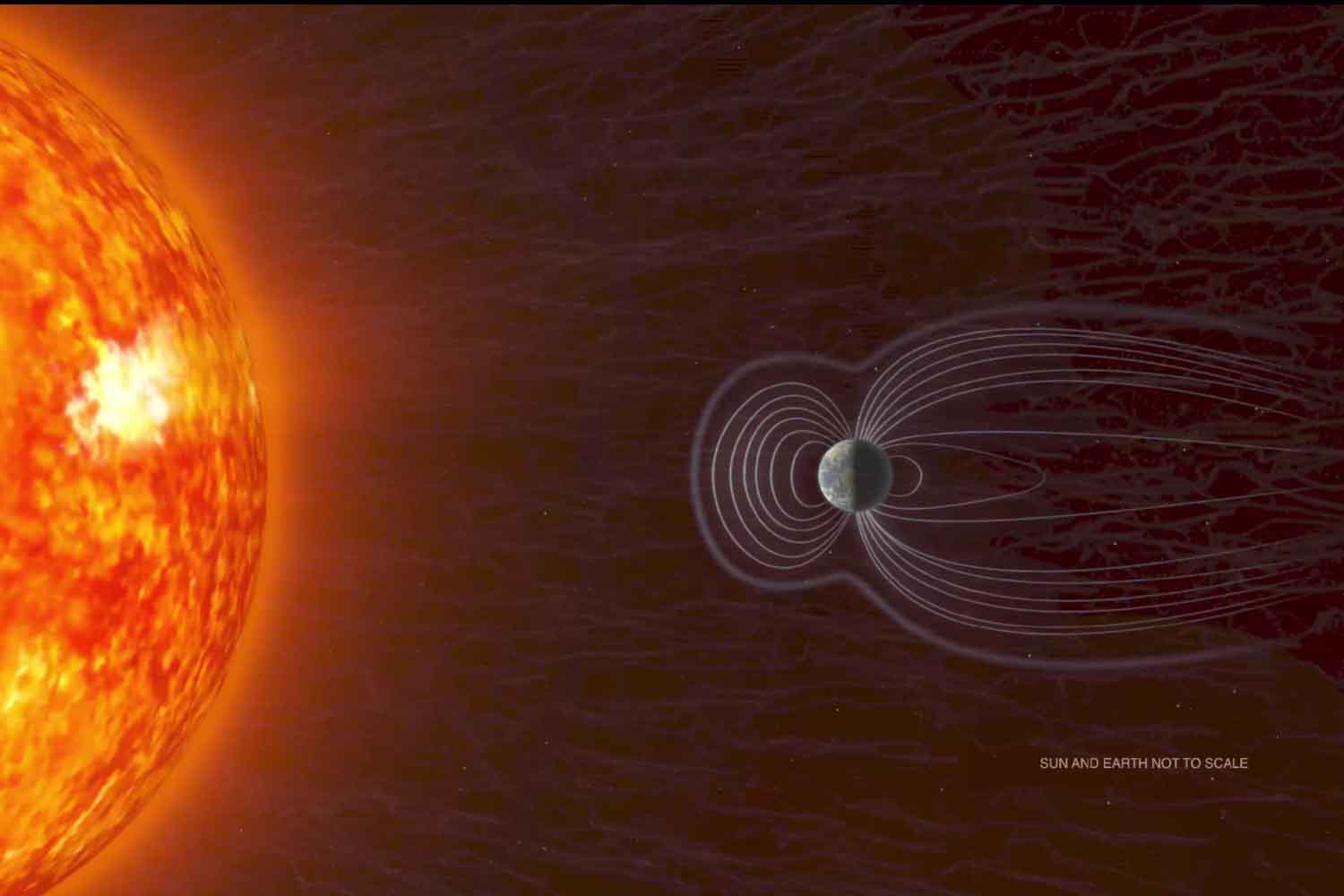
What the probe has captured is the beating heart of a phenomenon that concerns us much more closely than we think: the solar windthat continuous flow of charged particles that starts from the sun and crosses the entire sun system, also investing the earth.
The new images, obtained thanks to the tool Wisprshow the regions from which the solar wind takes shape. They can be glimpsed changes of management of the magnetic field (the so -called Heliospheric Current Sheet) and the Coronal mass expulsions (CME): huge plasma clouds that collide with each other and can go up to us, causing aurore but also damage to satellites and electrical networks, as explained Angelos Vourlidasscientist responsible for WISPR
In these images we see the CMEs that accumulate and merge. We are trying to understand how they behave, because this directly affects the forecast of the space weather.
The mystery of the slow wind
But that’s not all. Parker is also investigating another great enigma: The slow solar windwhich moves in the middle of the rapid wind speed but is twice dense and unstable. This type of wind can trigger medium magnetic storms on earth, sometimes as strong as those caused by coronal expulsions.
Thanks to the close steps, Parker discovered that The slow solar wind exists in two varieties:
Understanding where the slow wind comes from is fundamental. As he explains Nour Rawafimission scientist:
The big question has always been: how does the solar wind be born and escape the huge gravitational attraction of the sun?
With each new step, Parker brings us closer to the answer.
A mission that rewrites history
The name of the probe is not accidental. It is a tribute to Eugene Parkerthe scientist who first hypothesized the existence of the solar wind in 1958, between general skepticism. After more than sixty years, his theory finds confirmation … and new questions.
In 2021, Parker had already crossed the solar crown for the first time. But now, after just 3.8 million miles, We are direct witnesses of the birth of the solar wind. Let’s see with our eyes what was previously only simulated in the models.
And it is not over: the next close passage is expected for the September 15, 2025. It will be another dip in the fiery heart of our star, he said it Nicky FoxNASA director:
Parker Solar Probe brought us into the dynamic atmosphere of our nearest star. We are observing where space threats are born for the earth, no longer with models but with our eyes. This will help us protect astronauts, satellites and technologies better.
