
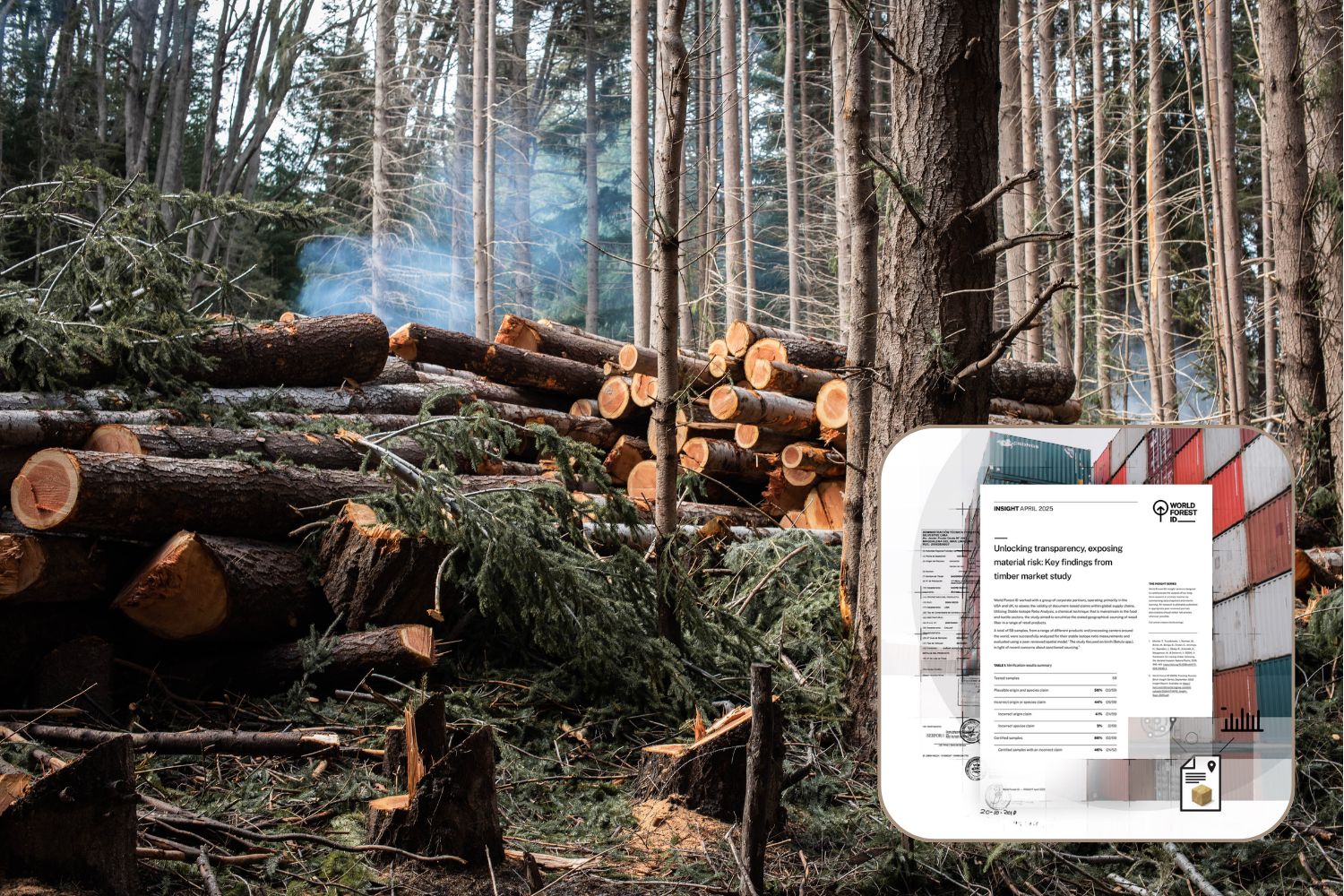
Almost half of the birch wood certified by the main sustainability programs is incorrectly identified and does not come from the country of origin that appears on the label.
It is what is disconcerting emerges from an analysis that also raises fears according to which large quantities of sanctioned timber from Russia and Belarus are still illegally entering In Great Britain.
A new research of the World Forest ID, a consortium of research organizations that includes Kew Gardens and the World Resources Institute, has in fact examined dozens of declarations on the origin of the harvest on products based on birchwhich had been almost entirely approved by Forest Stewardship Council (FSC) and from Program for the endorsement of forest certification (PEFC).
And he discovered the deception.
The investigation
Birch champions, a popular hard wood used in furniture, in the kitchens panels and musical instruments, have been labeled as original from Ukraine, Poland, Estonia and Latvia. But the tests that use the chemical imprint of wood have shown that 46% of the certified samples did not come from the origin on the label.
The birch is cultivated and commercially worked in most northern Europe, including most of Russia and Belarus. After the invasion of Ukraine by Russia, it became illegal to import compensated and products in Russian and Belarusian wood in Great Britain and in other European countries due to sanctions.
Now, even if the tests have not specified the country in which wood was cultivated, the experts said thatAnd Russia and Belarus were the only plausible origins.
Applications for certification
The FSC and PEFC are the most used timber certification schemes in the world, intended to promote the sustainable management of the woods and prevent deforestation.
Following the invasion of Ukraine by Russia, the FSC suspended the certification for timber from Russia and Belarus and has blocked all controlled timber from the two countries. PEFC has decided to classify the timber from both countries such as “Legname from conflicts”which means that they could no longer use its certification.
But this new Analysis World Forest ID has found that Out of 52 samples with an FSC or PEFC certification, 24 had an incorrect collection declaration. Although the tests were conducted on a relatively small number of samples, according to the authors of the report these results indicate that existing supervision was not enough to guarantee accurate statements.
To test the wood, the researchers used the analysis of the stable isotopic relationship, comparing the chemical composition of birch champions with a reference database from all northern and oriental Europe, and have used markers caused by differences in light conditions, soil and water to estimate geographical origin.
The FSC welcomed the World Forest ID research, adding that it is actively investing in new techniques to ensure the reliability of the supply chains. He said he did not have access to the names of the companies that had provided champions confidentially.
For its part, the PEFC said that the results must be contextualized and that only 14% of the samples were associated with their certification.
Certification schemes are the main way in which companies supply sustainable wood, avoiding contributing to the destruction of rain forests and other environments rich in biodiversity. The report raises doubts about the reliability of the current certification systems.
Sanctions
After Russia’s attack on Ukraine in 2022, the recorded Russian birch exports to European countries, including the United Kingdom, have decreased drastically. But in the following months, commercial data show that exports from other countries, including Kazakhstan and Turkey, have increased significantly.
In the case of Kazakhstan, compensated exports jumped from 600 tons in 2021 to 25,600 tons in 2022, according to the United Nations commercial statistics.
In January, the environmental organization Earthsight published an investigation into birch wood recycling, discovering that a network of organizations had found a way to avoid European penalties, with 20 wood -loaded containers that continued to arrive every day. The Russian army and the oligarchs close to Vladimir Putin take profit directly from the sale of the timber, according to the report.
We concluded that over 1.5 billion euros of illegal sanctions – in practice the bloody timber – have entered Europe since the penalties entered into force in 2022 – says Sam Lawson, founding director of Earthsight and one of the authors of the relationship. Much of the birch plywood that people used in their kitchens, and for fashionable furniture and things, before the conflict was imported from Russia or Belarus. That wood still manages to arrive in Europe.
