
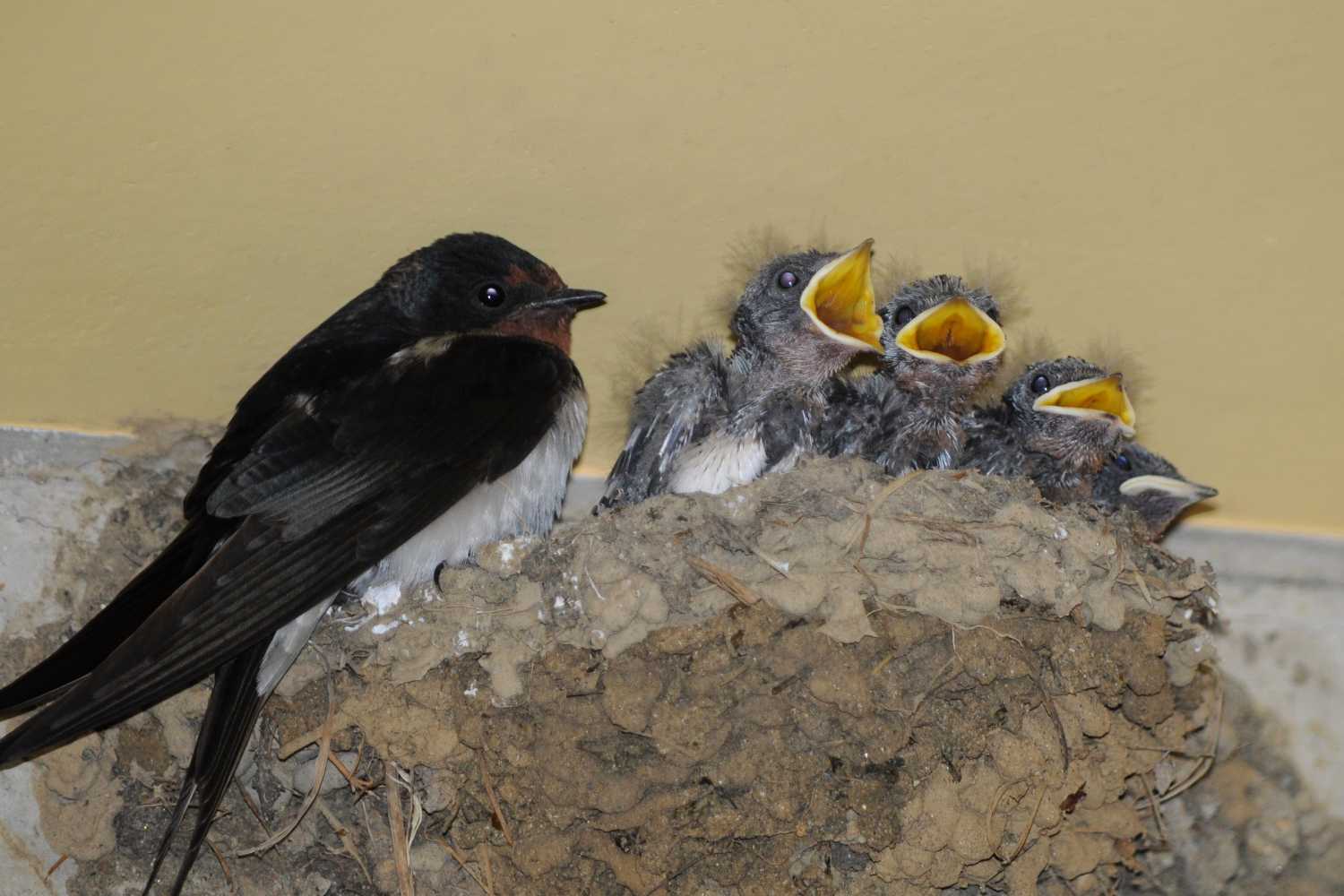
Swallows are the symbol par excellence of spring, and this season is finally upon us. However, when the first specimens return to our latitudes they often find themselves faced with a problem: the loss of their nests.
Swallows are truly extraordinary birds, they weigh about 20 grams but are able to fly over 5000 km, overcoming seas and deserts without rest and fighting against storms and disturbances. Swallows, house martins and swifts are very habitual migratory birds, they always return to the place they left the previous spring and even go in search of the same nest that they used and know. But these birds run a very great risk, they often find themselves returning to a “home” that no longer exists. If in recent days we have raised our eyes to the sky from our windows, perhaps we have already spotted some sporadic groups of swallows. But the phenomenon will increase in the coming weeks when swallows, but also house martins and swifts, will arrive in our country in search of the usual, comfortable, safe place to spend the spring, nest and bring their puppies into the world.
Every year, these birds travel thousands of kilometers to return home, even overcoming dangerous places such as the Sahara desert and the Mediterranean. All to find the nest they know and where they were born and raised, which can be found on the roof of a farmhouse, under a cornice, on the facade of a building, etc.
Unfortunately, however, these species are in sharp decline. This is due to the fact that they find an increasingly hostile and changed environment: polluted air, intensive agriculture where polluting chemical substances are used as well as, no less importantly, the loss of nesting sites especially in urban environments (more frequented by house martins and swifts, rather than by swallows).
People often destroy the nests of these birds found near their homes because they are accused of “dirtiness”, or because it is necessary to renovate attics and facades of buildings. And this, Lipu reminds us, also happens during the nesting period (this means certain death for the cubs of these species).
Consider that these birds help us keep the growth of the population of flies and mosquitoes under control, in fact they feed on insects which they hunt while in flight. According to some scientific studies, a pair of swallows can eat up to 6,000 insects per day in the breeding season. One more reason to protect them.
Fines (and even arrest) for those who destroy nests
Among other things, we remind everyone that swallows, swifts and house martins are species protected by law no. 157/92 and various other European directives, it is therefore strictly forbidden to destroy their nests. As regards the renovation of facades and buildings, there are precise regulations which establish the ways in which to deal with the possible presence of nests to preserve the protected species.
On a practical level, when there is no direct damage to the animals, it usually ends up in the administrative sphere: the penalties vary depending on local regulations, but generally range from 25 to 500 euros and one is obliged to build artificial nests as a replacement.
We too can help swallows during their nesting, by building artificial nests that replace the original nest if it has fallen, broken or been removed to carry out a building renovation. HERE how to do it.
