
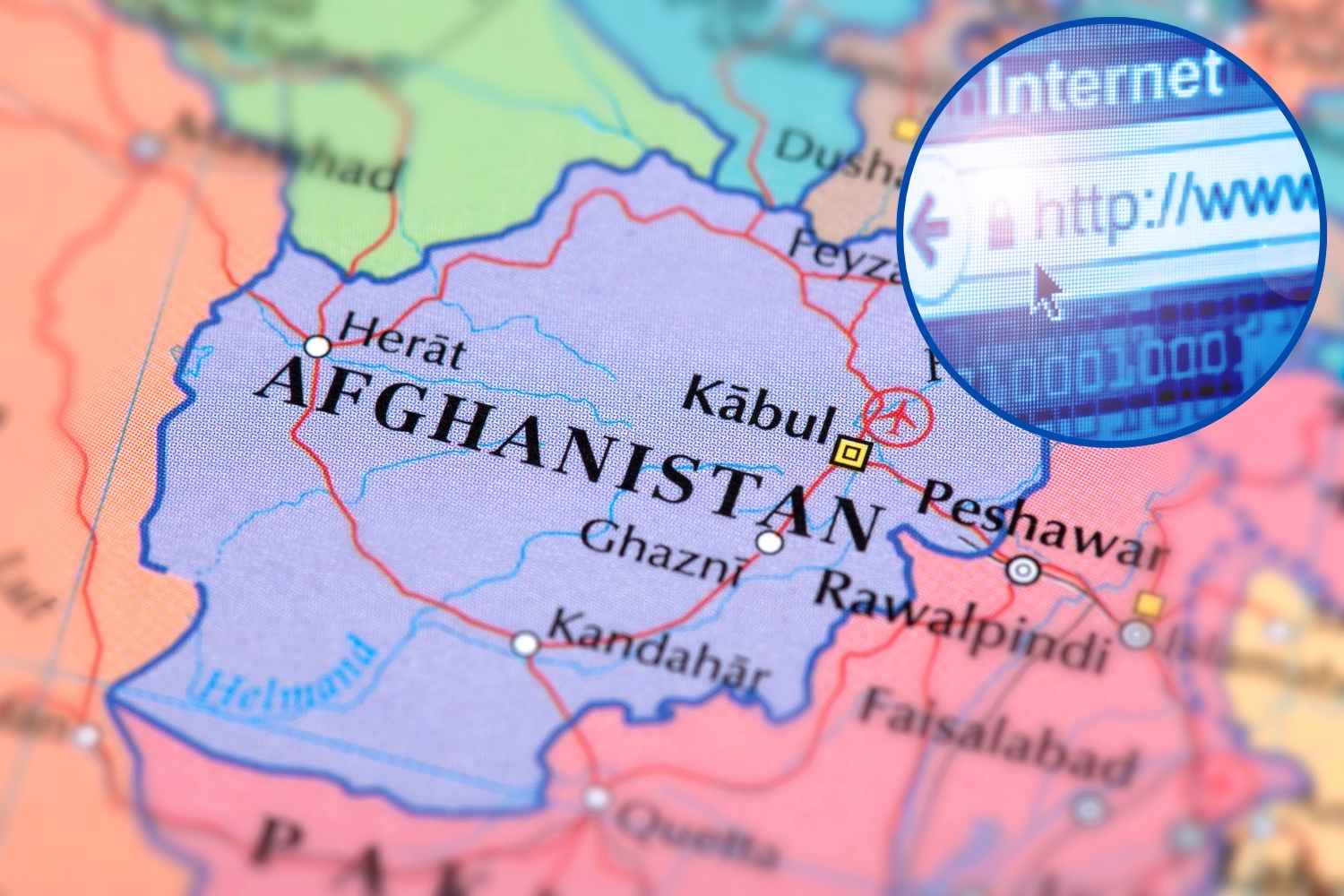
A “total internet blackout”. Thus the Netblocks monitoring body defined the situation in which Afghanistan ran down from 5pm on Monday 29 September. The Taliban regime has disconnected the entire nation, leaving almost 43 million people isolated from the world and panicked the Afghan diaspora in panic, suddenly unable to communicate with their loved ones. The official motivation, anticipated at the beginning of the month, is the will to eradicate the “immoral activities”, but the real impact is freezing the economy, rights and, above all, human ties.
The consequences of the disconnection are immediate and dramatic. “Since yesterday there is no more communication with anyone,” he told Cnn Mohammad Hadi, an Afghan who lives in Delhi. “There is no way to speak, to be sure they are safe or not.” The sense of anguish is shared. “Only a few hours have passed since the Internet was interrupted in Afghanistan, but for me it is as if a life had passed,” he confided to the CNN Wahida Faizi, an Afghan journalist residing in Denmark, describing the loss of daily contact with parents
A frozen country: the impact on economy and information
This blackout, which according to the United Nations was imposed without notice, paralyzed the country’s infrastructures. Banking services and public administration are stopped, the markets blocked and several flights to Kabul have been deleted. Information is also a victim: international agencies such as Associated Press and Agence France-Presse, and Kabul’s Tolo News Tv itself, have lost contact with their offices and are unable to operate regularly. The United Nations Assistance Mission in Afghanistan (Unama) has already asked the Taliban authorities to “restore Internet access immediately and completely and completely”.
The measure affects women and girls particularly hard, already excluded from higher education. For many of them, the Internet represented the only way to access online courses and continue forming. Sabena Chaudhry of the organization Women for Afghan Women (Waw), in a declaration to the CNN, stressed that the blackout “not only is silent millions of Afghan, but is also turning off their salvation to connect with the outside world”.
Behind the decision there would be the direct order of the supreme leader of the Taliban, Mawlawi Haibatllah Akhundzada. Although it has not been clarified what is meant by “immoral activities”, the move recalls the previous Taliban government, which had banned television and other mass media. The fear is that these are a step towards even deeper insulation and total control over the population.
The result is a silence that weighs like a boulder. “Online silence, without the Afghan voices from within Afghanistan, is deafening,” wrote in X Moriam Solaimankhil, a member of the government in exile. “My heart hurts: our people are cut out and the world is left in the darkness without them”.
No internet in Afghanistan, but on … “Follow us on social media.” Makes Perfect Sense. https://t.co/3uchtuyana
– Mariam Solaimankhil (@mariamistan) September 30, 2025
