
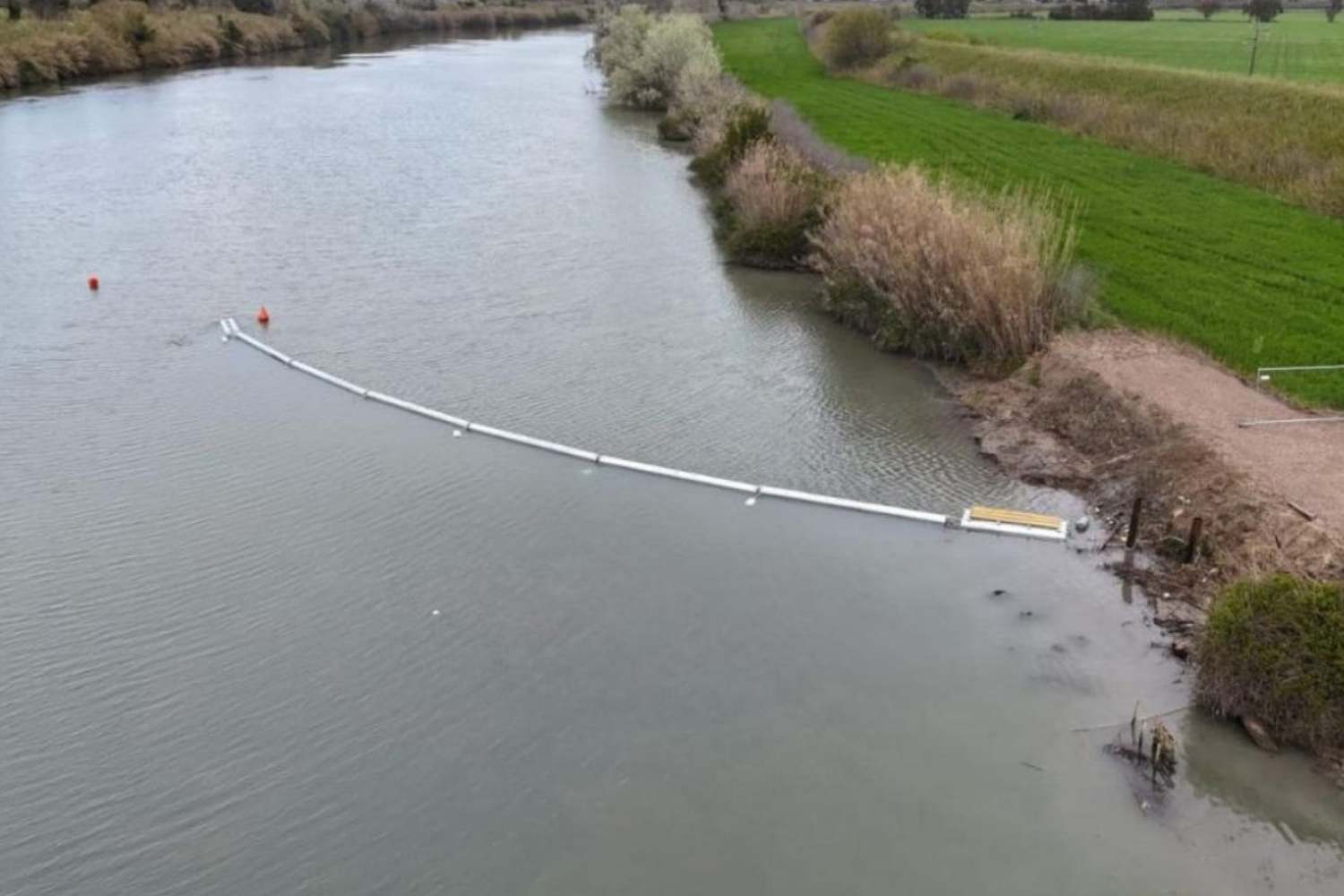
Plastic bottles, but also tyres, gas cylinders, refrigerators, water heaters, mattresses and wood. This is the surreal collection of waste that flows every day along the Tiber and the Aniene, destined – without intervention – to end up directly in the sea, poisoning the ecosystem and the fish that live there. To stop this environmental drama, the Lazio Region has installed three plastic collection barriers: the first positioned on the Aniene river, the second on the right bank of the Tiber and finally the third, installed in recent days, at the mouth of the Tiber near Capo Due Remi, Ostia side.
How the Pelikan system works
The technology adopted by the Lazio Region is called Pelikan System: it is an integrated system that intercepts floating waste before it reaches the sea, combining physical barriers and a fleet of intelligent boats equipped with drones, ROVs (Remotely Operated Vehicles) and parametric probes for real-time monitoring of water quality.
The barriers, approximately 40 meters long and built of galvanized steel, are strategically positioned where the Tiber forms a slight bend, the point where waste tends to accumulate naturally towards the outside of the curve. The structures intercept debris in the superficial part of the water column and convey it towards a collection point equipped with a grate up to one meter deep, capable of collecting even semi-submerged materials.
And in the event of exceptional floods, when the current exceeds 1.5 m/s, the barriers automatically switch to neutral mode so as not to interfere with the hydraulic flow of the river.
View this post on Instagram
A precious (and replicable) technology
During the first year of activity alone, approximately 120,000 kilos of waste were removed along the Aniene and Tiber (the equivalent of 600 Big Bags). Furthermore, the Pelikan vessel collected on average 30 kg of floating material per trip, also carrying out protection and deterrence work. The stretch at the mouth has an average flow rate of around 240 m³/s: stopping pollution is therefore essential, considering that around 80% of marine waste comes from the mainland and reaches the sea through the waterways.
“This innovative system adopted by the Lazio Region on the Tiber and the Aniene also makes it possible to have a positive impact during floods, managing to collect large quantities of floating material, the removal of which is essential to guarantee the correct flow of rivers, especially during extreme flood phenomena. With these projects the Lazio Region, in addition to confirming itself at the forefront on environmental issues, also proposes itself as an integrated management model that starts from the rivers and reaches the sea, combining technology, knowledge and sustainable governance” underlines the regional councilor Fabrizio Ghera.
It is estimated that globally, every year between 4.8 and 12.7 million tons of plastic — out of a total of 322 million produced — end up in the oceans. If tools like the Pelikan system were replicated in all the rivers of the world, our planet would breathe better again.
