
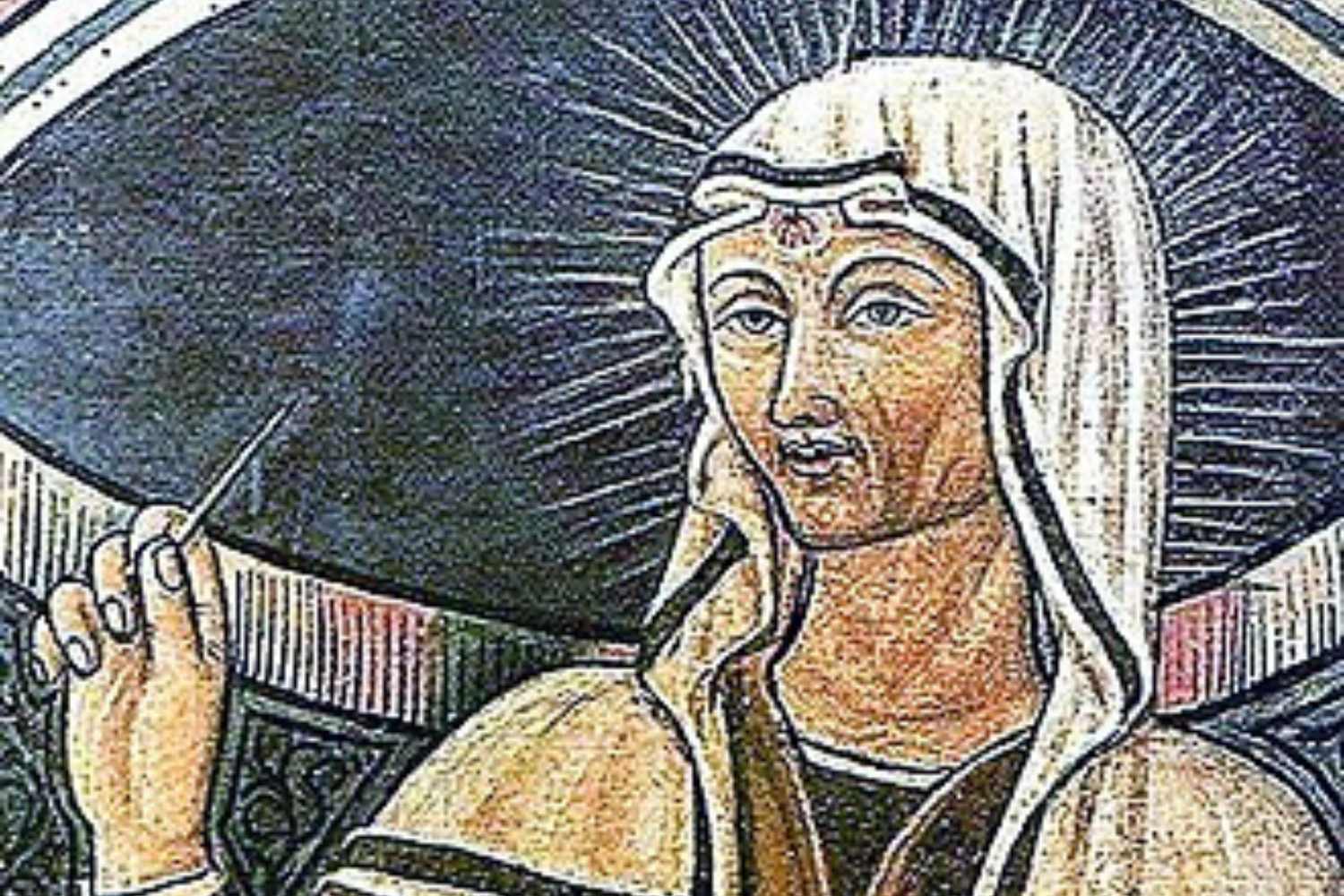
There is a sanctuary, set in the Umbrian hills, which welcomes thousands of people from afar every year, which bring with them letters, flowers and silent votes. There, in front of the urn of Santa Rita da Cascia, they kneel, cry and thank, someone asks for a miracle, others only peace. Everyone, in some way, recognizes themselves in its history: a story made of thorns, blood and love, crossed by the most unsheatable faith.
A life between violence and forgiveness
Santa Rita was born in Roccaporena, a hamlet of Cascia, between 1381 and 1387 Rita absorbs that vocation since childhood: learning to mend, rather than cutting.
At eighteen years and against his will, marries Ferdinando Mancini, a collector, at times violent, an officer with dangerous ties and a tormented soul. Rita loves him, or perhaps simply accepts him, he endures his humiliations, harsh words and heavy hands but does not yield. Indeed, he accompanies him, he listens to him, forgives him, and in the end he manages to change it. That husband who once made his neighbors tremble, becomes a different man, milder and more human.
The transformation, however, has a very high price. Ferdinando is killed in an ambush, perhaps for revenge, so Rita remains alone with two teenage children, who, overwhelmed by pain, mediate revenge. She prays that no other blood is fulfilled. The children die – perhaps of plague – before performing the irreparable. It is a pain that cannot be told, that of a mother who loses everything, but it is also the turning point.
The late vocation and the doors closed
Rita then asks to enter the Agostinian monastery of Santa Maria Maddalena. The doors, however, remain closed, because the nuns fear repercussions: some of them are relatives of her husband’s assassins. Rita does not give up, decides to persevere with her request and in the end a condition is placed: she will have to reconcile her family with that of the executioners.
And she does it: it goes from the enemies, looks at them in the face, speaks to us, listens to them and ends up tightening their hands that they would once have liked death. One step after another, forgiveness takes shape and peace is made, for what can be considered as the first great miracle of Rita da Cascia.
When she finally enters the convent Rita becomes a consecrated woman, wears the Augustinian dress and abandons her past to start living according to Christ.
The plug and the rose
In the last fifteen years of his life, Rita brings a visible sign to the forehead: a wound, as if a thorn of the crown of Christ had stuck in his skin. It is the symbol of his total union with the crucifix: not an abstract ecstasy, but a concrete suffering. Every day, that plague reminds her that true love spares nothing, and that holiness also passes through pain.
The image of the plug is accompanied, in popular devotion, to that of the rose: it is the flower that Rita asks for the death bed, in the heart of winter. And, against any logic, a squad blossoms in the garden of his home, the miracle that accompanies his last prayer. The plug and the rose then become the very symbol of his life: an existence marked by the wound, but always oriented to hope.
The cult and miracles
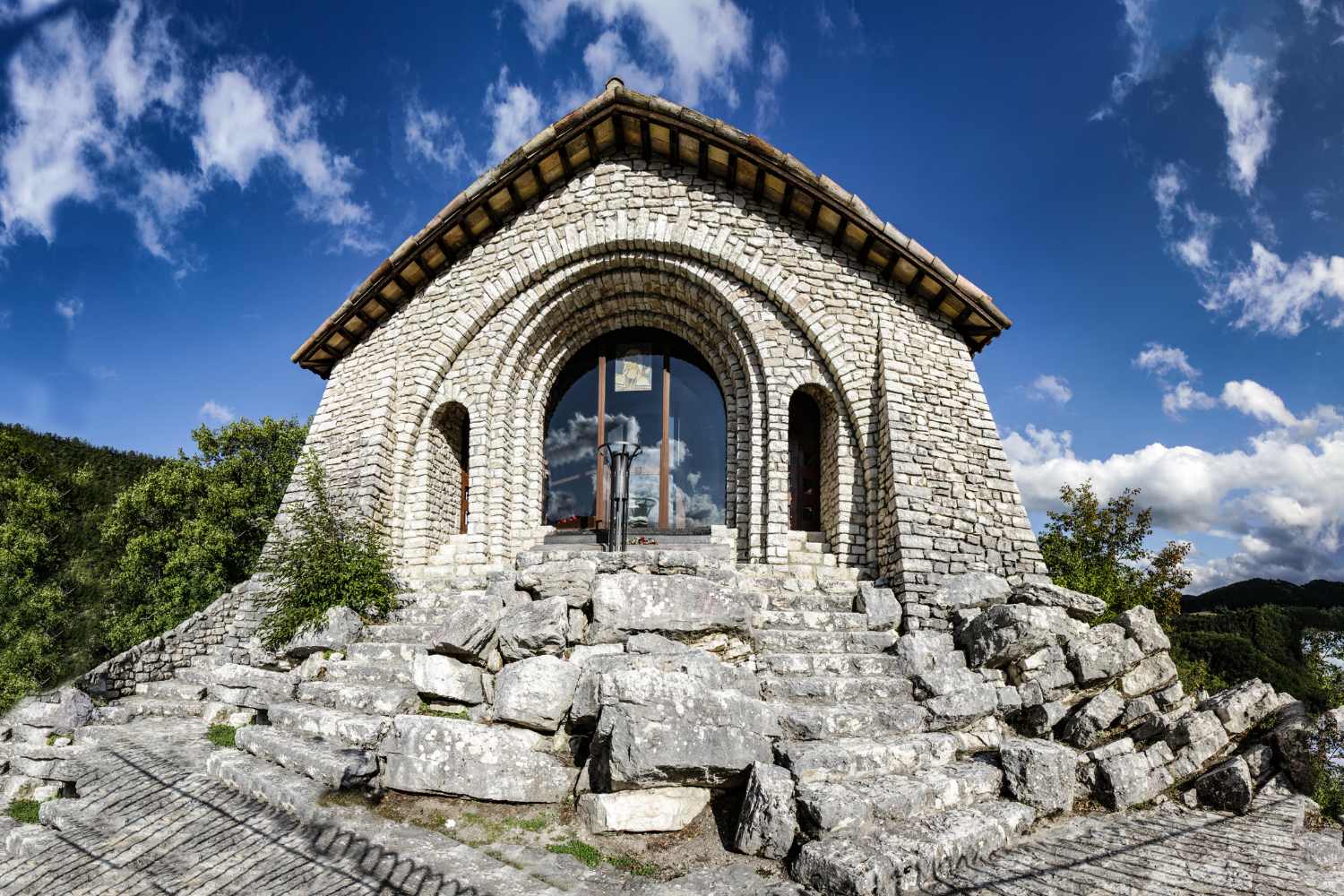
Rita dies between 1447 and 1457 and her body, still today, is preserved almost intact. It was beatified in 1627 and canonized in 1900 by Pope Leo XIII, then in 2000 he joined the universal calendar of the saints of the Catholic Church.
In the meantime, a cult that goes beyond the boundaries of Umbria is spreading around his figure. In Cascia they arrive faithful from all over the world, they call it “the saint of impossible cases”, they entrust her desperate causes, rebel children, lost husbands, tumors, failures, sleepless nights. And many tell about graces received, of inexplicable healings, of sudden conversions.
A Datmedia survey places it in second place among the saints most invoked by the Italians, immediately after Sant’Antonio of Padua. His popularity exceeds the boundaries of religion: even those who are not a believer find an exemplary history in his figure, a metaphor for resilience and love.
A heart that speaks to hearts
Santa Rita has its roots in Augustinian spirituality, in the so -called Theology Cortisthat is, in the theology of the heart, a type of faith that feeds on emotions, intuitions and compassion. An embodied faith, capable of touching the wounds of the world.
Its mysticism is not made of celestial flights and abstract visions, it is more concrete, with a domestic flavor. In her, the silence and the struggle, the house and the cloister, the mourning and the prayer coexist, the one who speaks the language of mothers, widowers and excluded.
And maybe that’s why he still moves. Because in the midst of a devotion that sometimes risks becoming automatic or rhetoric, she returns us the essence of the sacred: a wound that does not close, a prayer that does not go out, a hope that is reborn in the frost of winter.
Today, more current than ever
In our frantic and often disillusioned time, the Santa Rita figure remains a firm point, not only for those who believe, but also for anyone who is looking for something. His message crosses the generations: he speaks of forgiveness, resistance, possibilities. Remember that peace is never a discounted gift, but the result of difficult choices, which each wound can transform itself, if it is delivered to something bigger.
Santa Rita was a devoted woman and then Santa, a silent revolutionary, who managed to transform revenge into peace and violence into prayer, a universal symbol from the possibility of transforming the impossible into something possible.
