
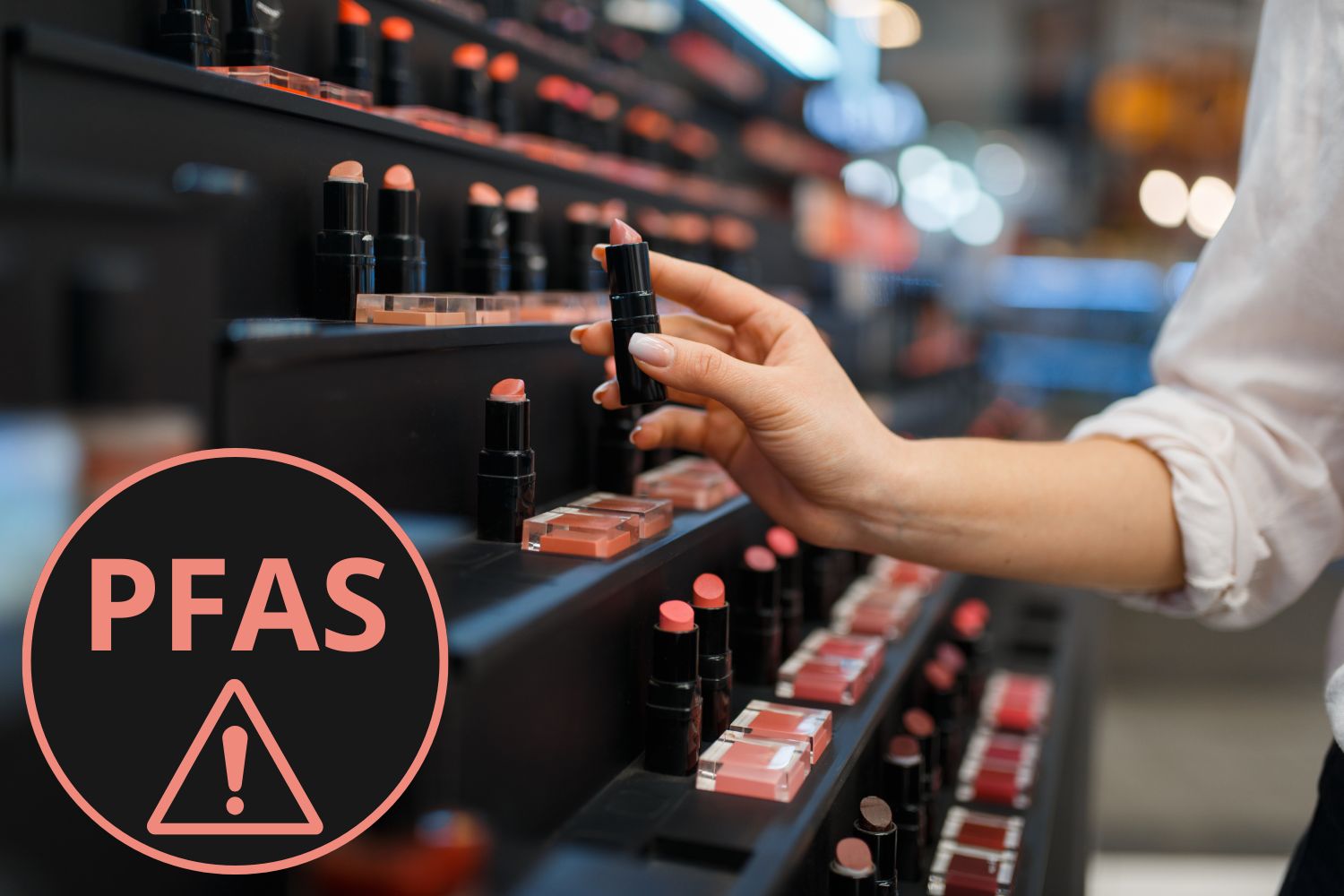
A recent analysis, conducted by the FDA in the USA, has revealed alarming aspects relating to the cosmetics we use every day. In fact, 51 different perfluoroalkyl substances, commonly known as PFAS, have been identified, used as deliberately added ingredients in formulations sold on the American market (but the brands of which have not been disclosed).
Recall that PFAS have earned the nickname “forever chemicals” precisely because of their ability to resist environmental degradation and progressively accumulate in living tissues. Their presence in beauty products therefore represents a source (yet another) of direct and continuous exposure for millions of consumers.
The investigation examined a very large database, containing information on over 400 thousand cosmetic formulations registered with the American authority in the period between the end of 2023 and the summer of 2024. From this vast analysis it emerged that approximately 1700 products, corresponding to 0.41% of the total, included PFAS among the declared components.
It is therefore a relatively small presence in percentage terms, but significant if we consider the overall volume of items involved and the frequency with which they are used daily. We are not talking about niche or specialist products, but about cosmetics commonly found in the homes and cosmetic bags of millions of people around the world.
The products most at risk
The examination highlighted that some types of cosmetics are particularly affected by the presence of PFAS. At the top of the ranking are eyeshadows, which alone represent over a fifth of the products containing perfluoroalkyl substances. This is followed by face and neck treatments that do not require rinsing, eye liners, loose powders and liquid or cream foundations.
These five categories together constitute approximately half of all cosmetics in which perfluoroalkyl pollutants have been detected. A worrying fact, considering that these are products applied to delicate areas of the face, often near the eyes and lips, and intended to remain on the skin for several consecutive hours during the day.
PFAS added most frequently in cosmetics
Among the various PFAS identified, one clearly stands out above the others in terms of frequency of use. This is polytetrafluoroethylene, also known by the acronym PTFE, the same polymer used in non-stick coatings on pans. This compound was found in approximately 28% of the cosmetic products analyzed containing perfluoroalkyl substances.
Next in the ranking are perfluorononyl dimethylsiloxane and trifluoroacetyl tripeptide-2. These substances are included in formulations mainly to improve certain performance characteristics of the finished product, such as the smoothness of the texture, resistance to humidity or the mattifying effect on the skin.
And the safety data?
What emerges particularly clearly from the government report is a worrying knowledge gap. The agency focused its assessment on the 25 most common PFAS in the cosmetics industry, but the results raise more questions than certainties. For 19 of these substances, equal to 76% of the priority sample, it is impossible to express a judgment on the safety of use due to the lack of fundamental toxicological information.
In practice, for the vast majority of perfluoroalkyl compounds used in cosmetics there are no adequate studies that allow us to establish whether and to what extent repeated application on the skin could pose health risks. This gap becomes even more critical considering that many of these products are used daily, sometimes several times a day, for years.
Only for 5 of the PFAS examined did the American regulatory body feel it could express a reassuring assessment, classifying them as of low concern in typical ways of use. These include the aforementioned PTFE, perfluorodecalin, a dye identified as HC Yellow number 13, perfluorohexane and tetrafluoropropene.
However, the situation is different for a specific compound, perfluorohexylethyl triethoxysilane, which has attracted the attention of the agency’s experts. When used in body lotions at the maximum concentrations detected, this substance has been reported as a potential critical element based on research conducted on animal models that have shown effects on the nervous system.
The ways we come into contact with PFAS
The report identifies several ways in which consumers may be exposed to these perfluoroalkyl pollutants while using cosmetics. The main one obviously remains direct contact with the skin, which absorbs the substances applied to the surface to a variable extent. However, the involuntary inhalation of particles should not be underestimated, a particularly relevant phenomenon when using powdered or sprayed products.
Other routes of exposure include accidental eye contact, especially when applying facial makeup, and inadvertent ingestion that occurs with products intended for the lips such as lipsticks and lip glosses. This last method takes on particular importance because it involves the direct introduction of substances into the organism through the digestive system.
Some information from previous monitoring programs seems to suggest a progressive reduction in the use of PFAS by cosmetics manufacturers. However, the American agency cautiously underlines that it does not yet have sufficiently large and reliable historical series to definitively confirm this downward trend.
The new federal legislation on the modernization of cosmetic regulation, which recently came into force, should allow us to build a more precise and continuous picture of the evolution of the use of these chemical substances in the sector in the coming years. Only with data collected systematically over a significant period of time will it be possible to establish whether the industry is truly moving towards the progressive elimination of PFAS from cosmetic formulations.
