
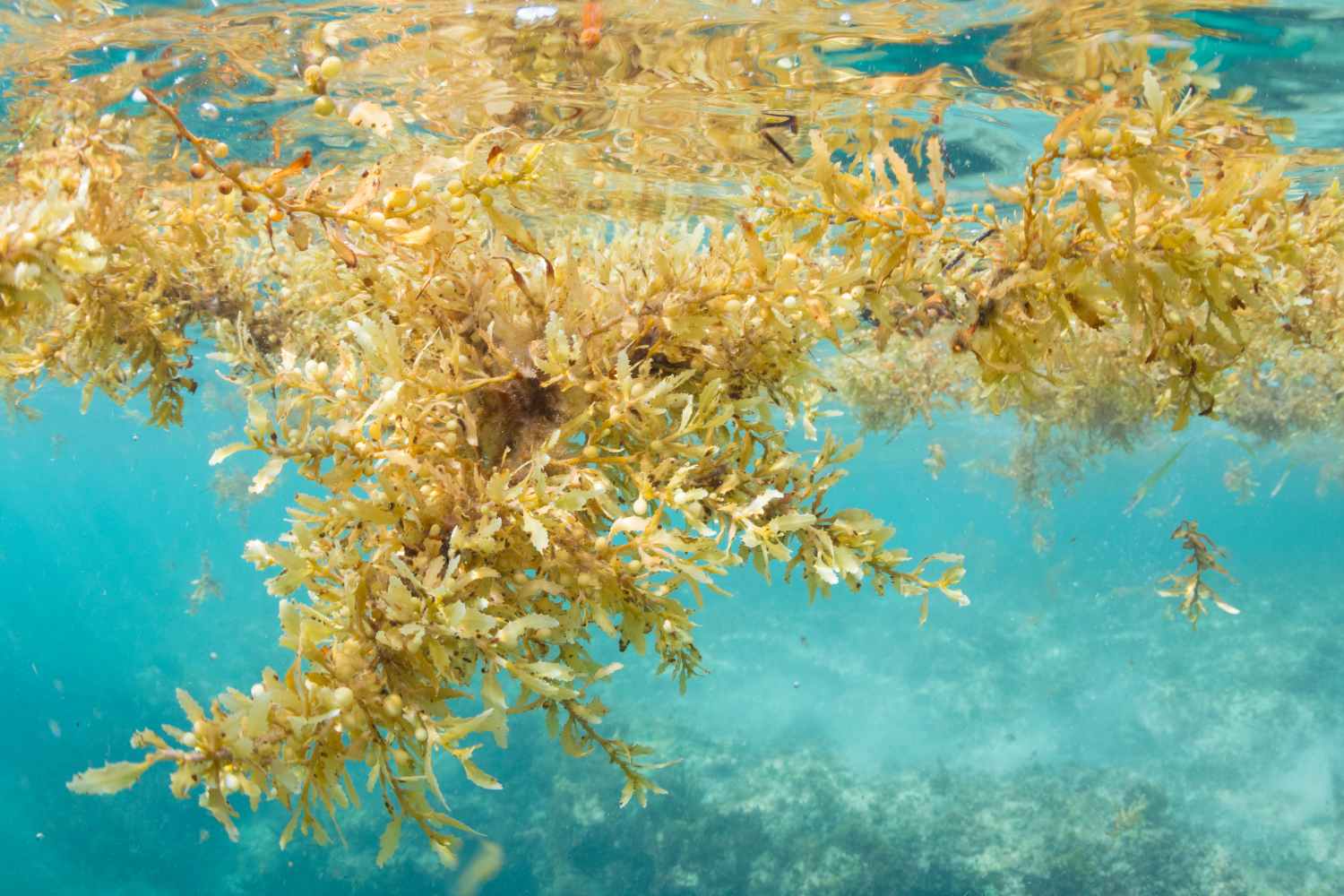
A gigantic mass of brunette algae has established a new extension record in the Atlantic Ocean. With an estimated biomass in 37.5 million tons in May 2025, the large Atlantic belt of Sargassi (Gasb) has turned into a floating band of over 8,800 kilometers that stretches from West Africa to the Gulf of Mexico. But the real alarm does not concern only the dimensions: science is confirming that behind this boom there is a risk to health and a clear sign of the human impact on the oceans.
What historically was an ecological resource in the Sargassi Sea, a key habitat for a rich marine biodiversity (turtles, fish and invertebrates), has today assumed the contours of a real harmful phenomenon. The researchers, in fact, classify it as harmful algal flowering (Hab), due to its “excessive biomass, which impacts on coastal waters and beaches,” with “unprecedented effects on coastal ecosystems and human health,” as explained by the authors of a new study published in the journal Science Direct.
The double trap: decomposition and accumulation of metals
The most urgent question for coastal populations is: are the sargassi toxic? The scientific response is complex: the pelagic seaweed (Sargassum – composed mainly by S. Natans and S. Fluitans) is not stinging or poisonous in itself, but its massive expansion creates two serious indirect problems.
Oceanic anomaly: why is it so big?
The Sargassum was historically confined to a stable area in the Sargassi Sea. Since 2011, however, a new source of proliferation has emerged in a region of the tropical Atlantic, north of the mouth of the Amazon Rio. From there, the marine currents have contributed to forming the Gasb, a mass which, according to the estimates, represents about five times the medium historical biomass present in the Sargassi Sea only (estimated at 7.3 million tons).
Although the initial formation of the Gasb has been associated with an extreme climatic event-a negative phase of the North Atlantic oscillation in 2009-2010-this factor alone would not explain the support capacity of such a large biomass, which has reformed almost every year.
The human imprint: nitrogen, phosphorus and the rio of the Amazons
The real turning point, as demonstrated by the study led by the scientist Marino Brian Lapaine, is the chemical composition of Sargassum, which has changed radically in the last forty years due to anthropic pressures.
The analysis of the algae fabrics aims at a significant and lasting increase in nutrients, especially nitrogen (N) and phosphorus (P), which feed an accelerated growth:
The research suggests that the proximity of the new source of proliferation to the mouth of the Amazon Rio indicates a key role of this river source in the contribution of nutrients, contributing to its development. The fluctuations of the belt biomass, which increases and decreases in correspondence with the years of extreme flood or drought in the Amazonian basin, are a further clue. The work also highlights that “the importance of the recent enrichment of nutrients, especially phosphorus, for the excessive biomass of Sargassum in the Gasb” is crucial.
The expansion of Sargassum reiterates that the excess of nutrients of anthropic origin – from agricultural outflow to urban discharges – is impacting the marine environment on a global scale. The algae, from an ecological resource, has turned into a toxic threat because of its quantity, modifying its “history and biogeochemical” and launching a clear alarm on water pollution.
In June, The Puerto Rican Governor Signed An Executive Order Declaring a State of Emergency and Expediting Responses to Sargassum. An NCCOS #Hab Event Response Will Expand & Complement Sargassum Sampling Efforts at Six Sites Along Pr of Coastline. https://t.co/ywd7bhwfv3 @Drnagpr pic.twitter.com/p6DNSYCJFC
– Noaa coastal ocean science (@noaacoastalsci) September 30, 2025
