
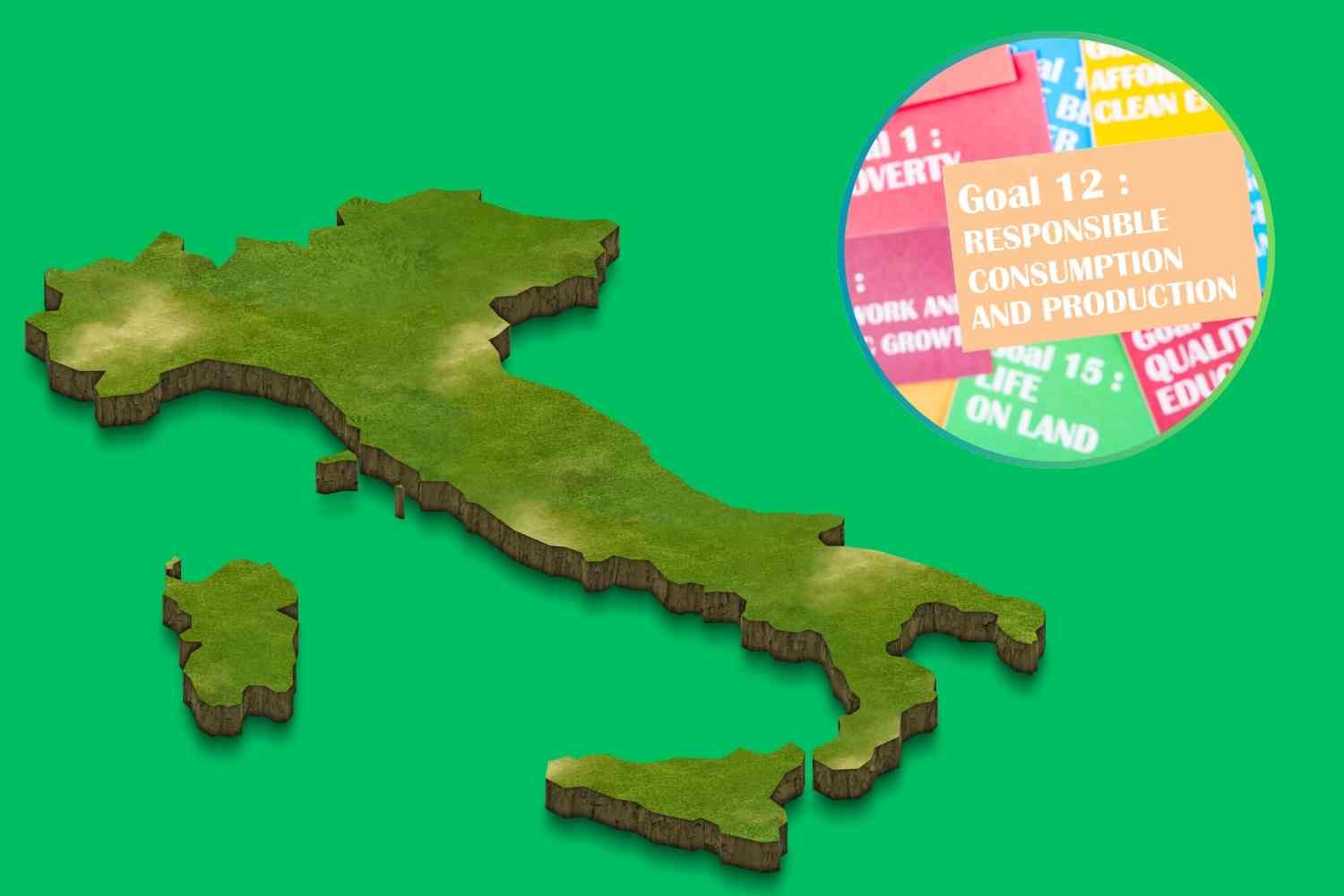
At what point is Italy on its path towards a more sustainable future? The question is more current than ever and the answer, contained in the last, detailed Istat Report on the objectives of Agenda 2030is far from obvious. It is not a simple promotion or rejection, but a complex report card, which sees us excel in some areas but remain dramatically behind others.
The analysis, which monitors progress towards i 17 Sustainable development objectives (SDGS) of the UN To be achieved by the end of the decade, it tells us that over half of our indicators improves (more than 60% in the long run), but there is no need to celebrate. In fact, more than one measure out of four has undergone a worsening in the last year and, perhaps more worrying, over 20% is blocked in a chronic “stagnation” phase. In short, we are going on, but with the handbrake pulled, while the 2030 deadline approaches.
The most painful note of the relationship concerns ours priceless natural heritage. The environmental objectives are those that show the greatest effort and, in some cases, a regression. It is here that Italy shows its most vulnerable side.
The geography of inequalities
If the environment suffers, the company is not better. The report confirms and details an Italy split in two, with a clear polarization between the Center-North and a South that struggles to keep up. The South presents a worst situation of the national average in 52.2% of the indicators, especially for poverty (Goal 1), work (Goal 8) and education (Goal 4). Just think that in 2024 almost a quarter of the population (23.1%) is at risk of poverty or social exclusion.
But the real novelty is the ranking of regional performances, which reveals complex dynamics and surprising traits.
However, there is a signal in contrast that deserves attention: a sort of “recomposition”. Some regions historically at the top, such as Autonomous Provinces of Trento And Bolzanoshow signs of slowdown or even worsening. On the contrary, some regions of the South, such as Abruzzo And Sicilytogether with Liguria And Basilicatahave recorded the most marked relative progress in the last year. A small sign that, if grown, could start reducing the gap.
We are the undisputed champions of recycling
In this contrasted framework, there is a sector in which Italy not only shines, but teaches the rest of Europe: the Responsible consumption and production (Goal 12).
Here we are among the most virtuous countries for material consumption and we have achieved exceptional results in the circular economy. The percentage of recycling of waste touched 51% (2023) and separate collection exceeded 66%. Our circular material rate of materials is 20.8%, almost double the European average (11.8%). It is proof that, when there is a political vision and a widespread commitment, we know how to become a model of sustainability.
What does all this mean?
The Istat 2025 report is not a simple data collection, but an urgent alarm bell. He tells us that current policies, fragmented and often without an overview, are not enough to achieve the objectives we have set ourselves for 2030.
Continue to celebrate our (although important) victories on the circular economy, ignoring the emergency that affects ours biodiversityour waters and our social cohesion, would be an unforgivable error. The regional performance data show that there is no unique solution, but targeted interventions are needed that take into account the specific fragility of each territory.
