

The world ranking of the most beautiful beaches is an exercise that every year calls into question consolidated geographical certainties. The 2026 edition of the World’s 50 Best Beaches, built on the evaluations of judges, Beach Ambassadors and the World’s 50 Beaches team, brings destinations ranging from the Philippines to Australia, passing through Greece and Madagascar to the top of the results. The Mediterranean is there, but it has to deal with oceans that play on another level. Italy conquers two places in a list of fifty: not many, but enough to demonstrate that certain corners of Sardinia hold up to comparison with any latitude.
The podium of the most beautiful beaches in the world
Entalula Beach, Philippines
The world’s first beach in 2026 is Entalula Beach, Philippines. We are in the El Nido archipelago, in the province of Palawan, in a context that in itself is considered one of the most spectacular on the planet. Entalula is a small private island surrounded by waters that go from blue to emerald green with an ease that seems almost artificial, flanked by limestone formations that emerge from the sea like sculptures. Access is only by boat from El Nido, usually as part of organized tours that explore the surrounding islands. You can’t stay overnight on the island, but a few hours are enough to understand why it is on top of the world.
Fteri Beach, on the Greek island of Lefkada
In second place is Fteri Beach, on the Greek island of Lefkada, already first in Europe in the continental ranking of the same year. A beach that doesn’t allow shortcuts: to get there you have to take a steep path that descends from the main road towards the sea, between rocks and sparse vegetation, without shade and without services of any kind. The reward is a white pebble coastline set between high cliffs, with turquoise water so saturated it seems unreal, and last but not least, there are no establishments.
Wharton Beach, Western Australia
Wharton Beach, in Western Australia, inside the Cape Le Grand National Park, near Esperance, closes the podium. It is a remote beach even by Australian standards: Esperance is about seven hundred kilometers from Perth, and the park can be reached after another half hour’s drive. What you find, however, is a shoreline of white quartz so pure it creaks underfoot, with a deep cobalt blue ocean and, with any luck, kangaroos descending onto the sand in the early hours of the morning.
The two Italian beaches in the world top 50
Two Italian beaches in the list of the fifty most beautiful in the world. Both Sardinian, both in the north and south of the island respectively, both with a history of environmental protection that explains their integrity.
Cala dei Gabbiani, Sardinia
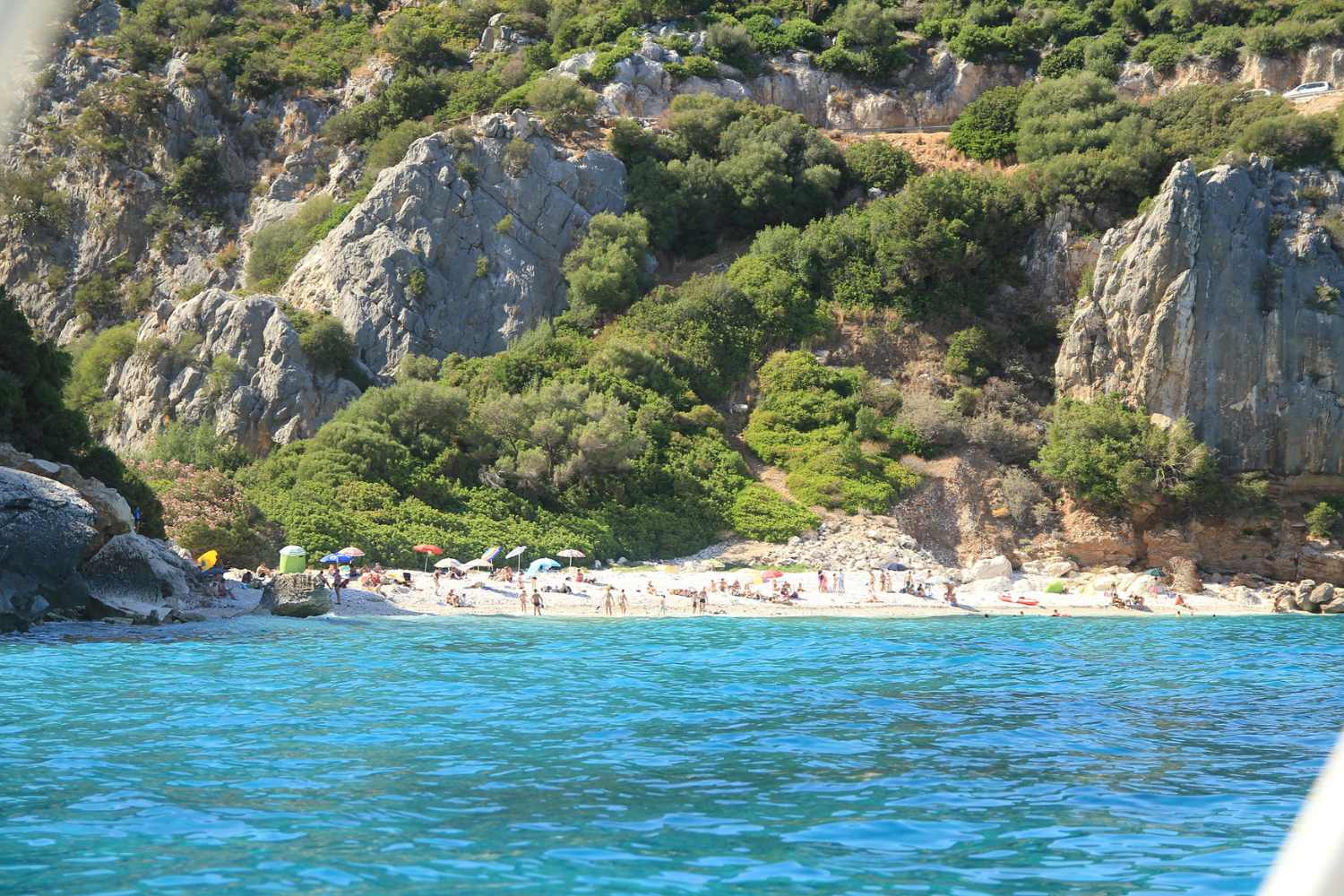
Cala dei Gabbiani is located in the south of Sardinia, in the Porto Pino area, and has achieved eighteenth place in the world with a consistency that those who know it judge to be more than deserved. The seabed slopes slowly, keeping the water low and transparent for a generous stretch before turning towards deep blue. The colors change with the light and the time of day, but the result is always a succession of shades that goes from almost white green to turquoise to cobalt, with the fine, light sand completing the picture. The surrounding context is made of dunes and Mediterranean scrub, without invasive structures. To reach it you travel along a dirt road in the pine forest of Porto Pino: it is not a complicated transfer, but the landscape that precedes your arrival already helps prepare you for what you will find.
La Pelosa, Sardinia
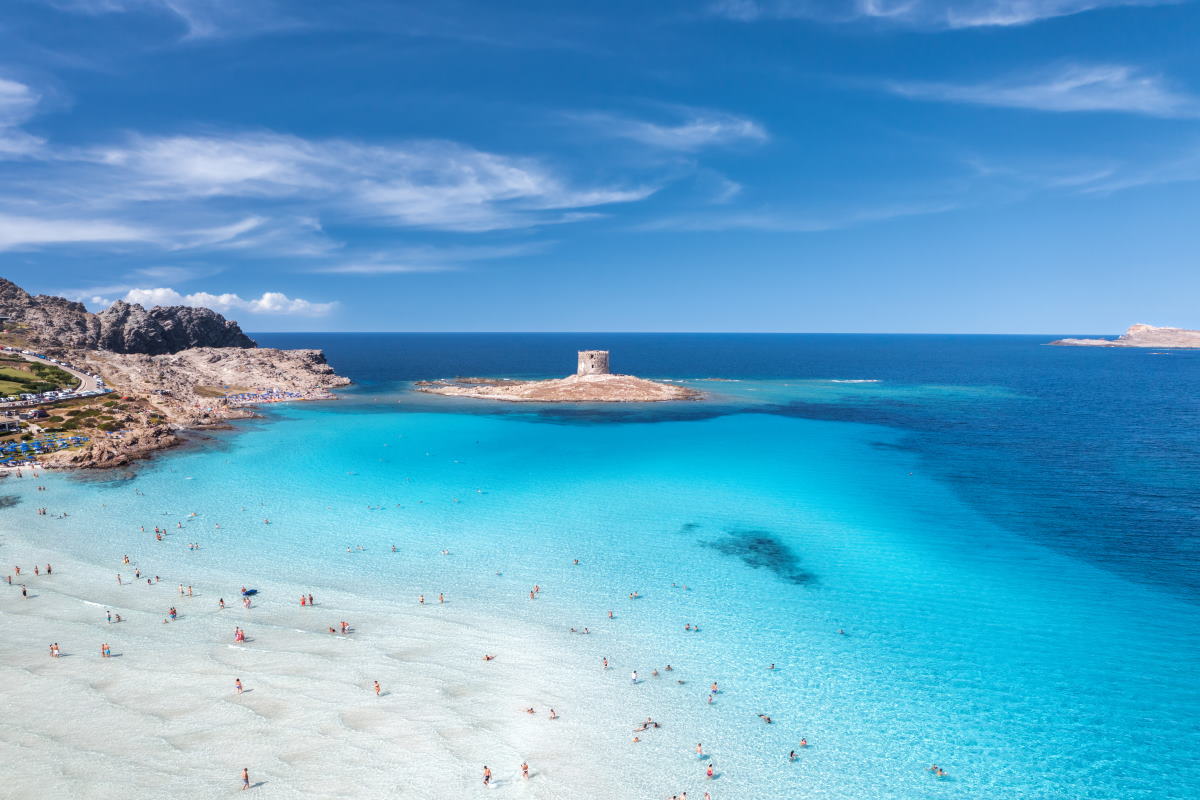
La Pelosa is at the other end of Sardinia, in the far north-west, in the municipality of Stintino. It is probably the most recognizable Sardinian beach in the world, the one that has become a symbolic image of the entire island. The water is very shallow for a very large stretch, and the color – a cross between sugar paper and light blue – is the one that appears in every guide and every social network dedicated to Sardinia. In the background, the Torre della Pelosa and the islet of the same name complete a composition that seems to have been built on purpose. Access is regulated with a booking system and a maximum number of daily presences, introduced to protect the seabed that makes that transparency possible. Arriving by car is not complicated, but in the summer season access management requires advance planning.
The complete ranking
- Entalula Beach — Philippines
- Fteri Beach — Greece
- Wharton Beach — Australia
- Nosy Iranja — Madagascar
- Mamanuca Beach — Fiji
- Shoal Bay East — Anguilla
- Dhigurah — Maldives
- Playa Balandra — Mexico
- Koh Rong — Cambodia
- Donald Duck Bay — Thailand
- Cayo de Agua — Venezuela
- Cala Macarella — Spain
- One Foot Island — Cook Islands
- Princess Diana Beach — Barbuda
- Turquoise Bay — Australia
- PK 9 Beach — French Polynesia
- Grace Bay — Turks and Caicos
- Cala dei Gabbiani — Italy
- Saadiyat Beach — United Arab Emirates
- Canto de la Playa — Dominican Republic
- Wineglass Bay — Australia
- Pink Beach — Indonesia
- Paradise Beach — Thailand
- Anse Source d’Argent — Seychelles
- Kalanggaman — Philippines
- Seven Mile Beach — Cayman Islands
- Freedom Beach — Thailand
- Siesta Beach — United States
- Kaputas Beach — Türkiye
- Cayo Zapatilla — Panama
- The Baths — British Virgin Islands
- Cabo San Juan del Guía — Colombia
- Baía do Sancho — Brazil
- Porto Katsiki — Greece
- Santa Giulia — France
- Blue Lagoon — Fiji
- Playa Xpu Ha — Mexico
- Ofu Beach — American Samoa
- Playa Cofete — Spain
- Le Morne Beach — Mauritius
- Flamenco Beach — Puerto Rico
- Grand Anse — Grenada
- Praia da Falésia — Portugal
- Pontal do Atalaia — Brazil
- Boulders Beach — South Africa
- Porto Timoni — Greece
- Paje Beach — Zanzibar
- La Pelosa — Italy
- Cas Abao — Curaçao
- Keem Beach — Ireland
