
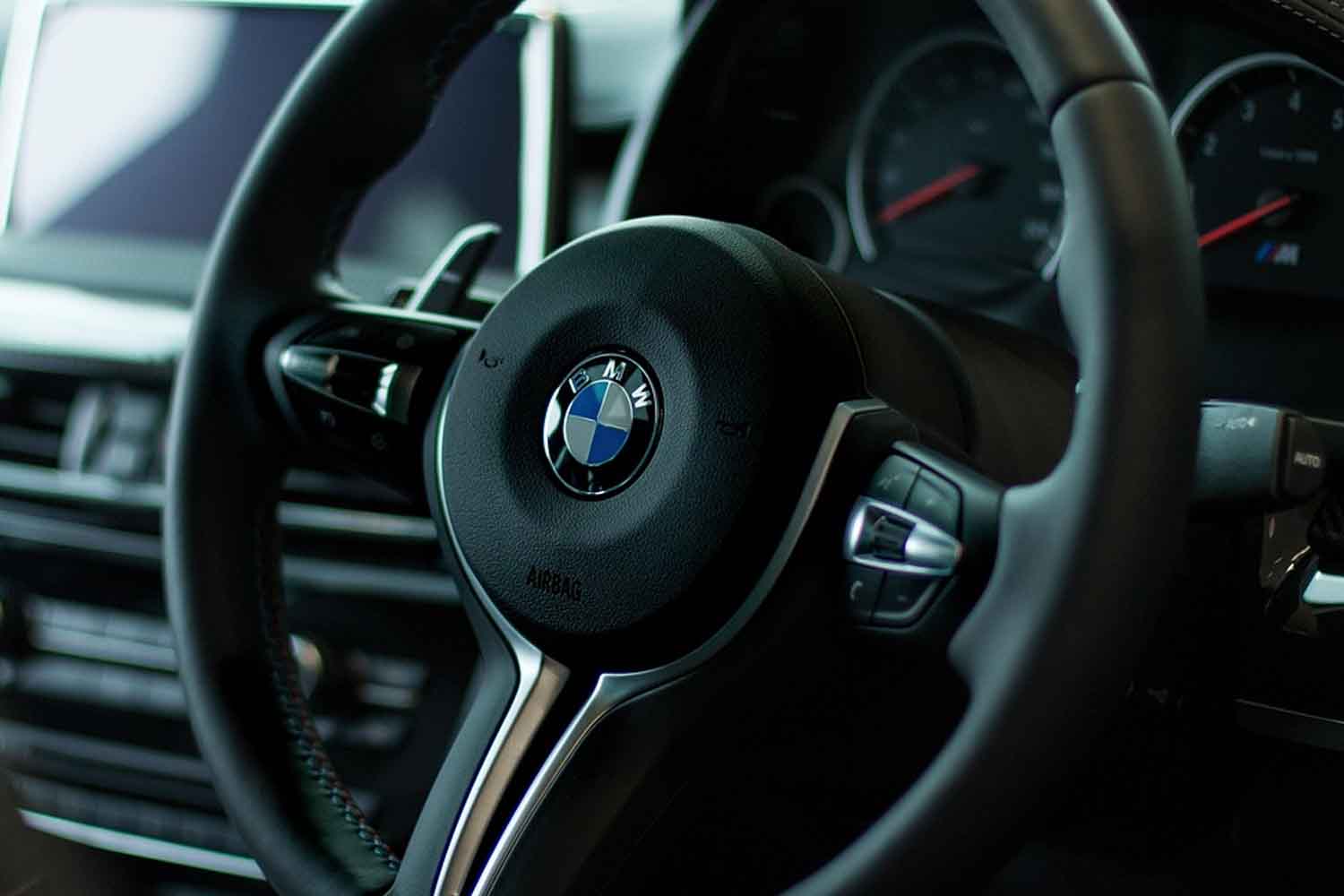
BMW has announced an urgent and large -scale call: hundreds of thousands of cars must be brought to the workshop for a serious problem that could even cause spontaneous fires, even while the vehicle is off and parked.
The reason? It can enter water into the starter motor, damaging it until it causes short circuits and overheating. The German house is clear: in the worst case, the car can also catch fire as a stop. That’s why BMW highly recommends the owners not to park in the garage or close to buildings, at least until the repair intervention is completed.
The models involved range from the compact 1 series to SUV X7, all produced between September 28, 2015 and September 7, 2021 On a global level, BMW has not provided a precise estimate, but there is talk of over 300,000 cars involved all over the world.
The costs will be high and arrive at an already critical moment
The repair involves the replacement of the starter motor and, in some cases, also the installation of a more powerful battery. A complex technical operation that, given the numbers, will translate into millionaire costs for the group.
This call is added to an already delicate situation for BMW. Just a few months ago, the CEO Oliver Zipse had announced a 32% drop in net profits in the second quarter, while specifying that the earnings remain above expectations, with 1.72 billion euros.
And it is not even the first time that the brand has to deal with fire risks: last year 150,000 mini cooper had been recalled if electric for batteries isolation problems. And, always this month, the Stellantis group also had to intervene on over 750,000 vehicles for a defective connection that could cause fuel losses.
A sector under pressure
The German car industry is experiencing a tiring moment of transition. On the one hand, the car houses move towards the electric, but with delay compared to international competition. On the other, German politics is not offering stable support, between incentives that end and uncertain investments in the production of batteries in the country.
The difficulties are reflected in all the main markets:
In 2024, the car sector employed around 773,000 people in Germany, but according to the VDA – the National Association of the Automotive Industry – over 150,000 jobs would be at risk in the coming years. A plausible number, especially considering that Volkswagen has already announced the cut of 35,000 positions by 2030.
The reason? The electric motor requires less components and less labor: from 1,000-2,000 pieces of a thermal engine you descend a few hundred. The Bosch group, one of the main suppliers, has already communicated the cut of 13,000 jobs.
Combustion engine yes or not?
Not everyone in the sector agrees on the direction to be taken. Hildegard Müller, president of the VDA, asked the European Union to review the 2035 deadline for definitive farewell to combustion engines, proposing to open alternative fuels and plug-in hybrids.
But not everyone share this line. At the recent Fiera IAA Mobility, the CEO of Audi, Gernot Döllner, reiterated that the future of the car is already written: it will be electrical, without returning to the past.
The problem, however, is that the demand for electric cars is falling. Volkswagen has already had to slow down production in some factories. For this reason, the European Commission has chosen an intermediate road: confirm the transition to electricity, but monitor the situation and evaluate in a year if it is really possible to respect the fixed times.
To see if your car is also involved in the call, enter your data here
You may also be interested in:
