
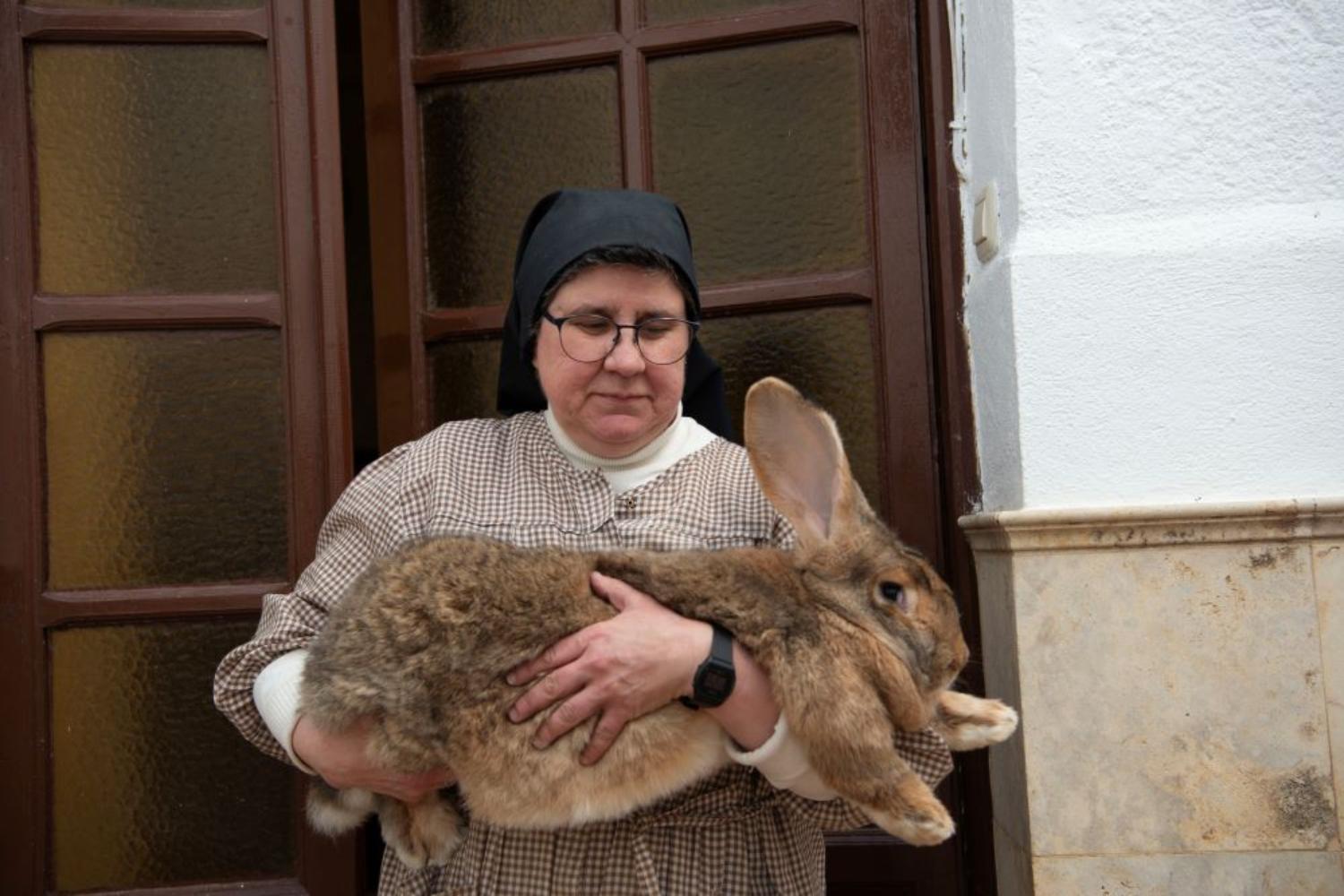
At dawn, when the convent is still immersed in silence, Sister Consuelo Peset Laudeña does not immediately head towards the chapel. Before breakfast and prayers, cross the corridors of the monastery to reach a row of cages where dozens of enormous rabbits with soft fur and very long ears live.
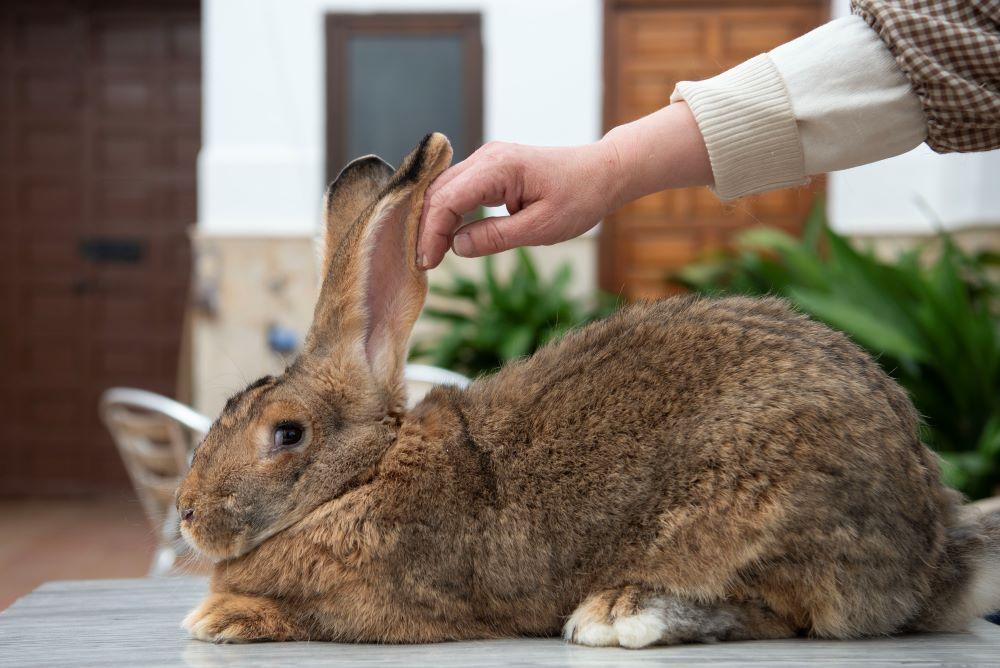
Some weigh almost 20 kilos, others are just born and move tightly in the fur left by their mothers to protect them from the cold. It happens in the convent of Saint Anthony of Padua, in the Spanish region of Castile-La Mancha, where eleven Franciscan nuns are carrying out an astonishing animal rescue mission: to prevent the extinction of the very rare giant Spanish rabbit.
A breed that fed Spain during the war
Giant rabbits are not just a zoological curiosity. For Spain they represent a piece of collective memory. During the Spanish Civil War and in the difficult post-war period, these animals were essential for feeding families, orphanages and communities affected by hunger. Their exceptional size, speed in reproduction and the quality of their meat made them a precious resource in the country’s toughest moments. Each female can give birth to up to 22 young per month, a capacity that allowed many families to survive decades ago. Today, however, that breed risks disappearing. And this is where the Franciscan nuns come into the picture.
From small farming to conservation mission
It all started over thirty years ago, when Sister Consuelo’s parents gave her a pair of rabbits for personal use. Only much later did the nuns discover that those animals were now very rare. From that moment on, the convent transformed simple breeding into a true genetic conservation project. With the support of the local authorities, the nuns have created a small specialized farm, investing thousands of euros to adapt the structures. Today each rabbit is registered with a microchip, pedigree, health checks and detailed food records. Nothing is left to chance: temperature, ventilation and cleanliness are constantly monitored.
Daily care and 90 puppies born in 2026
Three nuns look after the animals on a permanent basis. Every morning Sister Consuelo checks the rabbits one by one, observing their behavior, appetite and even the smell of their urine to detect any illnesses. The cages are cleaned every two days and completely sanitized every week. When the little ones are born, the checks become daily. In the first months of 2026 alone, 90 puppies have already been born in the convent. The diet is studied with precision: hay, barley and corn are dosed to maintain the correct weight, while the females with their young receive a richer diet.
The biggest limitation: they can’t sell them
Nuns cannot trade rabbits. The permit obtained from the authorities only allows breeding for personal consumption. For this reason, the animals are donated to schools, authorized breeders and educational spaces, with the aim of raising awareness of the breed and increasing its population. To financially support the project, the nuns produce artisanal sweets and ice creams sold in the shop next to the convent. Behind this mission there is also a profound spiritual motivation. The Franciscans are in fact inspired by Laudato Si’ of Pope Francis and the idea of protecting creation.
You might also be interested in:
