
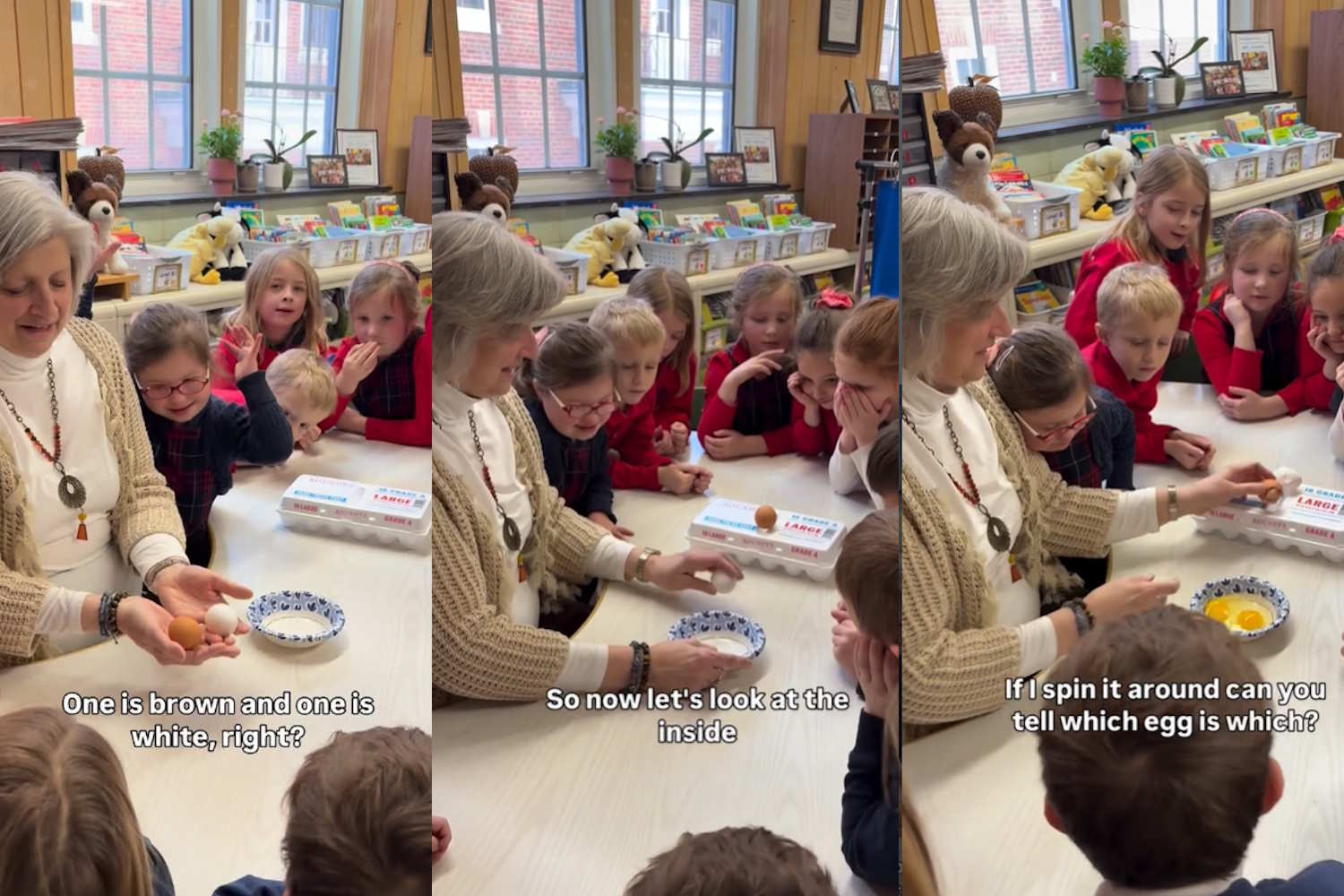
Two eggs. One white, one brown. And no rhetoric. Just a simple gesture, which succeeds where speeches, laws, communication campaigns often fail: to make children – and us adults – understand that diversity is only a superficial question.
The video of the American teacher showing her first grade students a white and a brown egg has gone viral because it tells a truth that we should know by heart and that we continue to forget. He breaks them, opens them, shows whites and yolks: identical. Same consistency, same fragility.
The message is there, clear: we may have different colors, different stories, different accents, but inside we are made of the same material.
It is a lesson that directly recalls the thought of Martin Luther King – as the school writes in the post itself – which spoke of equality as a daily practice. As choice and responsibility.
View this post on Instagram
Equality is not a romantic idea, it is an ongoing exercise. And it must start from childhood, from school classrooms, from small gestures that seem insignificant but which build the vision of the world.
In a time when racism often disguises itself as “opinion”, as “fear”, as “defense of traditions”, this teacher does not accuse, she does not point the finger. Just show. It is a disarming pedagogy, because it leaves no room for justifications: if two eggs are the same inside, why should one human being be worth less than another?
The teacher Barkow he didn’t do anything extraordinary. He did what we should all do: educate humanity first, because there is no future in a world that accepts inequality as the norm.
That simple gesture, now more than ever, reminds us of an uncomfortable thing: we often complicate what is already clear. We hide behind sophisticated discourses to avoid an elementary truth: we are equal in rights because we are equal in our vulnerability, in our ability to feel pain, joy, fear, hope.
Two eggs on a school desk thus become a mirror for adult society. And the question, at this point, is not whether the children have understood the lesson. The question is: have we really understood it?
