
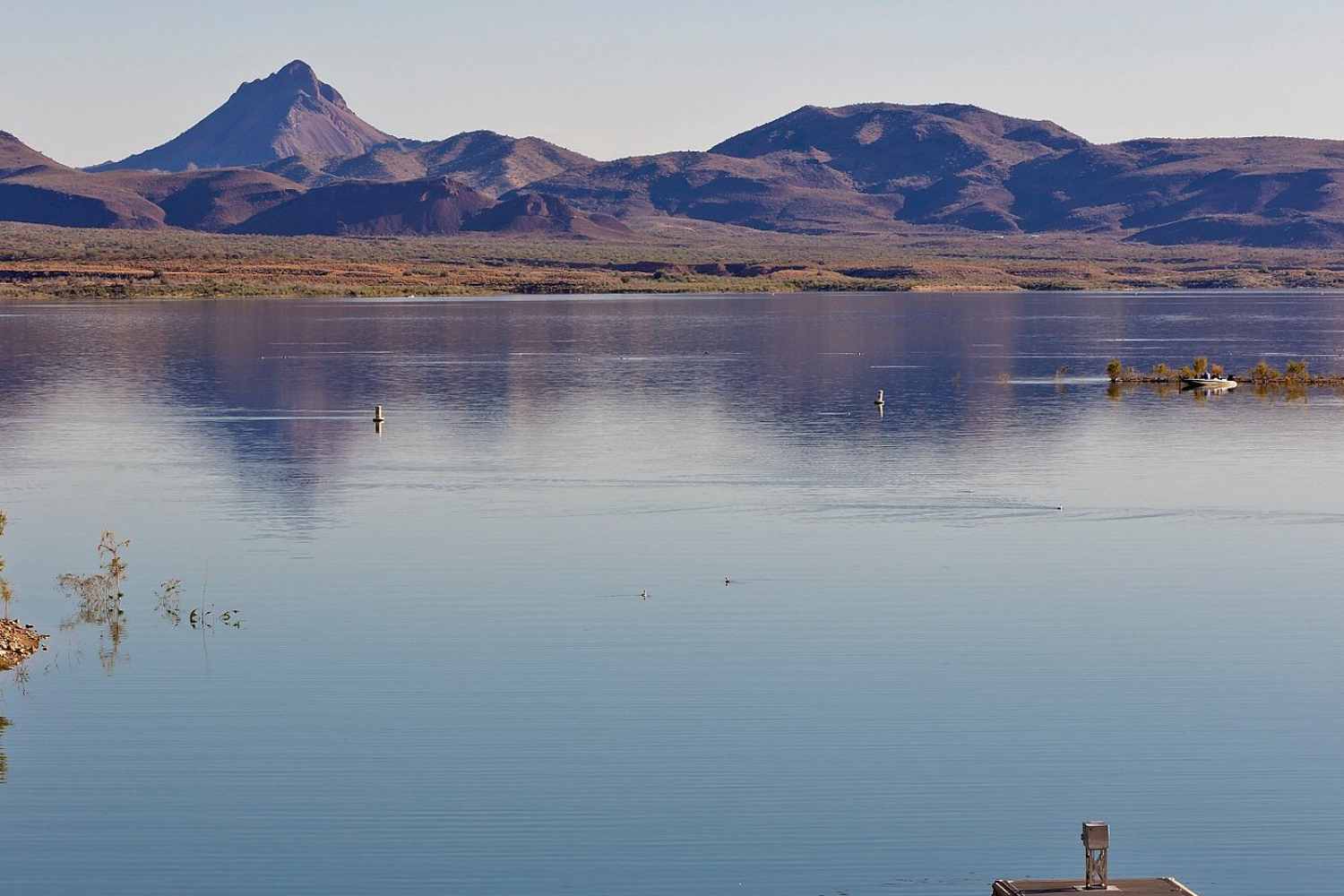
A city that sinks, slowly but without stopping. We are not in a coastal metropolis threatened by the rising of the seas, but in Wenden, a small center of Arizona where the ground has lowered over 5.5 meters in the last eighty years. Today the ground continues to give in to the rhythm of almost 7 centimeters a year, a phenomenon that has a precise cause: the unbridled competition for water in the subsoil.
A subsoil that collapses
Wenden’s paradox is an emblematic case of an increasingly widespread environmental and social conflict. On the one hand, a small community fighting to access a vital resource. On the other, the so-called mega-factories, agricultural giants that pierce the land at increasing depths to irrigate their immense crops. The problem, as highlighted by a State University (Asu) study, is the excessive pumping of the groundwater, which is literally drying up the aquifers.
“Just as the air keeps the tire inflated, the water keeps the ground inflated,” explained 15 Jay Famiglietti, the Asu professor who led the study to ABC. When the water is removed, clayey minerals in the subsoil are compact, “a bit like the dishes in a sink”, causing the lowering of the surface, a phenomenon known as subsidy.
The water of the Arizona for the Saudi cattle
To make the situation even more critical is the destination of these crops. Most of the land around Wenden is used by Fondomonte, a company owned by Almarai, the largest dairy group of Saudi Arabia. Here is grown medical grass, an extremely waterproof plant, which is then exported to nourish the Saudi cattle. In practice, the water of the American desert is being used to produce food thousands of kilometers away.
The frustration of the residents is palpable. “It’s an incoming disaster,” he told NBC News Gary Saiter, head of Wenden Water Improvement District. “We are sunk by over 1 meter and 80 in the last 15 years. It is not sustainable.” His voice is that of a community that sees his own water reserves vanish under his feet, while companies, strong of greater capital, can afford to dig increasingly deep wells, triggering a vicious circle that drys up resources for everyone.
The “Far West” water without rules
The story, as stated in the New York Post, has taken on legal contours. The Prosecutor General of Arizona, Kris Mayes, fought a cause against foundomonte, accusing it of having damaged the community with his excessive withdrawals. According to the estimates of its office, the company would consume up to 81% of all the underground waters of the area. “The water has disappeared for them because the Saudis are sucking it from the ground,” Mayes said to the NBC, reporting the defense of the company that defines its water consumption “reasonable”.
The heart of the problem is a regulatory vacuum. The Asu study revealed that almost 80% of the Arizona territory has no specific regulations on groundwater. This means that farms are not required to declare how much water consume, creating a sort of water “far west”. A figure of the US Department of Agriculture photographs the extent of the phenomenon: between 2010 and 2020, the agricultural surface of foreign property in the US has gone from 1.25 to almost 3 million acres.
Attempts to introduce a state regulation have so far collided with a wall. Despite the proposals of the governor Katie Hobbs, the different political factions have not been able to find a compromise on how and how much to limit water withdrawals in rural areas. While politics struggles to find a solution, the land in Wenden continues to sink, bringing with it the hopes and the future of an entire community.
Don’t you want to lose our news?
