
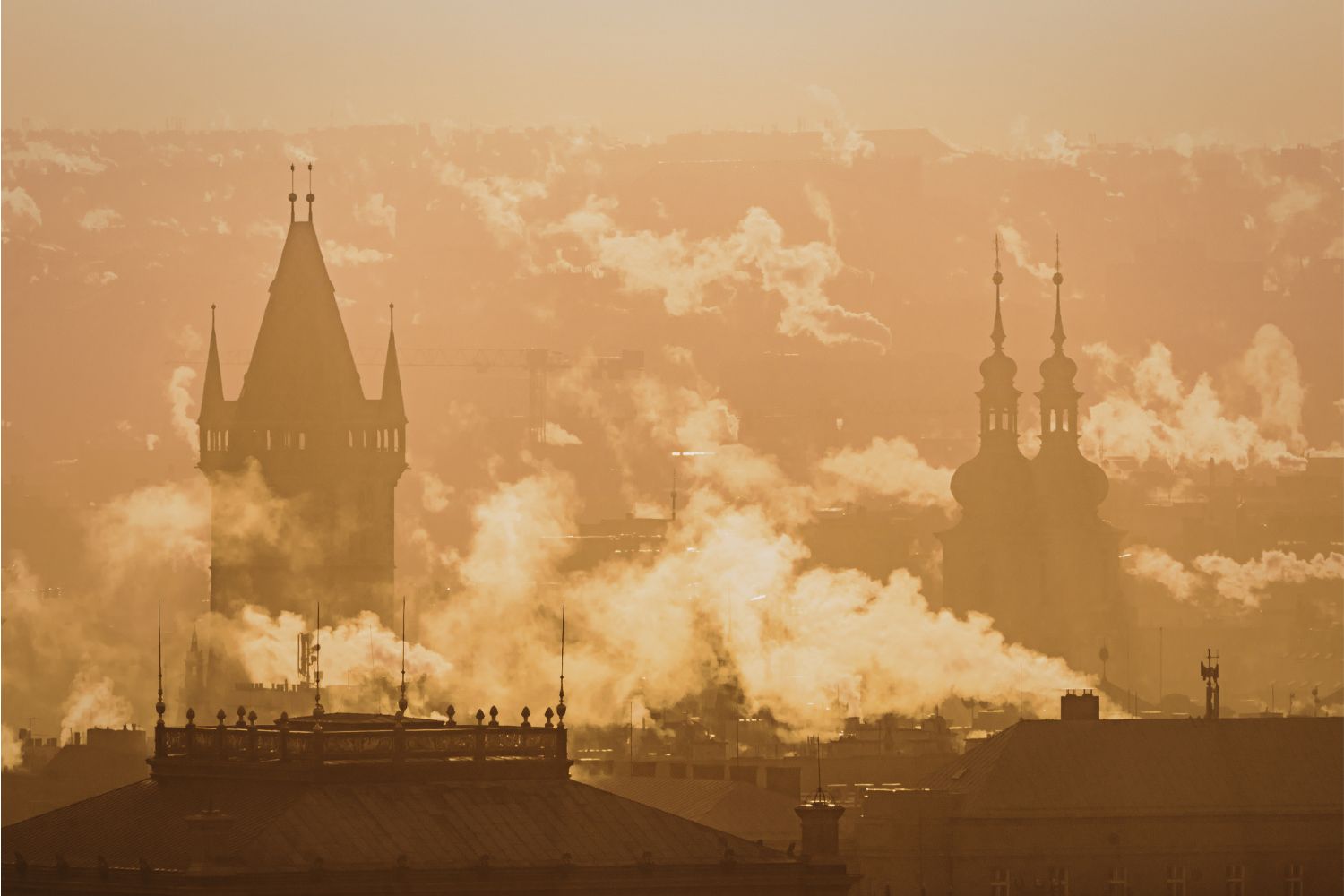
Krakow, a city that for too long has been a symbol of unbreathable air, has decided to rewrite its history. In 2019, “Poland’s smog capital” (and the second largest in the country) made a bold and fundamental decision: it banned the use of solid fuels such as coal and wood for home heating.
Poland has historically always been a large producer and consumer of coal for heating homes and this was a choice that profoundly changed the quality of the air and, above all, improved the lives of its citizens.
Thanks to supportive policies, such as subsidies to replace old stoves and boilers, families have been able to switch to cleaner heating systems. From here, not only an aesthetic improvement of the city, but a real medicine for health. The days of excessive pollution, which were previously 150 per year, have been reduced to just 30.
Poland produces and consumes most of the coal the EU uses for heating in winter, up to 80%. And when consumed, it causes clouds of particulate matter that contain probable carcinogens such as benzopyrene and clog the lungs, making Poland the European country with the highest coal-related health costs. A change, therefore, that was implemented, which saved thousands of lives: almost 6,000 premature deaths were avoided in ten years, thanks to cleaner air.
And the benefits of the new policies don’t stop there. According to what we read in The Guardian, for children, who are often the most vulnerable victims of pollution, cases of asthma and allergic rhinitis have decreased significantly, with a reduction of 17% and 28% respectively. It is as if Krakow had given back to its citizens not only better air, but a new hope of life.
The road Krakow has traveled has been long and difficult, but it has opened the door to a healthier and more just future. The city has not stopped with the ban on solid fuels, but has continued to evolve, with the introduction of a low emissions zone covering 60% of the territory, a measure which also aims to reduce traffic pollution, another great enemy of health and well-being.
But Krakow is not an island. Despite enormous progress, smog from surrounding cities and villages continues to threaten its air. Coal heating is still too widespread in many areas, and the change cannot stop at the city limits. The challenge is global, and Krakow is only the beginning of a journey that requires solidarity and common actions.
In any case, Krakow’s success is a concrete hope for all cities struggling with pollution. It demonstrates that when people, institutions and policies come together, change is possible. The city teaches us that improving the air is not just a question of the environment, but of life, health and the future. And if Krakow can do it, really any city can do the same. Because the change that breathes is the change that saves.
