
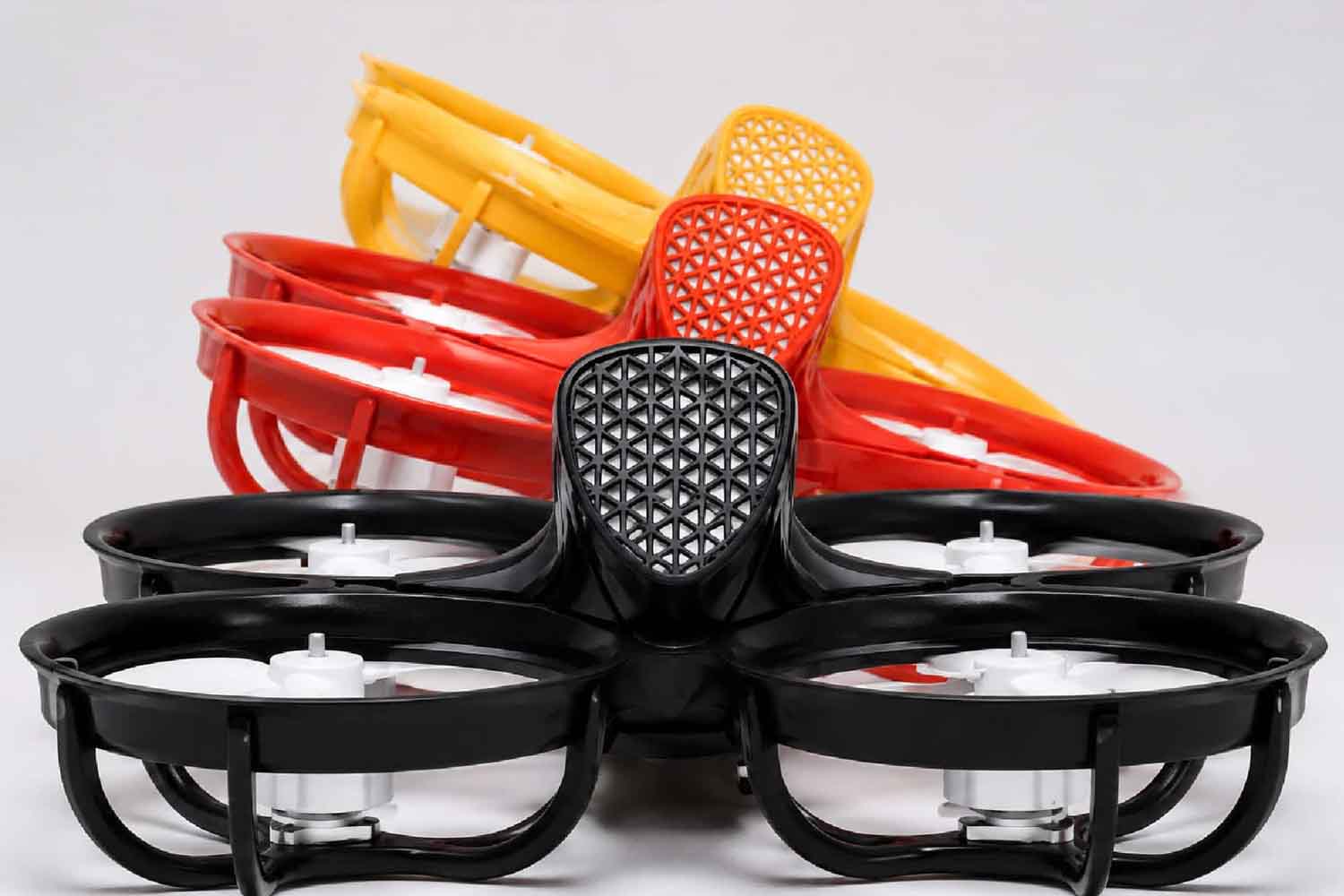
It barely weighs 40 gramspatrols the garden alone and when he finds a mosquito he does a rather simple thing: he runs after it and hits it in flight. It’s called Tornyol and it is the micro-drone developed by the French startup of the same name to transform the fight against mosquitoes into a small autonomous mission, without sprays, platelets or chemicals scattered in the environment.
The idea is inevitably reminiscent of a robot vacuum cleaner, except that instead of crumbs on the floor there are mosquitoes flying. The user delimits the area to be protected on the base station map, the drone takes off, patrols the area, returns to recharge and then leaves again. When it spots the right insect, it intercepts it directly with the propellers. The tricky part, of course, comes first: finding a mosquito among all the flying, moving, and waving things in a garden.
A sonar recognizes the flapping of wings
Tornyol doesn’t just look for tiny dots with a camera. The system uses ultrasonic sonar capable of exploiting the echoes produced by flying insects.
In fact, each species has different characteristics in the beating of its wings. Frequency and harmonic structure produce a sort of signature that the system can analyze to distinguish a mosquito from other insects, including bees and other pollinators that are far better left to their own business.
The technology developed by the startup comes from a system called LeSonar2built with 380 microphones, 32 40 kHz ultrasonic emitters and an FPGA processor. According to Tornyol, the sonar can reconstruct the three-dimensional environment, detect extremely small movements and detect targets up to about eight meters.
On the drone intended for domestic use, all this work serves a sequence that is much easier to describe: detects, identifies, chases, strikes. For the mosquito it’s basically Top Gun, only much shorter.
He returns to base and sets off alone
The other interesting element is the autonomy of the system. Tornyol describes the product as a combination of micro-drone and charging base designed to work without anyone having to fly it with a radio control. You set the area to be monitored and the drone carries out its patrols. When the battery runs out, it automatically returns to the base, recharges and starts again. The company’s goal is to maintain continuous protection of the area, intervening when a mosquito’s signature is detected.
The small size also serves to make the aircraft suitable for domestic spaces. The startup presents it as silent and light enough to operate near homes; the project focuses precisely on small “tinywhoop” drones, already widespread in the world of FPV flight. Founders Alex Toussaint and Clovis Piedallu are working on signal processing and electronics, and control and interception systems, respectively. The company entered the Y Combinator program in fall 2025.
From the terrace to the fight against mosquito-borne diseases
The home garden is only the most immediate version of the project. Tornyol aims much higher: using fleets of micro-drones even on larger surfaces, reducing the use of chemical disinfestation and fixed capture systems.
According to the startup’s calculations, around ten drones could operate on approximately one square kilometre. The company believes that a mobile system can have a clear advantage over a trap: instead of waiting for the insect to reach the device, the device searches for the insect.
The prospect is especially interesting for areas where mosquitoes are vectors of diseases such as malaria, dengue and West Nile. In its manifesto, Tornyol links the development of the technology to the possibility of reducing the costs of controlling mosquito populations and collecting, through the same detection network, information on their movements and breeding areas. It’s a big leap from the typical summer evening spent slapping your ankle.
When will the anti-mosquito drone arrive
The project is still in the phase before large-scale deployment. On the company’s website you can leave a refundable deposit of 100 dollars to reserve its place, while Tornyol indicates the goal of starting shipments in the United States in 2027.
In the presentation published by Y Combinator, the startup talks about a service for around 50 dollars a month for the home system consisting of drone and base. For now Tornyol is therefore building the machine that is supposed to do something that humanity has been practicing for millennia with mixed results: find the mosquito before it finds us. With 40 grams of drone, sonar and several algorithms, at least the power strip can stay in place.
