
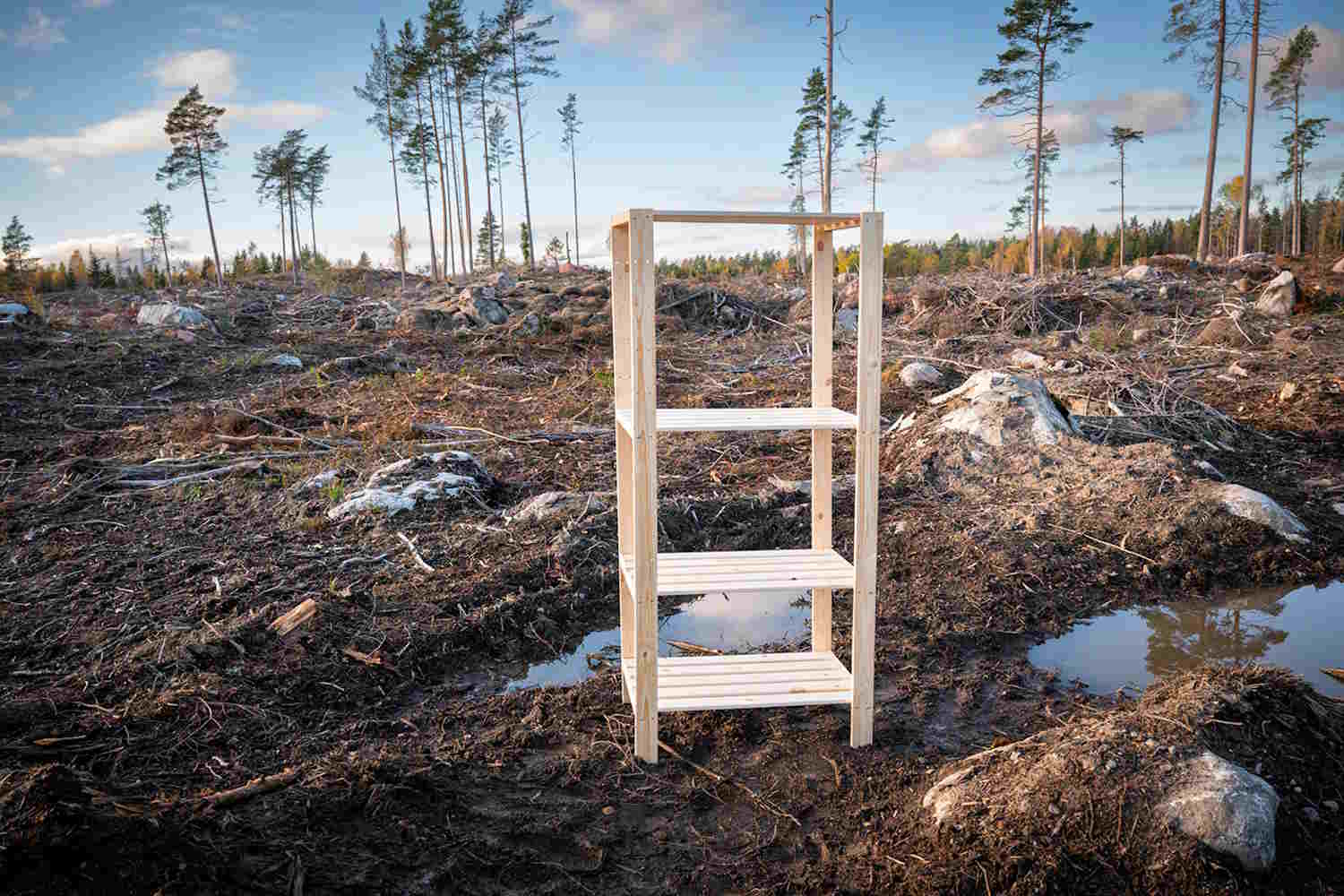
From a forest that took centuries to develop to a shelf sold around the world. This is the path reconstructed by a new investigation by Greenpeace Nordic, which denounces the involvement of the IKEA supply chain in the destruction of the last forests of great naturalistic value in Sweden.
The report, titled Vanishing Forests (Part 2): How IKEA Drives Destruction in the Boreal Forestslinks the deforestations in the north of the country to the production chain of some of the Swedish giant’s furniture, including the IVAR and HEJNE shelves and the MYDAL, NEIDEN and UTÅKER beds.
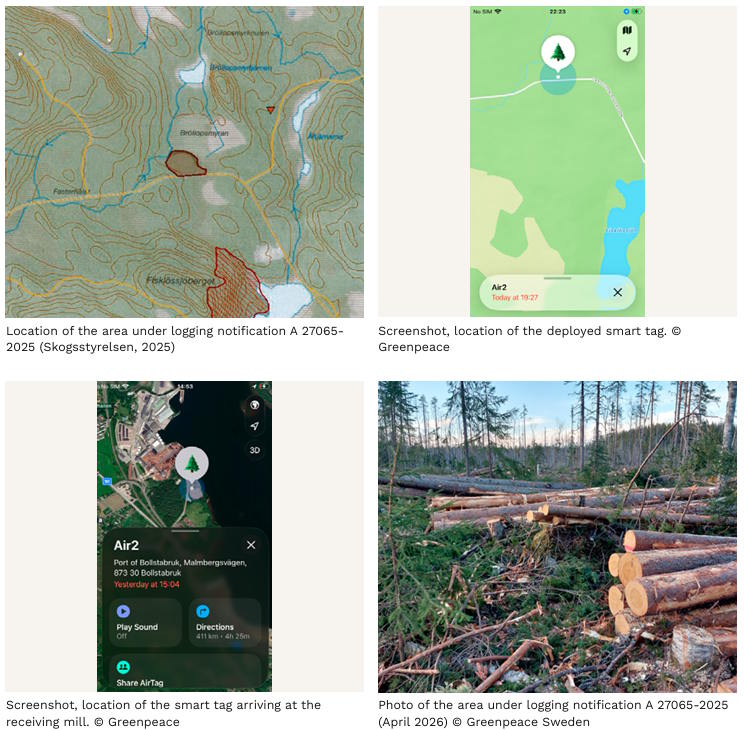
Through electronic devices hidden in the trunks, Greenpeace Nordic monitored the transport of timber from eight forest areas deforested by the company Svenska Cellulosa Aktiebolaget (SCA), an important supplier of IKEA.
What Greenpeace discovered
The logs were traced to the sawmills of Munksund And Bollstabrukconnected to manufacturers who make furniture for IKEA. The investigation therefore documents the path of the wood to the sawmills and the subsequent commercial relationships with the multinational, although without demonstrating that each trunk traced became a specific piece of furniture.
Munksund sawmill – Sweden @Greenpeace
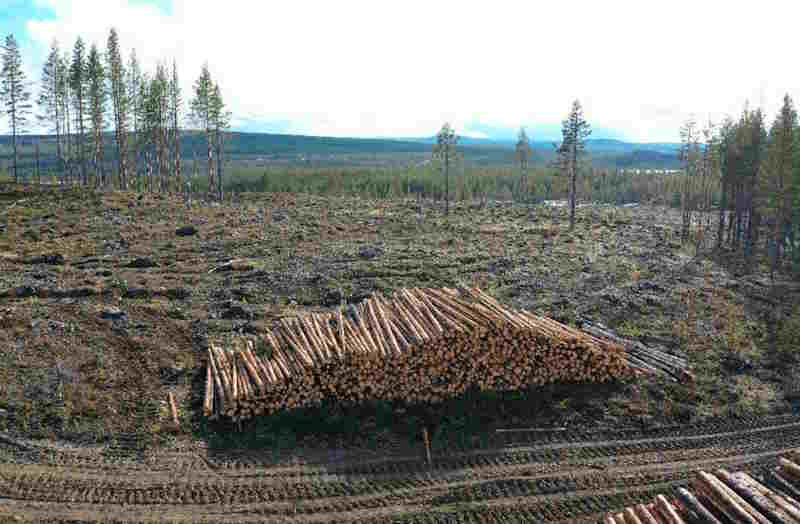
The problem mainly concerns the origin of the wood: all the areas involved are classified as continuity forests, ecosystems that have not undergone clear cutting in recent times and conserve habitats that have developed over centuries. Forests, therefore, which cannot simply be replaced by planting new trees, because they host threatened species, fungi, lichens and complex ecological relationships.
According to estimates by the Swedish Forestry Agency reported by Greenpeace, approximately 26 thousand hectares of forests of high naturalistic value and probable continuity forests are felled every year.

Label on a package of SCA lumber found at the factory
of Hedlunda Industri AB. Indicates that it is pine
(PNSY) from the Munksund sawmill (April 2026) @Greenpeace
At current rates of clearing and protection, these ecosystems could disappear from unprotected areas within 26 years. A huge risk for biodiversity: according to the 2025 Swedish Red List, forestry activities negatively impact 1,744 species.
@Greenpeace
The rights of the Sámi people are also at risk
The investigation also denounces the consequences of deforestation on the indigenous Sámi communities, who depend on the forests for traditional reindeer herding.
Among the documented cases is that of the community of Ohredahke, in whose territories SCA is accused of having carried out culling without adequate prior consultation and without the consent of the population.
The disappearance of the oldest forests also means the loss of the lichens that the reindeer feed on during the winter, threatening a fundamental practice for Sámi culture.
Greenpeace calls for a stop to the destruction
At the center of the criticism is also the FSC certification, which according to Greenpeace does not alone guarantee the protection of the most vulnerable forests.
It should be obvious that wood from unique ecosystems of great naturalistic value should not be used to make furniture, but our investigations are revealing that Ikea is not respecting its sustainability commitments, says Martina Borghi, head of Greenpeace Italia’s Forests campaign.
It is not the first time that the Swedish giant has come under accusation: a previous Greenpeace investigation in the Romanian Carpathians had already identified links between the destruction of natural forests and the production chain of the BEKVÄM stool and the SNIGLAR sunbed.
@Greenpeace
Greenpeace is now calling on IKEA to immediately exclude wood from forests that need protection from its supply chain, imposing stricter controls on all suppliers.
HERE you can find the full report.
