
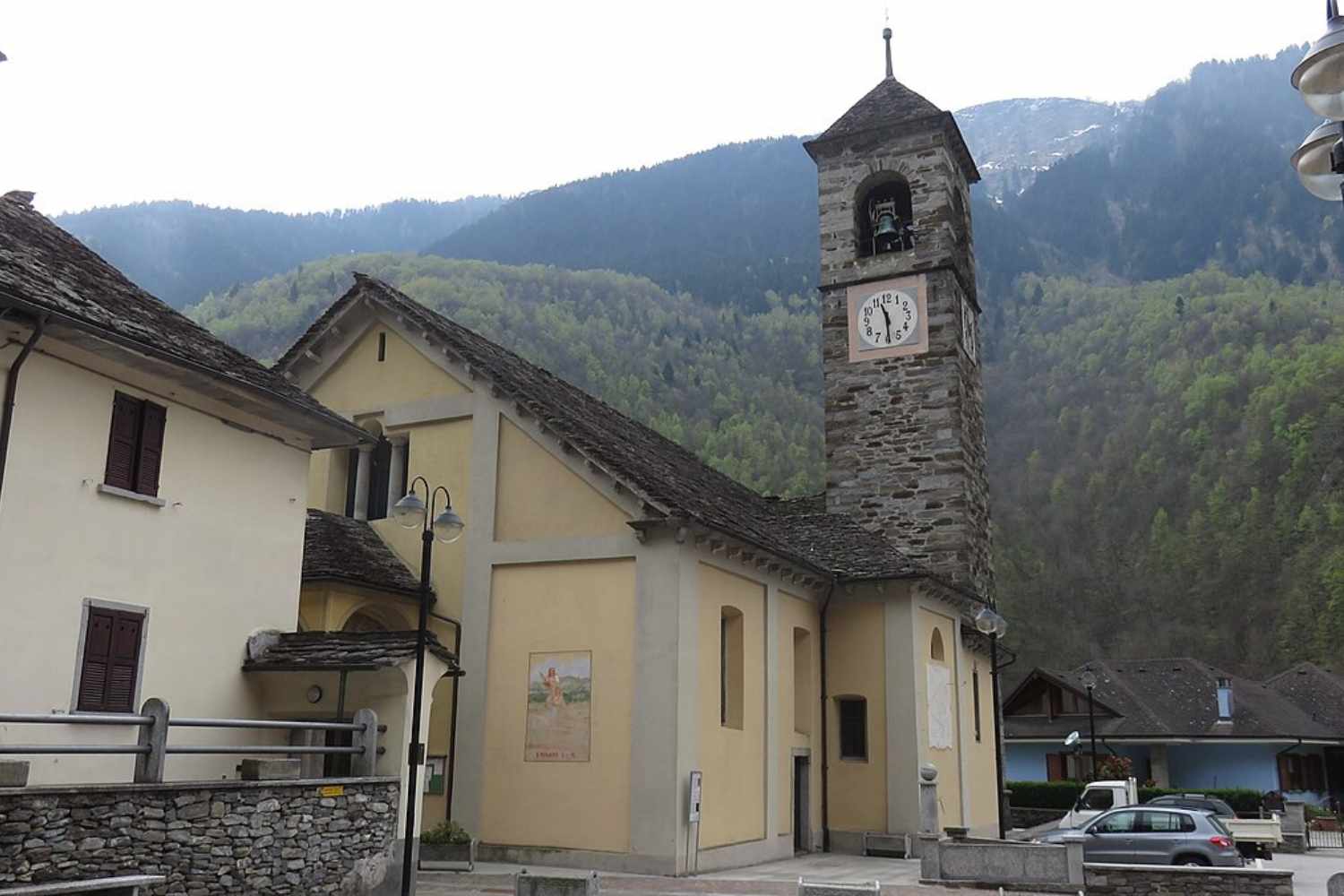
Imagine waking up one morning in November and knowing that for the next three months the sun will only be a memory. It is not the beginning of an apocalyptic novel, but the reality that the inhabitants of Viganella have lived for centuries. This tiny village of the Antrona Valley, nestled in the mountains of Verbano-Cusio-Ossola, in Piedmont, represents one of those paradoxes that only Italy can give: the country of the sun that lives without sun.
Geography sometimes plays bad jokes. The majestic mountains surrounding Viganella, high and imposing, certainly create a postcard scenario but also an insurmountable barrier for sunlight. The result? From 11 November to 2 February – 83 precise days – the village remained wrapped in a perennial penumbra, even when the sky above the peaks shone with a crystalline blue. The elderly of the country say that their grandmothers marked on the calendar on the day of the return of the sun, when the first rays finally caressed the bell tower of the church.
The turning point comes with a visionary idea
In 2006 everything changed thanks to Mr. Franco Midali, a profession of profession but dreamer by vocation, who decides that his country deserves more. He does not accept that his fellow villagers must live in the shade for a third of winter and together with the architect Giacomo Bonzani, he develops a project that seems to have come out of a science fiction film: installing a giant mirror on the mountain to capture the sun and bring it to the square.
The company proves to be titanic. Astronomical calculations, topographical forecasts, climatic studies are needed. The railway worker and the architect spend years to perfect the idea, to convince skeptics and administrators. In the end, with 99,900 euros – obtained through calls and funding – they carry out the impossible. A helicopter transports the mirror to altitude: 40 square meters of polished steel, eleven quintals of weight, eight meters of base for five in height.
The day that the artificial sun shone on Viganella
On 17 December 2006 he marked a historical date for the village. The inhabitants gather in the square with heavy jackets and out of fashion sunglasses – an image that will travel around the world. When the first reflected rays hit the stones of the square, someone is moved. The old men come out of the mass and sit on the benches, finally kissed by a light that believed lost until February.
The mechanism is as simple as it is brilliant: the mirror rotates slowly following the path of the sun, guaranteeing six hours of light reflected per day on the main square. In the evening he goes to go in a horizontal position, how he went to sleep, letting rain and wind clean him naturally. A detail with a poetic flavor set in a work of pure engineering.
The media phenomenon
The history of the country that defeated the darkness conquers the world. Television troupes from every corner of the planet arrive: CNN, BBC, Jazeera, Japanese, Brazilian and German journalists crowd the stone streets. Viganella becomes the symbol of Italian creativity, of the ability to transform a problem into opportunities. The Norwegian municipality of Rjukan, which lives a similar situation, sends its technicians to study the Piedmontese mirror and years later will install three reflective mirrors.
The legacy of a luminous idea
Viganella’s mirror shows that even small villages can think big. In an era of mountain depopulation, where young people go “outside” and the elderly go “in” – as a place inhabitant says with bitter irony – this invention has reported attention and life. Tourists arrive and the media tell the story, the country resists.
Of course, maintenance presents its challenges and in recent years the mirror has had some technical problems, but the idea remains brilliant as the sun reflecting: sometimes it is enough to look at a problem from a different perspective to find extraordinary solutions.
Don’t you want to lose our news?
