
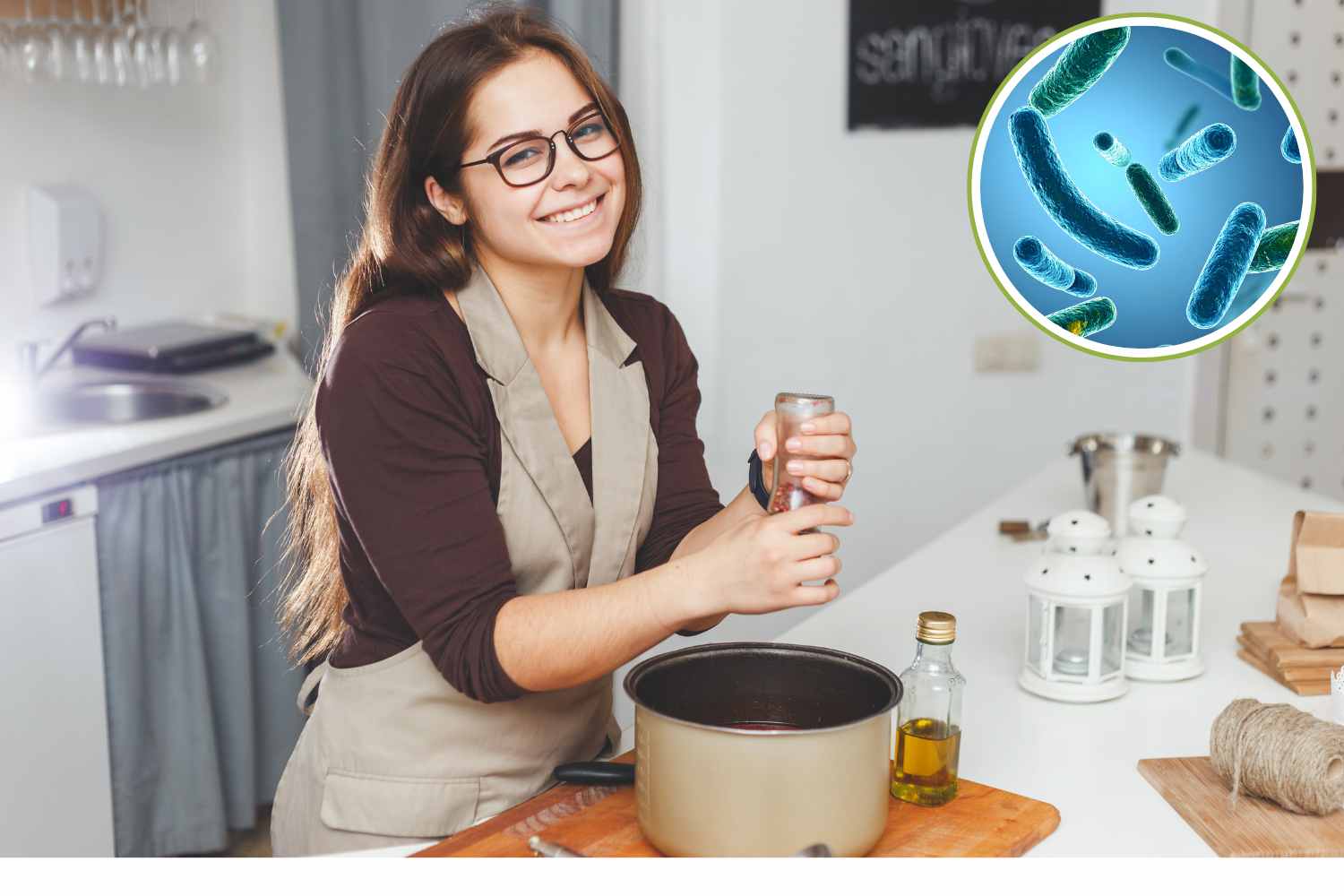
When it comes to cooking, it is essential to pay attention to cross-contamination.
According to a study commissioned by Food Safety and Inspection Service (FSIS) of the United States Department of Agriculture, spice racks could be very dangerous.
The study
The study examined cross-contamination by asking participants to prepare a turkey burger and a salad.
Participants were not told that researchers would be examining their food safety behavior until after they had prepared the meal.
The researchers tested surfaces including knives, cutting boards, tap handles and sponges, but when they tested spice containers 48% were contaminated.
Co-author Donald Schaffner, a professor in the Department of Food Science at Rutgers Universitysaid that most research on cross-contamination has looked at cutting boards and faucets, overlooking other things you touch while cooking, such as spice jars and utensils.
The researchers revealed, therefore, that the least hygienic areas of the kitchen are:
Consequently, it is essential to underline that maximum attention must be paid to the danger of cross-contamination, following all hygiene rules in the kitchen, since the consumption of contaminated foods can cause serious health conditions.
How to protect yourself from cross contamination
In light of these results, adopting good hygiene habits in the kitchen can no longer be put off. Experts recommend washing your hands thoroughly with soap and water before, during and after preparing food, especially after touching raw meat. It is equally important to regularly clean and disinfect spice containers, cutting boards and all work surfaces, preferably after each use.
A simple but effective measure is to use separate utensils for raw and cooked foods, thus reducing the risk of transferring potentially dangerous bacteria from one food to another. Finally, it is advisable to periodically replace sponges and tea towels, real reservoirs of germs that are often underestimated: small daily gestures that can make a big difference to the health of the whole family.
Source: PubMed
You might be interested in:
