
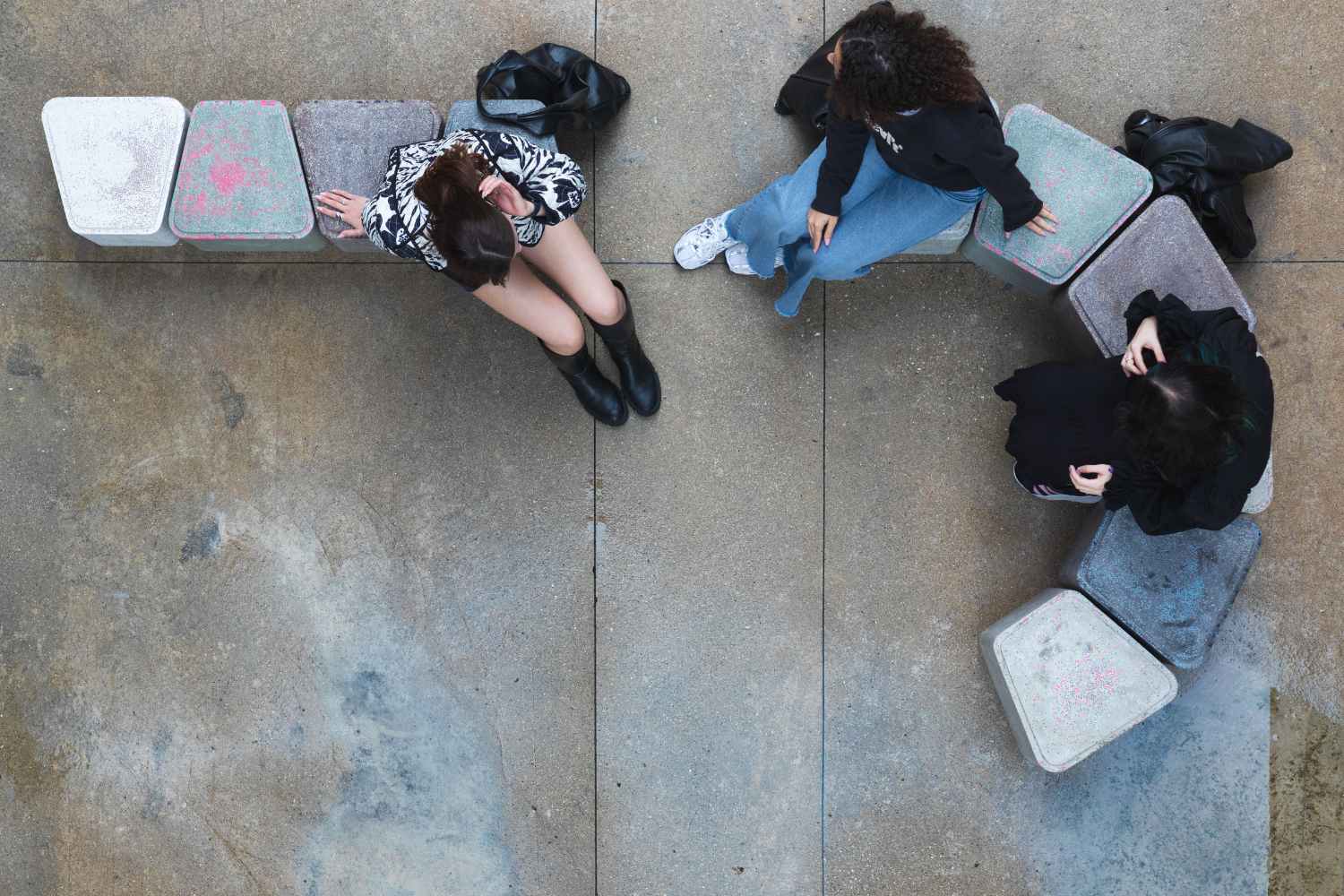
Imagine a bench, a planter or a meeting point in a city square built starting from plastic waste and waste from construction sites. The Waste Design 2.0 project, an initiative financed by the Interreg Italia-Slovenia program that saw the Iuav University of Venice on the front line to give a second life to the waste materials, does this.
The goal was immediately to overcome the simple experimentation to arrive at solutions capable of redesigning public spaces in a sustainable key. The research, in fact, focused on the potential of the plastic waste materials for the creation of urban furniture prototypes, demonstrating how what we consider a problem – the refusal – can become a precious resource.
The Waste-Lab workshop
The engine of the project was the Waste-Lab workshop, an intensive laboratory held at the IUAV in January 2025. For a week, students, teachers, professionals and local companies have combined forces, developing ten innovative concepts and different samples of materials. A model that has put in dialogue the world of academic training with that of industrial production.
From this creative ferment, a winning project emerged: link, conceived by the students Jenny Brunisso, Elettra Campagnaro and Adele Di Stasio. Their idea stood out for the ingenuity and the strong ecological imprint. Link is not a simple object, but a versatile modular system, designed to be assembled in infinite configurations. It can become a seat, a table or a green border, adapting flexiblely to the needs of public spaces and those who live them.
True innovation, however, lies in its material composition. The modules are made with a special cement mixture enriched with waste plastic. This combination not only subtracts waste from landfills, but gives the final product unpublished aesthetic and structural quality, transforming the very concept of recovery material.
To move from the idea to reality, the collaboration with the 70Materia company was fundamental. Together, the university research team and the company faced the challenges of production: from the design of the mold to the experimentation of the most performing mixtures, to the development of the surface finishes. A synergistic work to find the perfect balance between aesthetics, durability and environmental sustainability.
The final result has not remained on paper. Each partner of the project received a set of link modules, which he was able to install and compose freely in his own spaces.
