
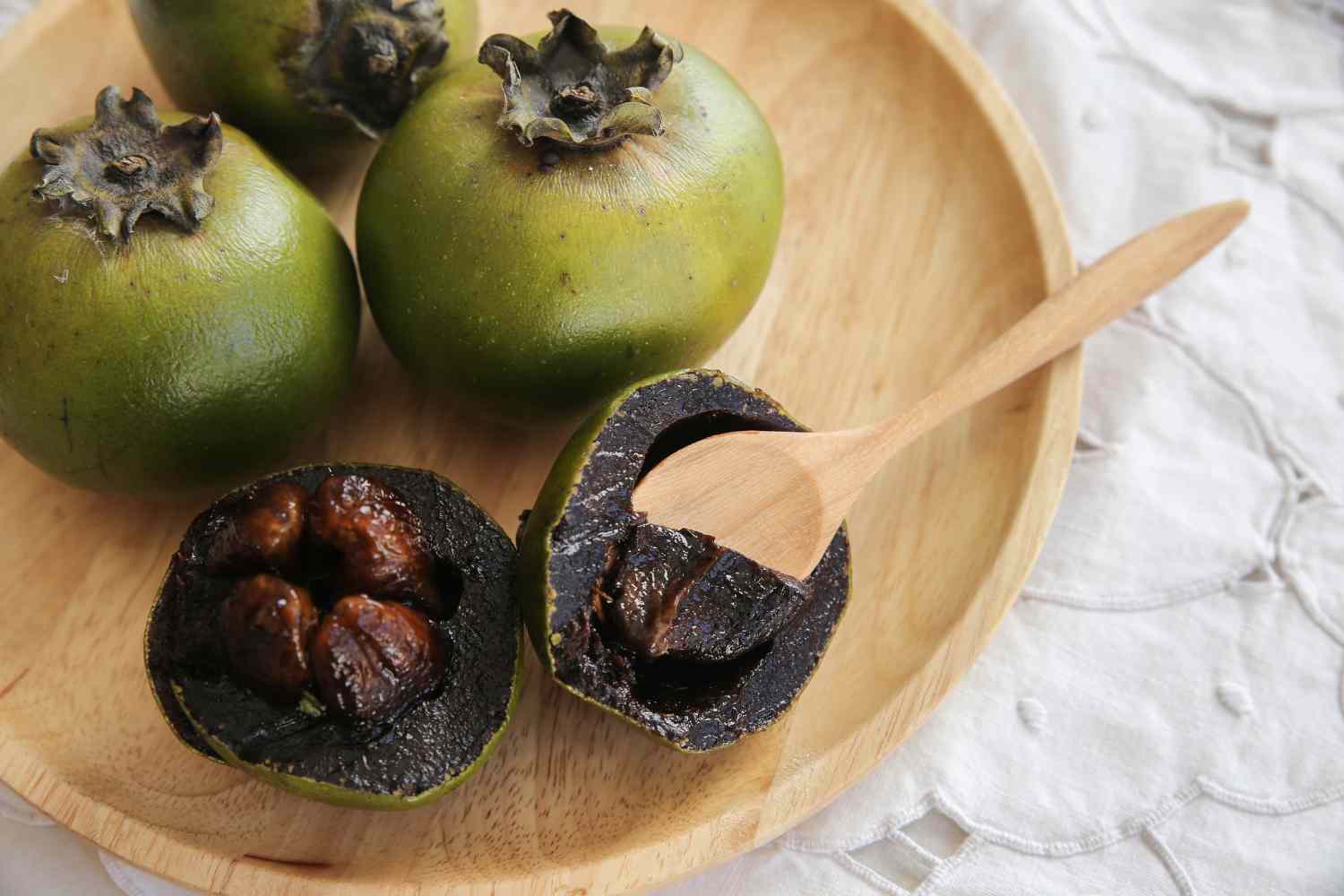
A chocolate-flavored fruit? It’s not a dream and maybe some of you have already tasted it. Black Sapote, or black zapote, chocolate tree or black persimmon: here are some of the names by which Diospiros digyna is called, a plant native to Mexico and Guatemala, which gives life to a truly particular fruit.
In the regions of origin, the fruit is appreciated not only for its taste but also for its symbolism: in some areas of Mexico it is considered a gift of fertility and is offered during end-of-harvest celebrations.
The fruit of the chocolate plant has a dark brown pulp that appears mushy. The sweetish flavor and consistency are reminiscent of chocolate cream. Precisely for this reason its pulp is often transformed into mousse, or spread on bread and biscuits. It also becomes a healthy ingredient to use for sweets and desserts, for the preparation of jams, puddings and smoothies.
The chocolate tree is widespread especially in Central America, Florida, Hawaii and the Philippines. It is an evergreen plant whose fruits ripen between May and June. It is part of the same family as persimmons. Its cultivation, as far as Italy is concerned, is simpler in regions with very hot springs and summers, such as Sicily.
What are the properties of black Zapote
The fruits are round and take on a light green color, which darkens and turns brown once they reach maturity. They are eaten when they are very soft. They are rich in vitamin C – they contain 4 times more than a common orange – and low in fat. They provide important mineral salts such as calcium and phosphorus.
A fruit rich in minerals such as iron, copper, potassium, calcium and phosphorus, vitamins including A, B1, B2, B3 and C, precious amino acids and powerful antioxidants. These elements give Black Zapote a series of health benefits, including supporting digestion thanks to the fibers that improve intestinal mobility, strengthening the immune system thanks to vitamin C, fighting free radicals and its value in a slimming diet thanks to the low amount of calories and fats. Furthermore, the presence of vitamin A helps to improve vision and keep the skin in a healthy and radiant state.
Thanks to its content of antioxidants and vitamins, black zapote pulp is now also used in some natural beauty products for nourishing face masks and scrubs. It is considered a “tropical superfood” in all respects.
Nutritional values of black zapote
Despite its rich and enveloping flavour, Black Sapote surprises with its moderate calorie content, which stands at just 45 calories for every 100 grams of fruit. This makes it a tasty but light choice for those who want to enjoy a chocolate-like flavor without exaggerating in terms of calorie intake.
| Nutritious | Quantity per 100g |
|---|---|
| Calories | 45 kcal |
| Proteins | 0.7g |
| Fats | 0.2g |
| Carbohydrates | 20.9g |
| Fibers | 3.6g |
| Vitamin A | 410 IU |
| Vitamin C | 20.9 mg |
| Soccer | 39 mg |
| Iron | 0.9 mg |
| Potassium | 300 mg |
To make a comparison, Black Sapote has about half the calories of a chocolate spread and many more nutrients for the same weight. Therefore perfect for those who do not want to give up taste but are looking for natural and light alternatives.
How to eat black zapote
The consistency of black zapote can closely resemble that of a persimmon, a fruit whose flavor is not always particularly appreciated. But the taste of the fruit of the chocolate tree is unmistakable. This is why we could define black zapote as the fruit of greedy people. Children might also like it without any problems.
Many use it as a base for smoothie bowls or “fit” desserts, perhaps combining it with bitter cocoa or Greek yogurt. In the cold version, it becomes a natural chocolate-flavoured ice cream that conquers even the most sceptical.
Another positive point? Black zapote fruits are easy to eat. When they are ripe, just divide them in half and remove the pulp with a teaspoon. They contain few seeds, easy to remove. After harvesting, you must consume the fruits within a few days, as they risk rotting easily.
Its delicious flavor pairs harmoniously with a variety of tasty ingredients and accents, including vanilla, rum, cream, coffee and spices such as cinnamon and nutmeg. In Mexico, it is customary to prepare a dessert drink by mixing the pulp of the fruit with wine, cinnamon and sugar, creating an irresistible mix of flavors and aromas.
You can buy the chocolate tree on the internet or in a trusted nursery (which may be able to order it) and try to grow it.
You may also be interested in the properties of other exotic fruits:
