
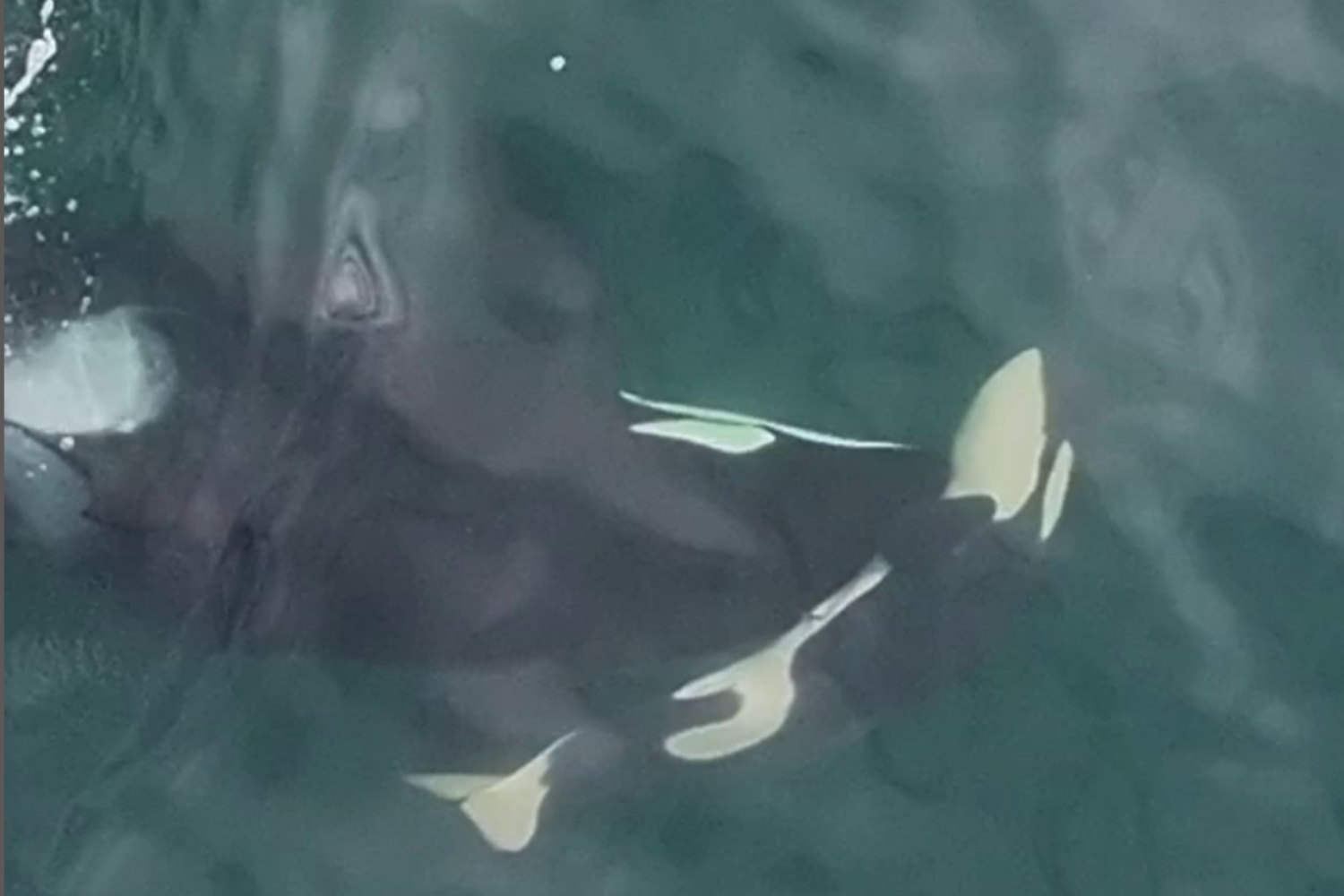
In the Strait of Rosario, in Argentina, the Orca mother J36 was spotted while carrying her dead puppy on the muzzle, still tied by the umbilical cord. This behavior, already observed in 2018 with the Orca Tahlequah who transported its puppy for 17 days, represents a rare but significant manifestation of southern resident orcies, a population in critical danger with only about 70 left individuals.
The puppy transported by J36 era female and, based on the researchers’ estimates, was completed or almost completed. It is not clear whether death has been caused by a premature birth or if the baby died immediately after birth. Fortunately J36 was subsequently sighted in Puget Sound, socializing with other members of the J Pod, especially with the youngest, showing resilience and recovery capacity after traumatic events.
The story was documented by the center of the center for Whale Research (CWR), SR3, Seadoc Society and Whale Museum, who carefully monitored the mother’s health and collected data on the couple’s behavior.
View this post on Instagram
A behavior linked to the culture of the orcies
These recurring episodes show how the orcies develop a real social culture, characterized by rituals, traditions and behaviors handed down among pod members. The orcies communicate through specific dialects, teach hunting techniques to the youngest and participate in affiliation rites, such as mutual cleaning with algae, which resembles a sort of skincare between friends.
The mourning observed in J36 could therefore represent a social ritual, as well as an expression of deep maternal attachment. These behaviors indicate how orche have a complex emotional life, with very strong and well -rooted cultural practices and cultural practices.
View this post on Instagram
A threatened population
The population of southern resident orche has a very low reproductive rate and the losses of the puppies are unfortunately frequent. The death of J36’s little one highlights the difficulties of this species, including the scarcity of prey, especially salmon chinook, pollution and anthropic disorder. Experts underline that the survival of the population depends on the protection of natural resources and the reduction of environmental pressures. Each new NATO represents hope for the future of these orche -hazarding orche.
Don’t you want to lose our news?
You may also be interested in:
