
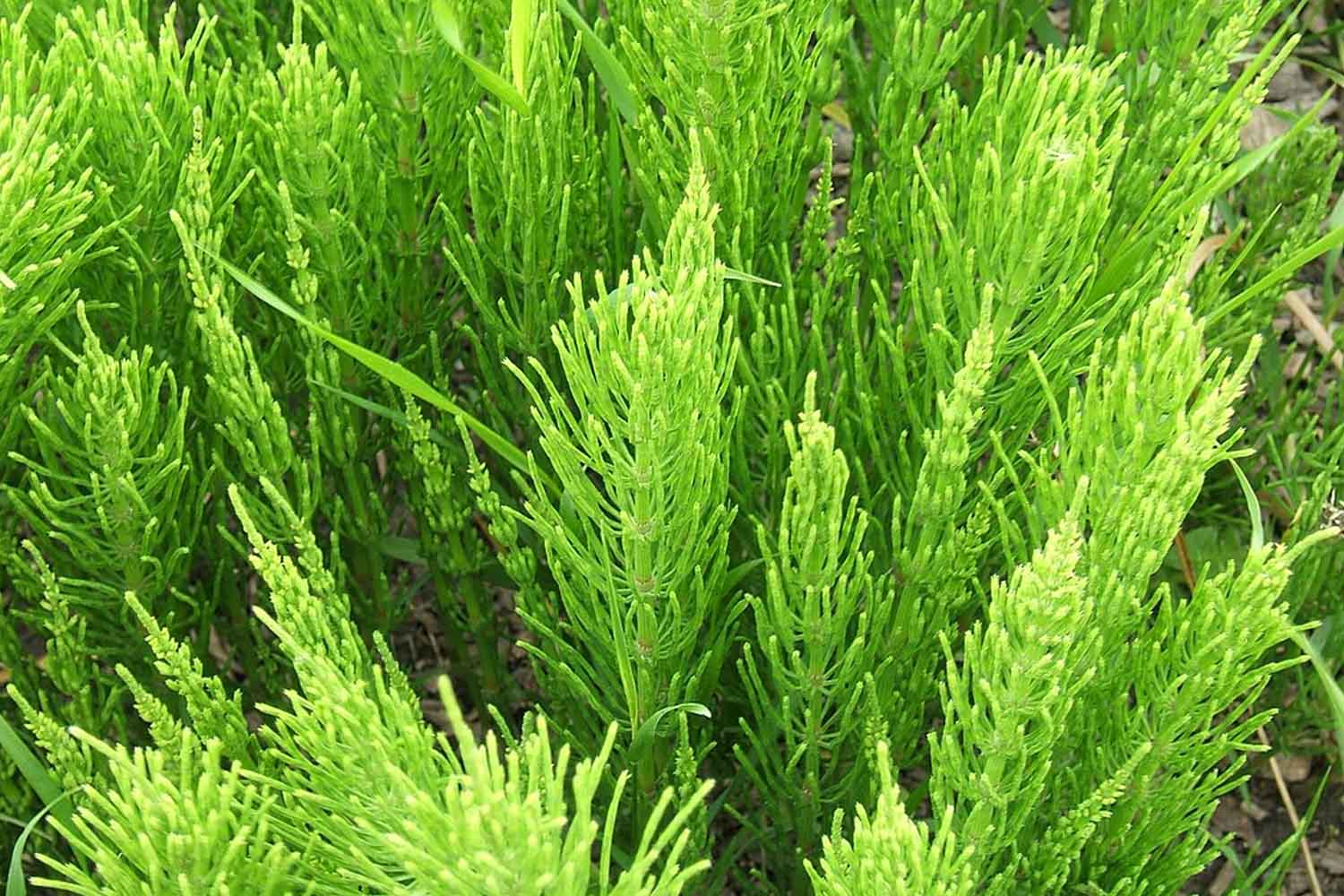
In the heart of the desert of the new Mexico, on the edge of the Rio Grande river, a plant is growing that seems to have come out of a lost world. At first glance it is only a small green grass, thin and elongated, but behind its simple appearance there is a fascinating and unique mechanism in the vegetable kingdom. Is called horsetailbut many know him like “Horse tail”. And it is older than dinosaurs.
Survived beyond 400 million yearsthis small miracle of nature is now at the center of a discovery that could revolutionize the way we study the climate of the past. According to a team of researchers from the University of New Mexico, The horsetail is able to change the composition of the water inside In such a profound way that it looks like it … water from space.
A stem like a laboratory
During the International Geochemistry Conference Goldschmidt, in Prague, the geochimic Zachary Sharp He explained why this plant is so extraordinary. His cable stem and divided into segments It works as a natural distiller: while the water dates back to the plant, it is subjected to continuous processes of evaporation and condensationaltering the Relations between oxygen isotopes.
Isotopes are different versions of the same element, and their behavior changes during evaporation. The horses, however, bring this process to the extreme: the water that reaches the top of the stem has one isotopic composition so “pushed” that it resembles more water found in meteorites than to that normally present on earth.
Sharp describes the plant as:
A perfect cylinder, full of tiny holes, so ingenious that it cannot be replicated even in the laboratory. A masterpiece of natural engineering that science has just started to understand.
The mystery of the isotopes in the deserts solved thanks to a “simple” plant
For years the researchers wondered why The water samples taken from desert plants and animals they never corresponded to the values envisaged in the laboratory models. The proportions between light and heavy isotopes were “busted”, without a clear explanation. But now, thanks to the equity, the puzzle is finally recomposing.
Analyzing the smooth horses (Equisetum Laevigatum)Sharp and his team have discovered that the isotopic transformation takes place naturally and continuously throughout the stem of the plant. This process had never been considered in the scientific models used so far. Once updated the theory with these new data, The anomalies in desert champions have become perfectly understandable.
An interesting detail: The most intense isotopic variations are recorded right in the highest part of the plantwhere the water has undergone the most evaporation cycles. A discovery that changes the cards on the table also for the study of the most extreme ecosystems of our planet.
Phytolitis
But the most fascinating part of the research comes now. Inside the horses are tiny silica grains called phytolitis. These microscopic vegetable fragments are preserved even after millions of years and, Based on the composition of the water at the time of their formation, they maintain an isotopic “signature” of the past climate.
In practice, the phytolites are Natural Air Waming recordersand thanks to them we can understand how the climate was also at the time of dinosaurs. In the past, the horses were enormous: they could even reach 30 meters in heightand probably produced isotopic effects even more marked than those observed today. Their fossil phytolites could contain precious data on the amount of humidity, on temperatures and evaporation of entire geological eras.
Zachary Sharp is convinced of it: These plants can become real “hygrometers of the past”tools with which to carefully reconstruct the climate change of millions of years ago. An idea that could open new roads also to predict how our climate will change in the future.
