
Which fruit contains less pesticides than everyone? The answer will surprise you: his special peel protects him naturally, making him the champion of the “Clean Fifteen” ranking of the AWG
Every year thousands of fruit and vegetable samples are analyzed to evaluate the presence of pesticide residueschemicals used in agriculture to combat insects and diseases. Their presence is a problem for several reasons: not only do they pollute soils, waters and damage whole ecosystems – putting at risk of pollinating insects and biodiversity – but also end up on our plate, exposing us every day to potentially harmful chemicals.
The pesticides do not only contaminate apples, spinach, strawberries and in general fruit and vegetables, as one might think, but also accumulate in meat, fish, milk and other foods of animal origin. Where do they come from? There are several ways: through contaminated feed, drinking water used in breeding, the use of disinfectants in the production premises or even through environmental contaminations due to the so -called “old pesticides”, prohibited for years but still present in the soil and in the air due to their persistence and difficult degradability. We talked about it yesterday in an article.
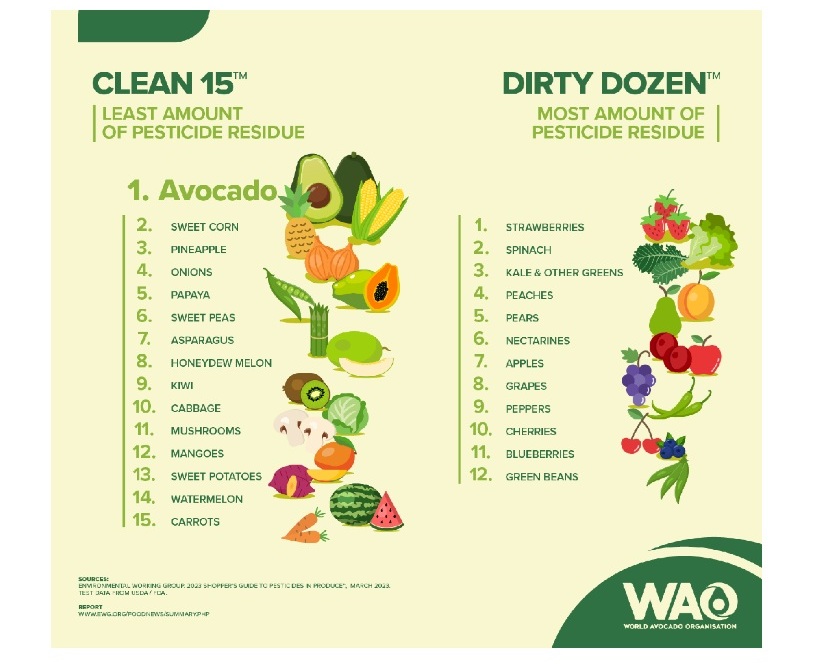
For years, some international organizations have been posting rankings of more and less contaminated foods. One of the best known is that ofEWG that distinguishes between “Dirty Dozen” and “Clean Fifteen”that is, among the products with multiple residues of pesticides and those that contain less.
And do you know who is at the top of the “clean” food ranking? According to the last Shopper’s Guide to Pesticides in Produce ™, Avocado is the fruit that presents the lower level of detectable pesticides: Less than 2% of the samples analyzed shows residues, against 90% of foods such as strawberries, apples, cherries, nut peach and spinach that contain at least two.
Because avocado is generally devoid of pesticides
His secret is all in the peel, thick and leathery, which acts like a natural barrier against parasites. This drastically reduces the need to use insecticides and allows cultivations more respectful of human and environmental health, even if not bio not certified.
In addition, avocado is increasingly at the center of sustainable agricultural practices: some companies adopt drop irrigation, sensors and artificial intelligence to save water and resort to quality and biopesthetic fertilizers that do not leave harmful residues.
To underline the importance of the most sustainable agricultural practices related to the cultivation of the avocado was also the World Avocado Organization, That on the occasion of the International Day of Biodiversity recalled how, if cultivated responsibly, this fruit can contribute to the protection of biodiversity.
Choosing to eat avocado, therefore, perhaps produced responsibly (preferably in Italy) is a small gesture that can have a great impact.
