
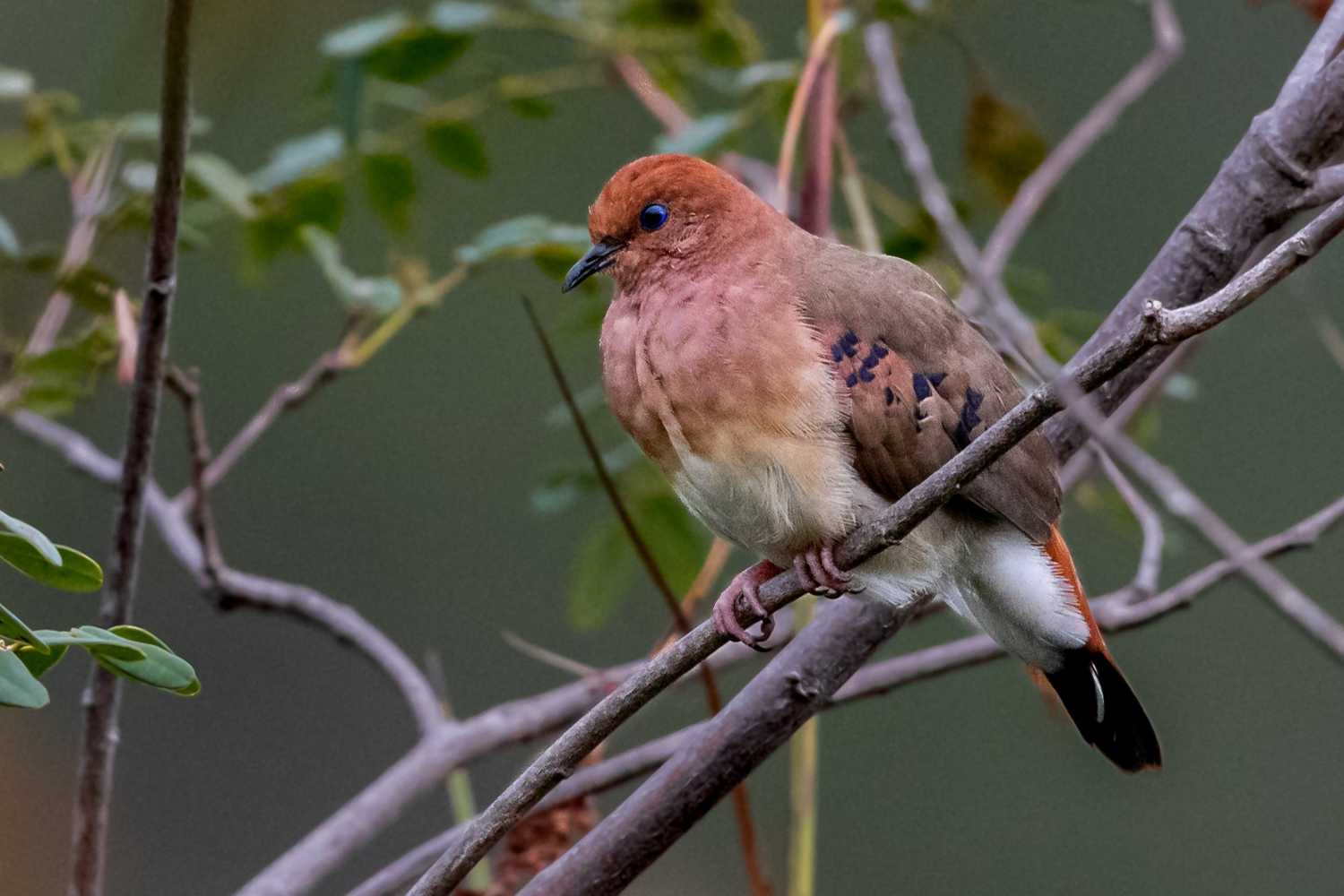
One of the Species of birds more at risk of extinction in the worldthe Paloma Ojiazul (Colomba with blue eyes), she returned to make people talk about itself thanks to an event as rare as it is important: The birth of three new specimens Although, unfortunately, in captivity. The news comes from Parque das Aves in Brazilwhere a team of experts successfully incubated some eggs taken from nature.
This species was considered disappeared in nature for over seven decadesup to the surprising Finding in 2015. From that moment, several international projects have activated themselves to save it, given that, according to official data, Today only 11 adult individuals remain in the wild.
At the beginning of 2025, a group made up of Brazilian and international scientists started a delicate assisted reproduction programcollecting and incubating some eggs in controlled conditions. The result? Three little ones born in the Sanctuary of Foz Do Iguaçu. According to the technical director of the Center, Each new birth represents a concrete hope To avoid the definitive extinction of the species.
Objective: a self -sufficient population
The long -term strategy involves the creation of a Stable and genetically healthy population populationto be used in the future for the repopulation of wild areas. In other words, these specimens will become the future parents of new generations who could one day return to fly free in their natural habitat.
The main threat to Paloma Ojiazul is The destruction of the habitatparticularly in the bioma of Brazilian Cerradodue to agricultural expansion and industrial plantations. Precisely for this reason, one of the fundamental steps is the protection of the ecosystem in which it lives.
To reduce stress on the last remaining wild colonies, the project Save Brasil has decided to prohibit human visits to the Botulim Reservethus protecting the tranquility of the specimens still present in nature.
Animals born in captivity
However, we cannot fail to reflection: the birth in captivity of the three specimens of Paloma Ojiazul It is undoubtedly good news from the conservation point of view, but also poses ethical and biological questions. On the one hand, it is clear that without human intervention this species would be condemned to the information. With just 11 adult specimens in naturethe environment no longer offers minimal conditions for autonomous reproduction. In this sense, the captivity breeding represents The only possible short -term strategy to guarantee their survival.
However, we cannot ignore the fact that the birth in captivity, however positive, is also an admission of failure of the management of natural ecosystems. It is, in essence, an emergency solution that arises from progressive destruction of the original habitatcaused by human activities such as intensive agriculture and deforestation.
Also breeding a species outside its ecological context involves Long -term risks: Populations in captivity can lose fundamental natural behaviors, such as the ability to feed independently, to escape from predators or to build nests. Genetic variability is also reduced, with potentially negative effects on the health of future generations.
It is therefore important to underline that Birth in captivity is not a definitive solutionbut only A means to earn time. If you don’t act in parallel for protect and restore natural environmentsevery effort risks being in vain. Saving a species does not just mean keeping DNA, but return it the possibility of living in its environment, free and autonomous.
