
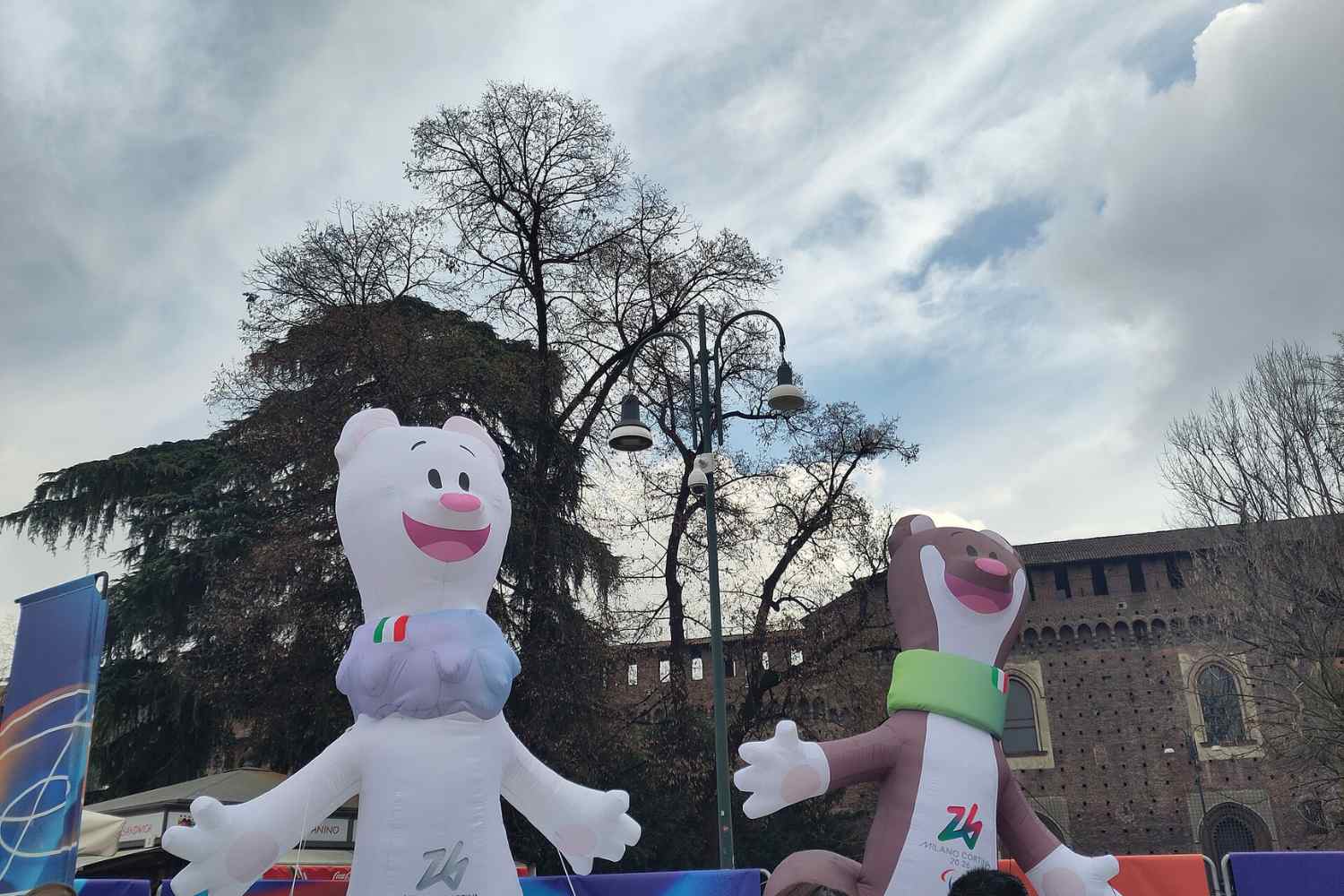
To take home a plush toy of Tina or Milo, the simplest way seems to be to get on the podium: the mascots of the Milan Cortina 2026 Winter Olympics are given to the athletes during the awards ceremonies, but in the official stores – physical and digital – they have practically disappeared. A paradox that alone tells how these two stoats have become objects of desire.
View this post on Instagram
On the racing fields Tina and Milo are omnipresent, surrounded by fans queuing up for photos and videos. But just get close to the points of sale in the sports halls and not only to come to terms with reality: empty shelves, permanently sold out sites. The official presentations held in Bormio and Cortina by Deborah Compagnoni and Giorgio Rocca also ended with a full house.
Who were they made by?
The two mascots, created by the Italian brand Trudi – known for quality craftsmanship and attention to detail – have been able to win over audiences of all ages. Tina, whose name recalls Cortina d’Ampezzo, is an ermine with a light coat and represents the Olympic Games. Milo, who carries Milan within himself, is instead the symbol of the Paralympics: born without a paw, he learned to get by using his tail, becoming an icon of resilience and inclusion. They are brother and sister, different but complementary.
The choice of the ermine is not random: it is an animal with extraordinary agility, capable of changing the color of its coat as the seasons change, a natural symbol of adaptation. The design of the two characters was studied down to the smallest detail – clean lines, colors that evoke snow and warm earth tones, proportions designed to make them empathetic and modern – to translate the Olympic values of tenacity, respect, inclusion and dream into visual form.
Furthermore, mascots have been an integral part of the Games since 1968, with the task of making the Olympic spirit accessible to all generations and of telling the story of the culture of the host territories. Tina and Milo seem to have hit the nail on the head – perhaps too much so, given that the 13cm models for 15 euros disappear with every restock and even the larger formats are now almost impossible to find.
The phenomenon has crossed national borders: the New York Times dedicated an article with an ironic title to the impossibility of finding mascots, comparing the difficulty of procuring them to that of winning a medal, and even citing rumors of a nascent black market.
