
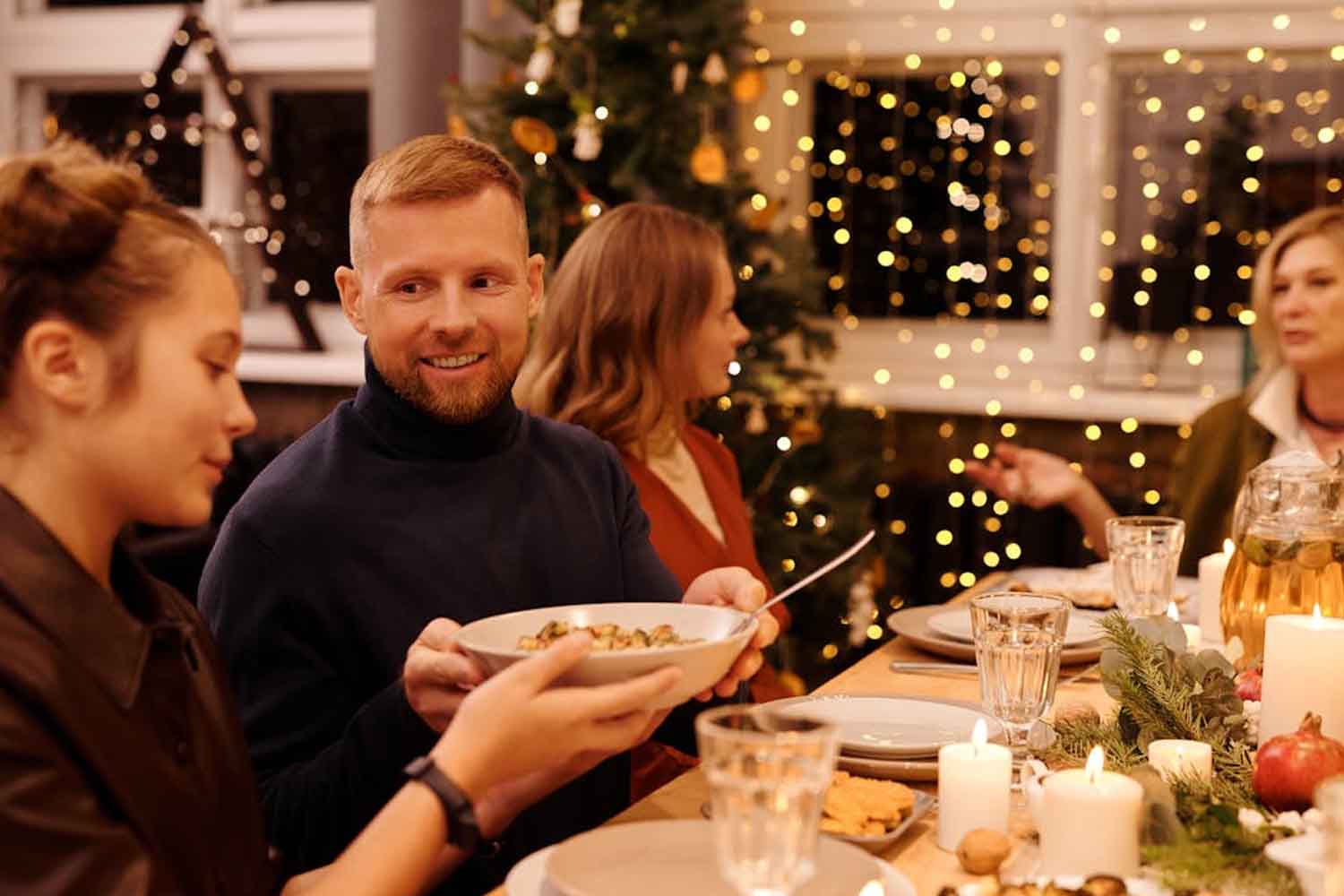
Christmas lunch is an undeclared social experiment. All sitting at the same table, with a shared past, very high expectations and a quantity of unsaid things that could fill a cupboard. The illusion is that the right food is enough to keep everything together. The reality is that a badly placed sentence is enough to see the atmosphere change consistency, like a mayonnaise that goes crazy without warning.
It’s not bad luck. And not even “we fell for it again”. It’s just that at Christmas family dynamics tighten, overlap and lose elasticity. And what remains manageable during the year suddenly becomes cumbersome at the table. The interesting thing is that social research also confirms this, without taking anything away from the daily experiences of those who actually sit at that table.
Because at Christmas one sentence is enough to upset the balance
The sociologist Jill Suitor explains it well, having studied family conflicts within over 550 multigenerational families for twenty years. His work shows something very simple: parties don’t create problems, they amplify them.
At Christmas we bring everything to the table. The expectations of harmony, the old dynamics that have never been clarified, the roles that we have not chosen but that are assigned to us automatically, as if we were characters in a sitcom that has been running for thirty years. Type Gilmore Girlsbut without brilliant dialogue and with more wine.
Politics, social issues and religion: why they are not “just opinions”
According to the study, conflicts explode more easily when they touch on deep values, such as politics and religion. Not because anyone wants to argue, but because those ideas are part of the identity. Questioning them, even lightly, is equivalent to saying: “what you are is not good”.
And if you add the stress of the holidays, the accumulated tiredness and that strange pressure of “we have to feel good”, the result is predictable. It’s not dialogue. It’s a verbal massacre ready to explode.
In-laws, brothers-in-law and partners
Another very delicate point concerns relationships with children’s partners. Research shows that conflicts with in-laws and relatives are among the main causes of family estrangement. It doesn’t all happen at once. It happens slowly. A joke here, a criticism there, a distance that grows without making any noise.
Christmas lunch is the ideal moment for these tensions to emerge. Not with big fights, but with that creeping feeling of unease that makes you chew more slowly and check your phone under the table.
Questions about couples, children and life choices
Then there are the unsolicited questions, the ones that arrive punctually like panettone. “When will you settle down?”, “And the children?”, “But isn’t it late now?”.
At Christmas these questions hurt more because they are asked in front of everyone, as if life were a balance sheet to be presented. Research tells us that people tend to compare and feel judged, even when the speaker thinks they’re just curious. The result is embarrassment, defensiveness, closure. Everything except conviviality.
Money, work and economic comparisons
Another topic to handle with extreme caution: money and work. Salaries, professional successes, economic difficulties, who has made a career and who has not. At Christmas these themes automatically become comparisons, even when no one explains them.
It’s not envy, it’s social comparison. It just happens. And it often leaves a feeling of discomfort that stays with you for the entire lunch.
The body, food and observations disguised as affection
Commenting on how much you eat, how much you don’t eat, how you have changed, is one of the most underestimated and harmful topics. At Christmas, food is everywhere and every observation about the body or food choices is amplified. Even a phrase said “in jest” can affect you much more than you imagine.
When there is also an absence at the table
Then there is an aspect that weighs more than people say: mourning. The first holidays after the loss of a parent or central figure are often the most difficult. According to Suitor, perceptions of favoritism and old family injustices intensify in these moments.
Not because they arise from nothing, but because absence makes everything more fragile. As if the pin that held together already unstable balances was missing. And at Christmas, this fragility is fully felt.
Gifts, comparisons and that silent competition that no one allows
Finally, the gifts. Which are never just gifts. They are symbols. Attentions measured, compared, interpreted. Research shows that many siblings compare themselves to each other, trying to figure out who the “favorite” is. And the curious thing is that they often make mistakes, even when parents do everything they can to avoid creating differences.
But emotions don’t reason from data. They work more like certain episodes of Friends: You know Ross is exaggerating, but you totally understand why he does it.
In the end, avoiding certain topics at Christmas lunch doesn’t mean pretending that everything is fine. It means recognizing that not every moment is right for every conversation. Sometimes protecting the atmosphere is a form of relational intelligence. And also a way to get to the dessert without that feeling of knots in the stomach that has nothing to do with the filling.
Okay, but how do you get out alive?
Ok, we have clarified what topics to avoid at Christmas lunch. Now the real question is another, much more concrete one: what do you do when the same thing inevitably turns up?
The solution, in reality, is less tiring than it seems: don’t fight the topic, move it, with the same naturalness with which you pass the bread. When the wrong conversation starts at the table, there is no need to correct, explain or demonstrate anything (Jill Suitor’s research shows that this is precisely where conflicts harden), just bring everything back to the concrete, to something that is happening in that moment: food, a practical detail, a neutral memory.
It also works to respond without opening up too much, with short and kind sentences that don’t invite in-depth analysis, and above all to accept silence when it comes, without filling it out of anxiety. Christmas is not the place for great clarifications: it is more like a precarious balance that is based on small adjustments. And sometimes the real skill is not saying the right thing, but avoiding turning a sentence into a human case before dessert.
You might also be interested in:
