
A sky not to be missed — at least in streaming
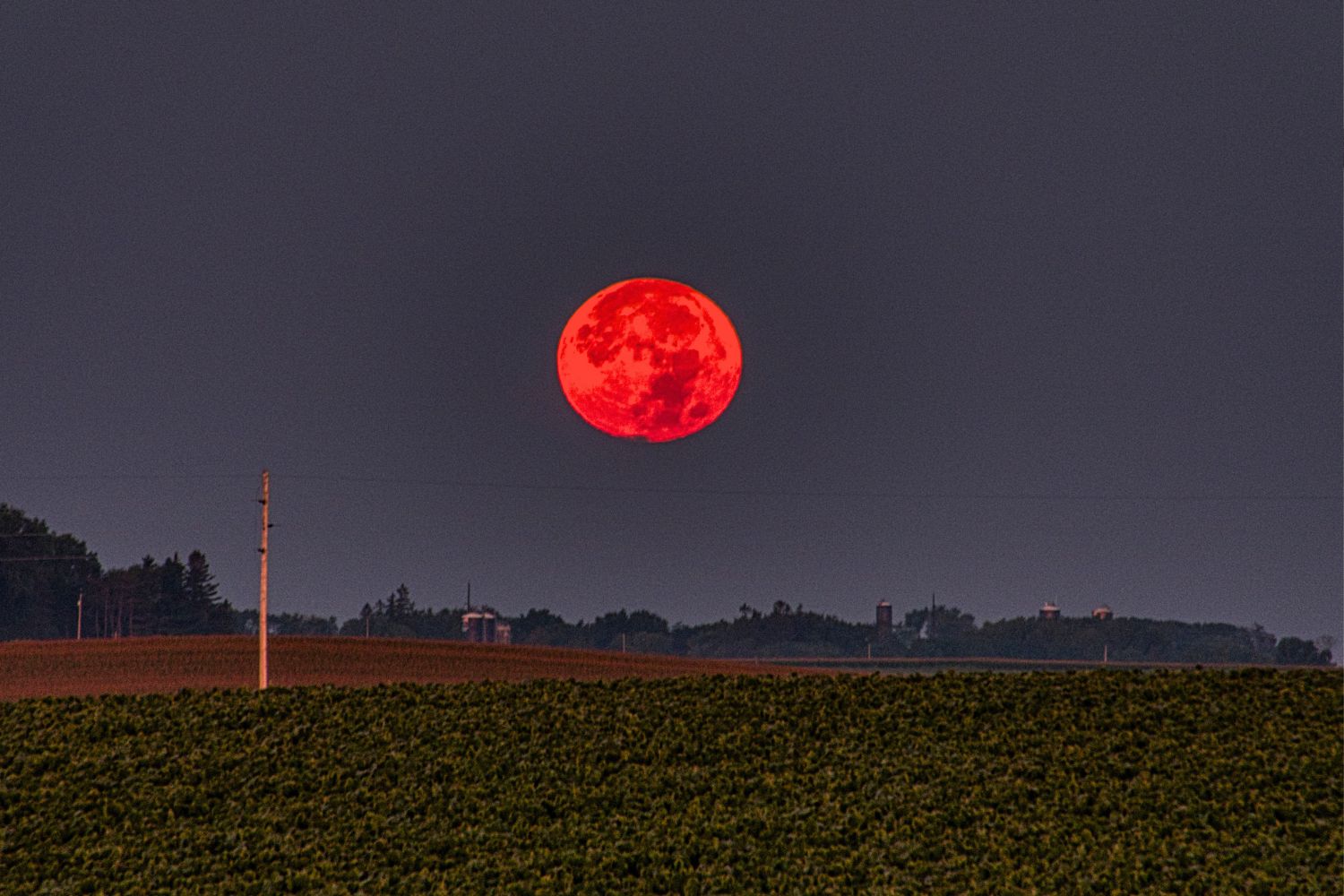
This morning the sky offers one of the most fascinating shows that nature can stage: a total lunar eclipse. The full Moon will enter completely into the Earth’s shadow and will transform into a red-orange disk suspended in the darkness, in what is commonly called blood moon.
The totality phase will last approximately 58 minutesbut the entire phenomenon — from the initial penumbral phases until the return to normality — will extend for more than five hours. The moment of maximum eclipse is expected at 12.33pm Italian time (11:33 UTC).
Visible from Italy? Unfortunately not
There is bad news for Italian enthusiasts: at that time the Moon will already be below the horizon, therefore, neither from the North nor from the South. The visibility of a lunar eclipse always depends on the geographical position and the local time – this time it doesn’t affect us.
The most favored areas will be East Asia, Australia, the Pacific Basin and the Americaswhere the event will be visible at night or in the early hours of the morning depending on the time zone.
Full times (in UTC)
| Phase | UTC time | Italy time |
|---|---|---|
| Beginning of twilight | 09:44 | 10.44am |
| Partial eclipse begins | 10.50am | 11.50am |
| Beginning of totality | 12.04 | 1.04pm |
| Maximum of the eclipse | 12.33pm | 1.33pm |
| End of totality | 1pm | 2.02pm |
| End of partial eclipse | 2.17pm | 3.17pm |
| End of twilight | 3.23pm | 4.23pm |
How to follow it live
Despite the impossibility of observing it live, it will be possible to follow the eclipse in real time thanks to the Virtual Telescope Projectwhich will activate live streaming starting from 09:30 Italian (08:30 UTC). The broadcast, available on the project’s official YouTube channel, will be commented by the astrophysicist Gianluca Masiscientific director of the Virtual Telescope and curator of the Planetarium of Rome.
Why does the Moon turn red?
The mechanism is as fascinating as it is simple. During a total eclipse, the Sun’s light is not completely blocked by the Earth: some of it filters through the Earth’s atmosphere. The air scatters the shorter wavelengths — the blue and violet tones — while allowing the longer ones, the reds and oranges. This residual light reaches the surface of the Moon and illuminates it with that characteristic warm color. It is exactly the same optical phenomenon as sunsets, simply reprojected at a lunar distance.
For those outside the visibility zones, streaming remains the best way not to miss one of this year’s most anticipated astronomical events.
