
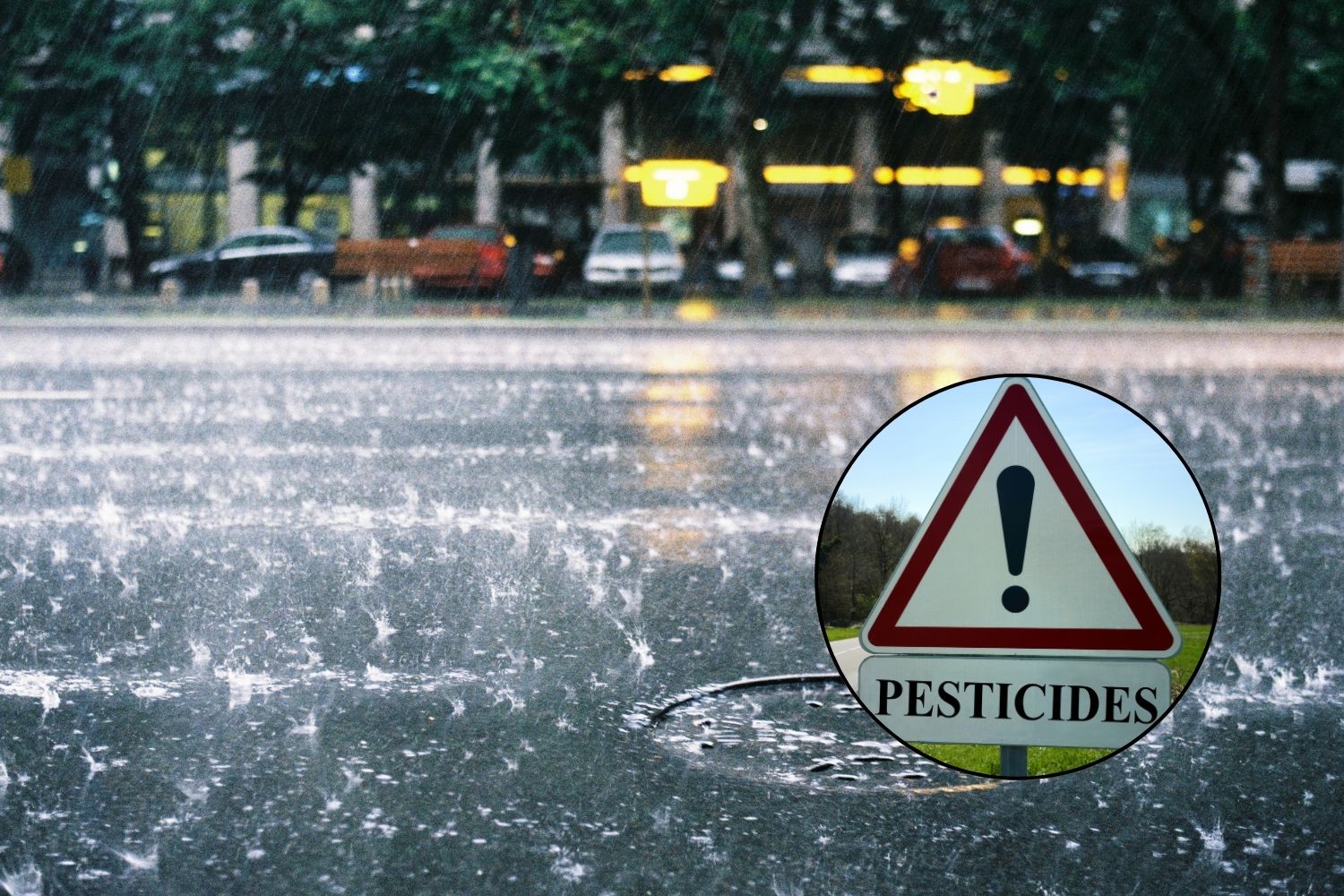
We knew they were in landnow I’m in therainwater. THE neonicotinoids, pesticides Used in agriculture to reduce insect populations to zero, they were detected for the first time in rainwater in Japan.
Used largely for the production of rice and for the protection of the pine forests, insecticides spread mainly through the outflow from agricultural land. But a scientific team led by Masumi Yamamuro of the University of Tokyo has just shown, in a new relationship, that these biocides are also found in rainwater.
In Japan, the neonicotinoids were introduced en masse in the 90s and now, to reach this conclusion, scientists have taken and analyzed rainwater samples from the cities of Tsukuba And Kashiwaboth north-east of Tokyo.
The study
The analyzes were carried out between April 2023 and September 2024 and to date reveal that the 91% of the samples contained several insecticides of the Neononicinoid familywith a maximum concentration of 1.72 NG/L on a sample dating back to August 2024.
THE’acetamiride It is the main insecticide since it was identified in 82%of the samples, followed by ThiaCloprid (73%) and Dinotefran (45%), two other insecticides of the Neononicinoid family.
This research is the first report on the presence of neonicotinoids in rainfall, suggesting that neonicotineids, as low volatility material, can still be dispersed in the environment through rainfall, warn the researchers.
In 2019, another study, always conducted by researchers from the University of Tokyo, detailed how the large-scale spraying of neonicotinoids contributed to the destruction of different species of fish, crustaceans and Zooplacton in Lake Shinji, in the south-west of Japan.
Starting in 1993, several rice growers have started to spread imidacloprid in their fields. According to the study, the introduction of this insecticide in areas geographically close to the lake coincided with a decrease in 83% of the average biomass of the Zooplankton.
What are the effects on human health?
While the harmful effect of neonicotinoids on insects and several other animal species is increasingly documented, there are still doubts about human health.
Since the neonicotinoids affect the nervous system, it is thought that exposure to these substances can be associated with neurological disorders. But there is still to study and deepen, for now it is enough for us to know that they have a devastating effect on pollinators.
