
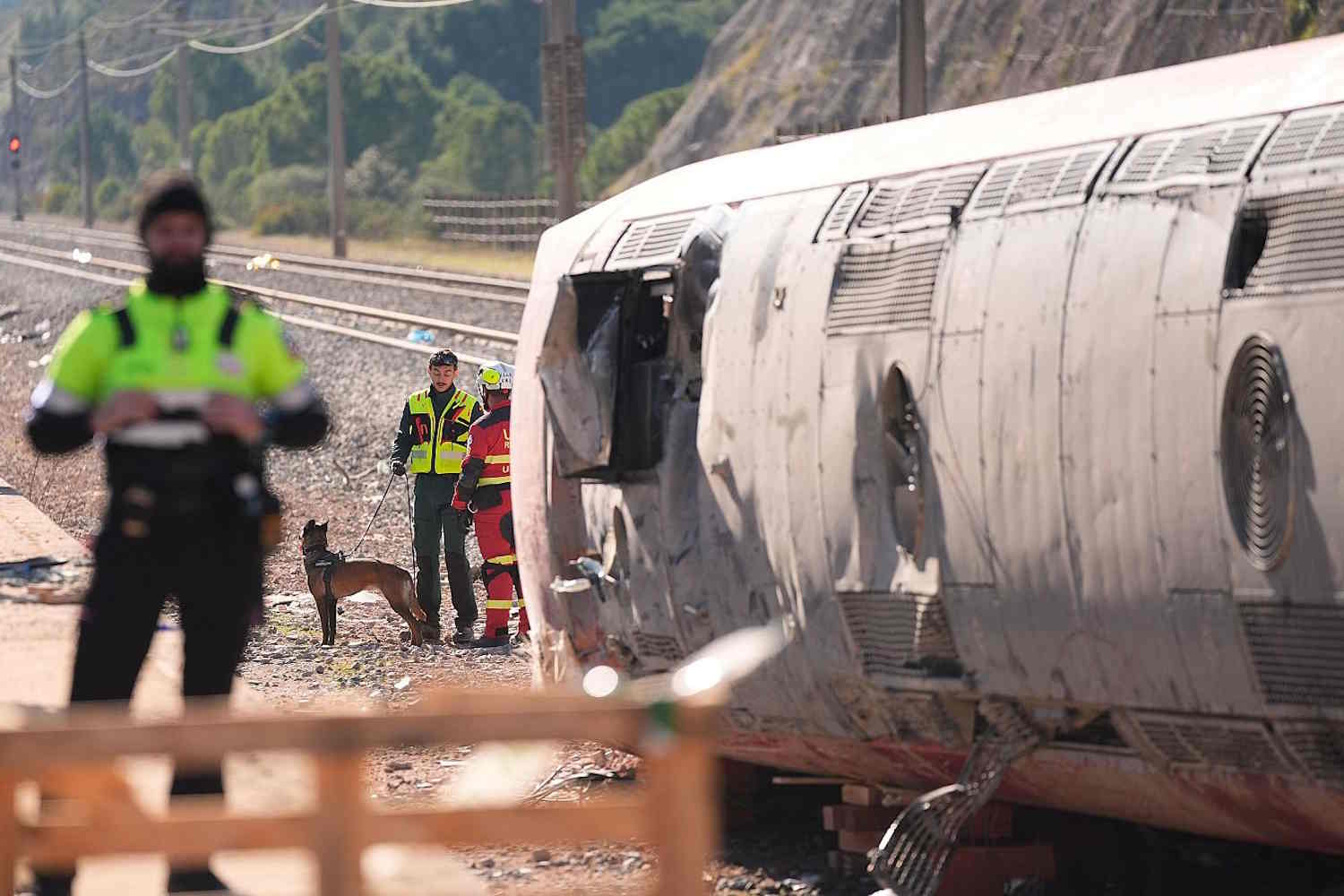
Spain continues to deal with a disturbing sequence of train accidents. Also today, Thursday 22 January, a regional train collided with a crane along the Cartagena–Los Nietos local line, in the Murcia region. It is the fourth accident in less than a week, after the tragedy on Sunday in Andalusia and the two derailments that occurred on Tuesday in Catalonia. A budget that raises very serious questions about the safety of the railway network and the maintenance of infrastructure.
@greenme_it More blood on the tracks. Spain has been hit by a new serious train accident just two days after the tragedy in Andalusia. Yesterday evening a regional train of the Rodalies network derailed in the province of Barcelona. The toll is heavy: a train driver dead and at least 37 passengers injured, 4 of whom are in critical condition. According to initial reconstructions, the convoy crashed into a retaining wall that collapsed onto the tracks. The collapse would have directly hit the first carriage, where most of the injured passengers were travelling. . . . greenmeitalia Catalonia Spain AccidentRailway derailment
♬ original sound – greenMe –
According to initial information released by the public broadcaster TVE, the Feve regional transport convoy hit a crane in the town of Alumbres. The impact caused around six injuries, fortunately only slightly, among the passengers. At the moment the precise number of people involved has not yet been made known, while the emergency services intervened quickly to provide aid and make the area safe.
This new episode arrives in an already dramatic context. In fact, the count of victims of the train accident which occurred on Sunday 18 January in Andalusia, which caused at least 43 deaths and dozens of injuries, has not yet been concluded. A tragedy that profoundly shook public opinion and had already turned the spotlight on the safety conditions of Spanish railway lines.
As if that wasn’t enough, two more serious accidents occurred in Catalonia on Tuesday 20 January. The first was caused by the collapse of some rocks on the tracks following bad weather, which caused the derailment of a train. A few hours later, a second train went off the tracks due to the collapse of a retaining wall along the line. In these two incidents, dozens were injured and one of the train drivers involved lost his life.
A chain of events that cannot be dismissed as a simple coincidence. The close frequency of accidents highlights a structural problem: the fragility of railway infrastructures and the lack of effective maintenance and prevention interventions.
It is no coincidence that already yesterday the Español de Maquinistas Ferroviarios (Semaf) union had announced the call for a general strike, defining the situation of constant deterioration of the Spanish railways as “inadmissible”.
In a very harsh statement, the union called for “the safety and reliability of the railway network” to be guaranteed and warned that it would demand “criminal responsibilities for the people responsible for ensuring safety on the railway networks and infrastructures”.
Semaf also asked that the Rodalies regional transport service in Catalonia not be reactivated without “sufficient guarantees for circulation”, underlining how the protection of passengers and workers must come before any need for rapid restoration of the service.
What is emerging in recent days is a worrying picture: a railway network under pressure, vulnerable infrastructures and a management that seems incapable of preventing now evident risks. Rail transport is considered one of the most sustainable and safe means of transport, also fundamental in the ecological transition to reduce the use of cars and planes. But without serious investments in maintenance, control and safety, this trust risks collapsing.
After four accidents in a few days, there is probably no time to waste.
