
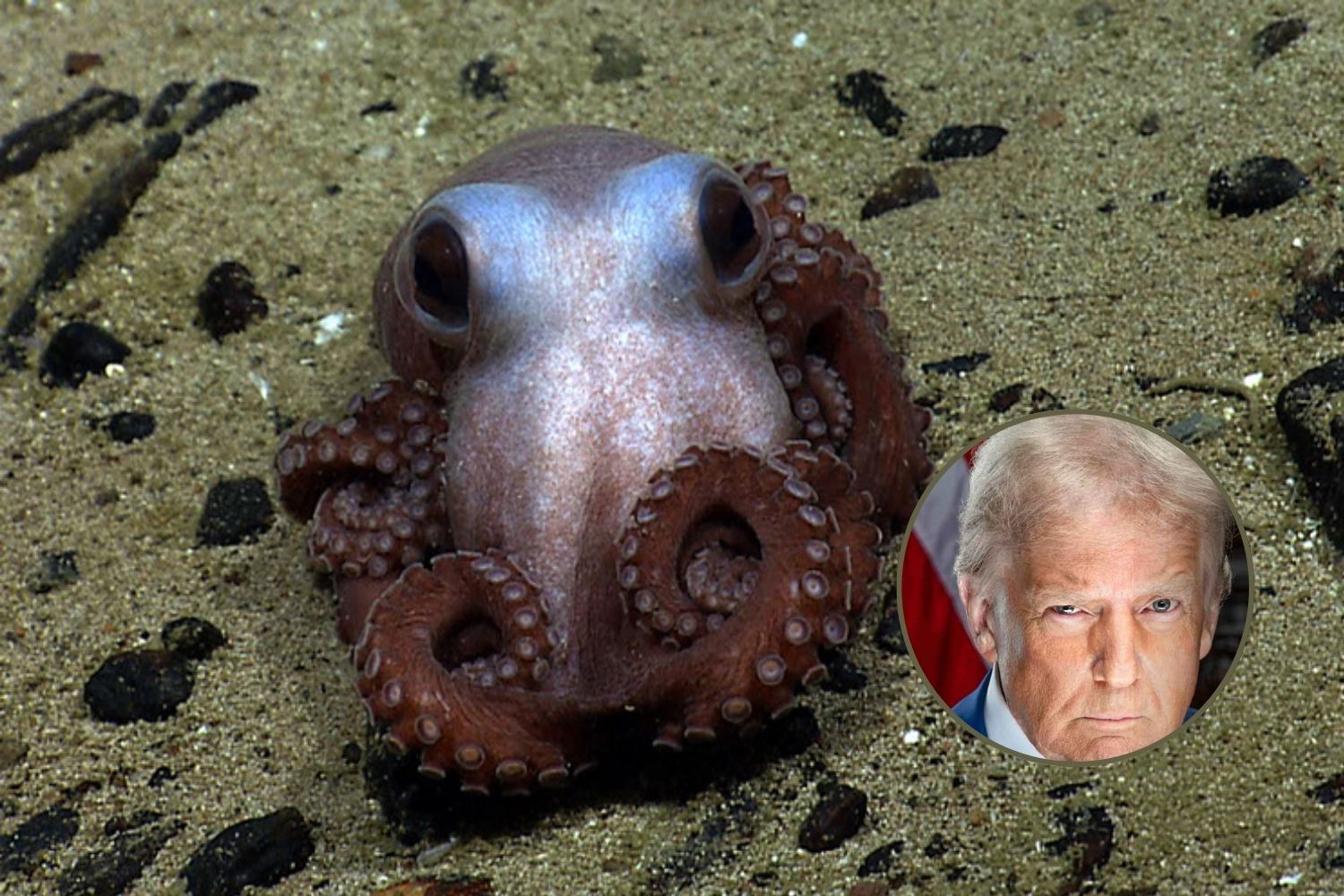
The Northeast Canyons and Seamounts Marine National Monumentan area of 12,725 square kilometers just over 200 km southeast of Cape Cod, United States, is home to corals and sea sponges, whale sharks, and a variety of marine mammals. A very precious treasure chest, designated as a protected area in 2016 by then President Barack Obama.
But Donald Trump doesn’t go down and dismantle everything. The president has in fact issued a statement in recent days to open that protected marine area to commercial fishing, in his latest move to deregulate the country’s waters and fishing (Trump had already attempted to remove the ban in his first term, but Joe Biden had reinstated it).
According to the tycoon, the reopening will not endanger marine species and will actually help the fishing sector. But conservationists have denounced it, saying the area is a key sanctuary for marine life.
This Monument supports extraordinary species from the sea floor to the sea surface, and we see evidence of this in every aerial survey,” said Jessica Redfern, associate vice president of the New England Aquarium, a Boston-based nonprofit. Removing protections for the Northeast Canyons and Seamounts Marine National Monument puts these species at risk.
It goes without saying, in fact, that For many scientists and environmentalists, the decision reopens crucial questions about the conservation of deep ecosystems, among the slowest to regenerate. Overfishing remains a major threat to vulnerable ocean species, along with warming waters and ocean acidification.
The reopening of the Northeast Canyons and Seamounts thus becomes a symbol of a broader fracture: on the one hand Trump’s out-of-control push towards economic development and deregulation, on the other the need to protect biodiversity and climate in a context of global environmental crisis.
The US decision could have effects that reach beyond the Atlantic. Policies on marine protected areas are in fact considered one of the key tools to achieve the international objectives of protecting 30% of the oceans by 2030.
For this reason, the reopening of such an important ocean sanctuary to fishing is not just a national issue: it represents a political signal destined to influence the global debate on the use of marine resources, biodiversity conservation and ecological transition. And, once again, it asks the same basic question: how much space are we willing to leave to nature in an increasingly exploited planet?
