
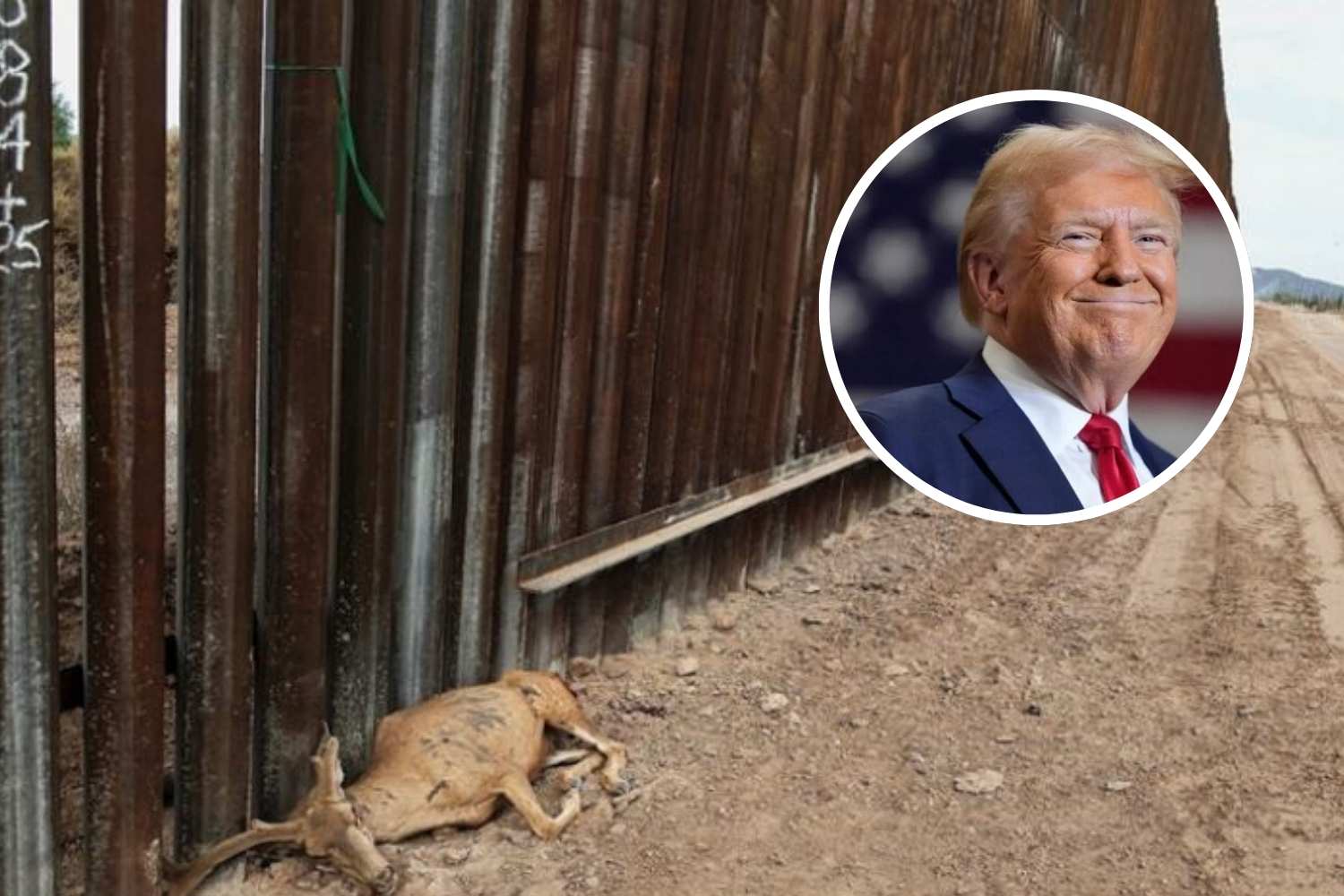
Donald Trump is once again pushing for a wall on the border with Mexico. But this time the project risks hitting one of the last and most important wildlife corridors remaining in the United States.
In fact, it involves the construction of approximately 40 kilometers of barrier along a remote area of southern Arizona, which – according to a recent report by the Center for Biological Diversity – would block a crucial area for wildlife migration.
A territory made up of rolling prairies and mountain ranges that today allows dozens of species to move freely between the United States and Mexico.
The images collected by the camera traps speak for themselves: at least 20 animal species regularly cross this portion of the border, including black bears, pumas and mule deer. A delicate balance that would be broken by a wall almost nine meters high, destined to interrupt vital movements for the survival of the animals.
The area affected by the project includes the San Rafael Valley and the Patagonia Mountains and Huachuca Mountains. Here there are protected habitats of enormous ecological value, also fundamental for species in danger of extinction. Among these is the jaguar: in the last ten years at least three specimens have been documented, a very rare figure for the United States. In total, at least 16 threatened or at risk species live in the area.
According to the report’s authors, a barrier at this point would not only prevent animal movement, but would destroy protected habitats and irreversibly compromise ecological connections between North and South America. Damage that, once done, would no longer be recoverable.
The risk is real even in the long term. As ecologist Gerardo Ceballos, a researcher at the National Autonomous University of Mexico, warns, if this wall and others like it are built, the presence of the jaguar in the United States could disappear completely within a few years. What makes the picture even more alarming is the political decision that unblocked the project. Already last June, the secretary of Internal Security Kristi Noem authorized construction of the wall using a series of waivers that exempt construction sites from compliance with more than 30 federal laws, including the cornerstone environmental protection law, the National Environmental Policy Act.
Once again, the logic of the wall clashes with the reality of ecosystems: lines drawn by man that ignore natural boundaries, biological cycles and the increasingly urgent need to protect biodiversity instead of sacrificing it to short-term political choices.
