
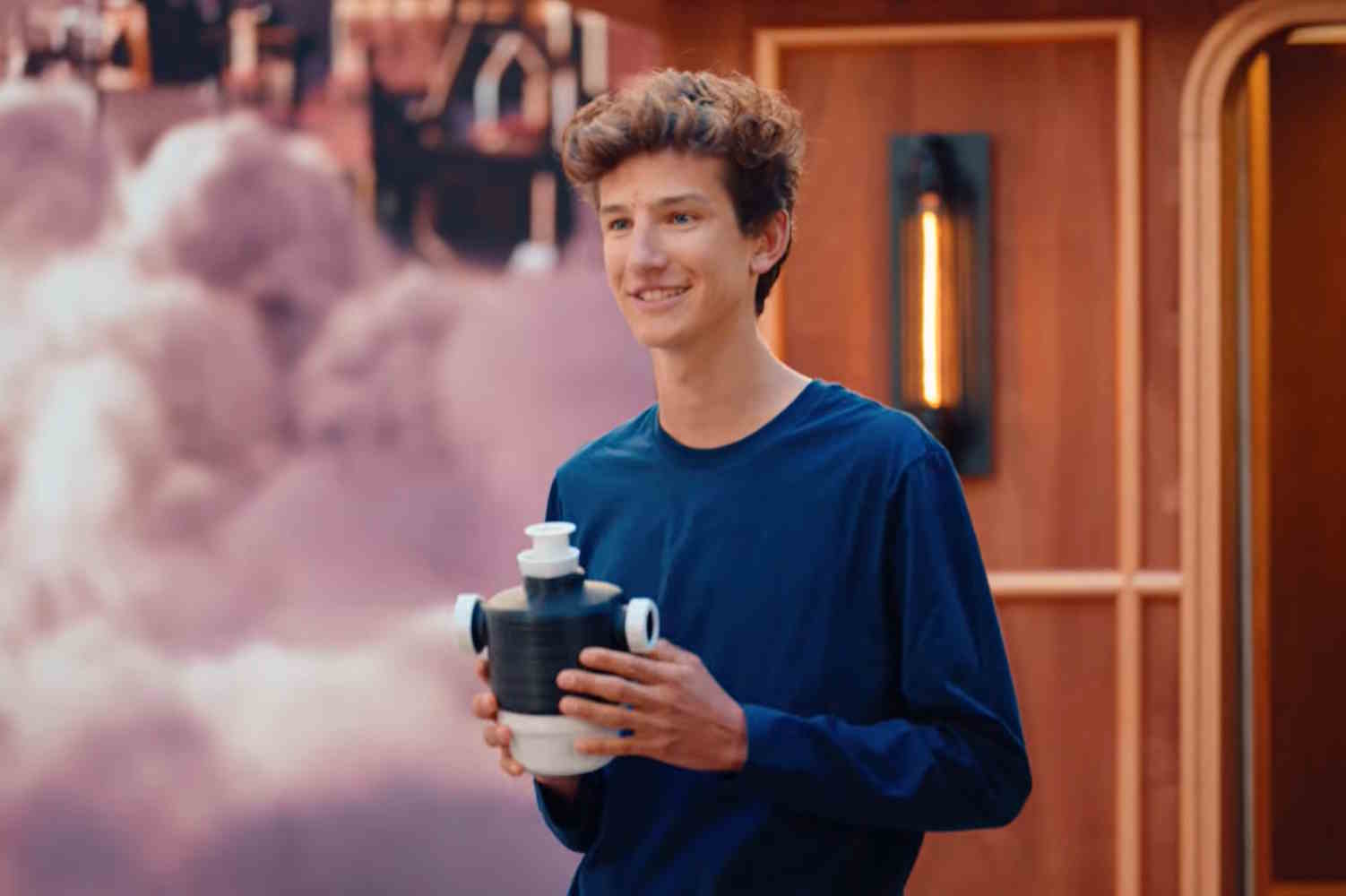
We throw away liters and liters of drinking water every day without even realizing it. What if some of that water could have a second life, without changing our habits? From this question arises TriPhonan intelligent siphon designed by two young French students that aims to make the domestic water recycling as simple as recycling.
In France, each citizen consumes on average approximately 150 liters of drinking water per dayaccording to official data from the Ministry of Ecological Transition. A huge amount, especially when you consider that a lot of this water isn’t actually dirty. Yet, while we have become very good at separating plastic, paper and organic materials, when it comes to water we continue to let it all flow indiscriminately down the drain. TriPhon try to change this very automatism.
TriPhon was born from an idea as intuitive as it was revolutionary
The invention bears the signature of Thibaut Witvoet and Vincent Caujollestudents of the École Centrale de Lyon, who have chosen a very concrete approach. Instead of designing a complex or cumbersome new appliance, they decided to evolve an object that already exists in all homes: the siphon under the sink.
Outside TriPhon appears like a normal siphonbut inside it hides an intelligent system. A sensor analyzes the quality of the water flowing from the sink in real time and, based on the level of impurities, decides its fate. The dirtiest water is directed towards the traditional drain, while the relatively clean water is directed towards a recovery circuit.
This is the case, for example, of water used to wash fruit and vegetables or for quick hand rinsing: it makes no sense to treat it as if it were highly contaminated. TriPhon allows you to reuse it easilyto water plants, clean external surfaces or carry out other activities that do not require drinking water. A silent innovation, which works behind the scenes and for this reason it is particularly effective.
From the fablab to the public’s attention
The project TriPhon was born and raised within the fablab of the Fabrique de l’Innovation, where the two students were able to create the first prototypes thanks to the 3D printers and infrastructure made available by the university. From the beginning, the goal was not just to prove that the idea worked, but to verify that it did compatible with real life.
Space under the sink, ease of installation, simple maintenance and adaptability to existing systems were central elements in the development. And this is also why the project quickly transcended academic boundaries. TriPhon was featured in a YouTube video by Inoxtag and shown during the Perspectives de Comblouxan event dedicated to concrete solutions for territories and the ecological transition.
What is most striking is the philosophy behind the idea. TriPhon does not push towards technological over-equipmentdoes not require large investments and does not impose changes in daily habits. On the contrary, it fits into a logic of sobriety and common sense, demonstrating that often the most effective innovation is the one that manages to be almost invisible.
In recent years we have learned that sustainability does not only come from large works or complex industrial solutions, but also from small widespread changes. After having internalized the gesture of separate waste collection, we are starting to understand that even water can be valorisedwithout waste and without complications.
If it manages to move beyond the prototype phase and spread on a large scale, it could become a normal presence in our homes. An object hidden under the sink, which does a very simple thing: .
