
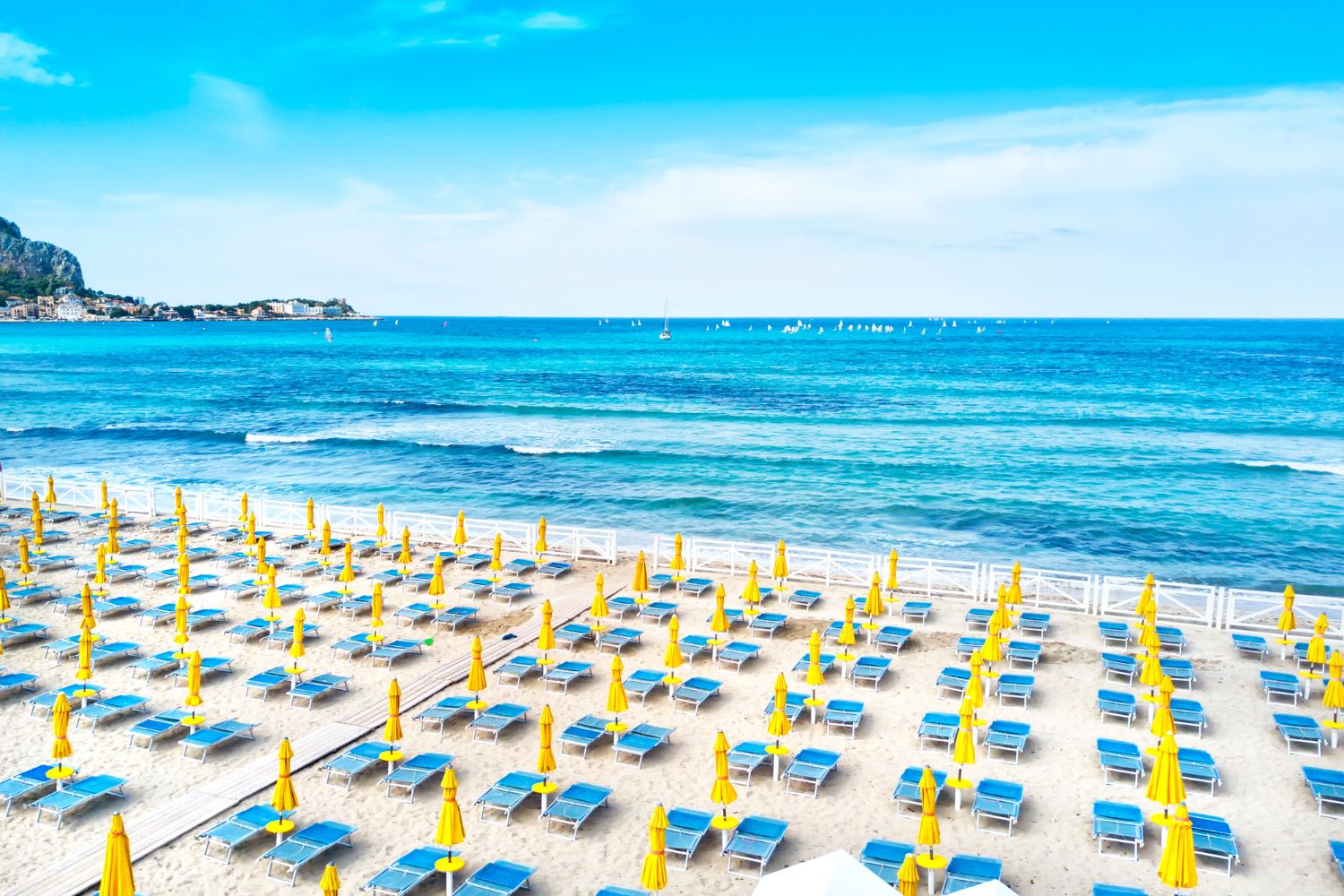
The issue of beach concessions returns to the center of the political conflict after an amendment by the League to the “Commissioners” decree, initially approved by the Senate Environment Committee. The measure provided for an extension of state concessions until 30 September 2030, with a possible extension to 31 March 2031 in the event of difficulties in the tenders.
The provision arose from the need to respond to the serious damage caused by coastal erosion and the extreme weather events that hit Calabria, Sicily and Sardinia in January, territories already declared in a state of emergency. The declared objective was twofold: to guarantee the continuity of tourist activities and to incentivize new private investments for the safety of the coasts, severely compromised by Cyclone Harry, which aggravated an already structural erosive phenomenon in many areas of the country.
The about-face: stop in the Budget Committee
However, the negative change came a few hours later. The Senate Budget Committee blocked the amendment, deleting it from the text. At the basis of the decision there are two elements: the lack of financial coverage and the possible critical issues linked to article 81 of the Constitution, which requires the balance of public accounts.
Not only that. The provision was also considered problematic on a European level, due to the risk of conflict with the Bolkestein directive, which prohibits automatic extensions of concessions and could open a new infringement procedure against Italy. The result is an abrupt stop to a measure that had already sparked political and administrative debate.
From postponement to regulatory chaos on the beaches
The rejected text also envisaged a complex mechanism: the concessions would have remained valid only in the face of mandatory safety measures, with private investments intended for the restoration of damaged areas and the continuity of tourist services. However, its fall brings the system back into the midst of uncertainty.
Today the deadline remains set for 2027, but the reality in the area is fragmented: some Municipalities have already started the tenders, others have concluded them, many are still waiting for a uniform national tender which the government has not yet defined. The result is an uneven regulatory mosaic that fuels tensions between operators, administrations and the State.
Between environmental emergencies and political stalemate
The most critical point remains the link between legislation and environmental disasters. Regions affected by Cyclone Harry continue to grapple with eroded beaches, damaged infrastructure and pressured tourism businesses. Precisely this scenario had pushed to attempt the extension, but the attempt was dashed due to European constraints and public accounting. The seaside sector thus finds itself in a phase of stalemate, suspended between the need for stability for investments and a regulatory framework that is still far from a definitive solution.
You might also be interested in:
