
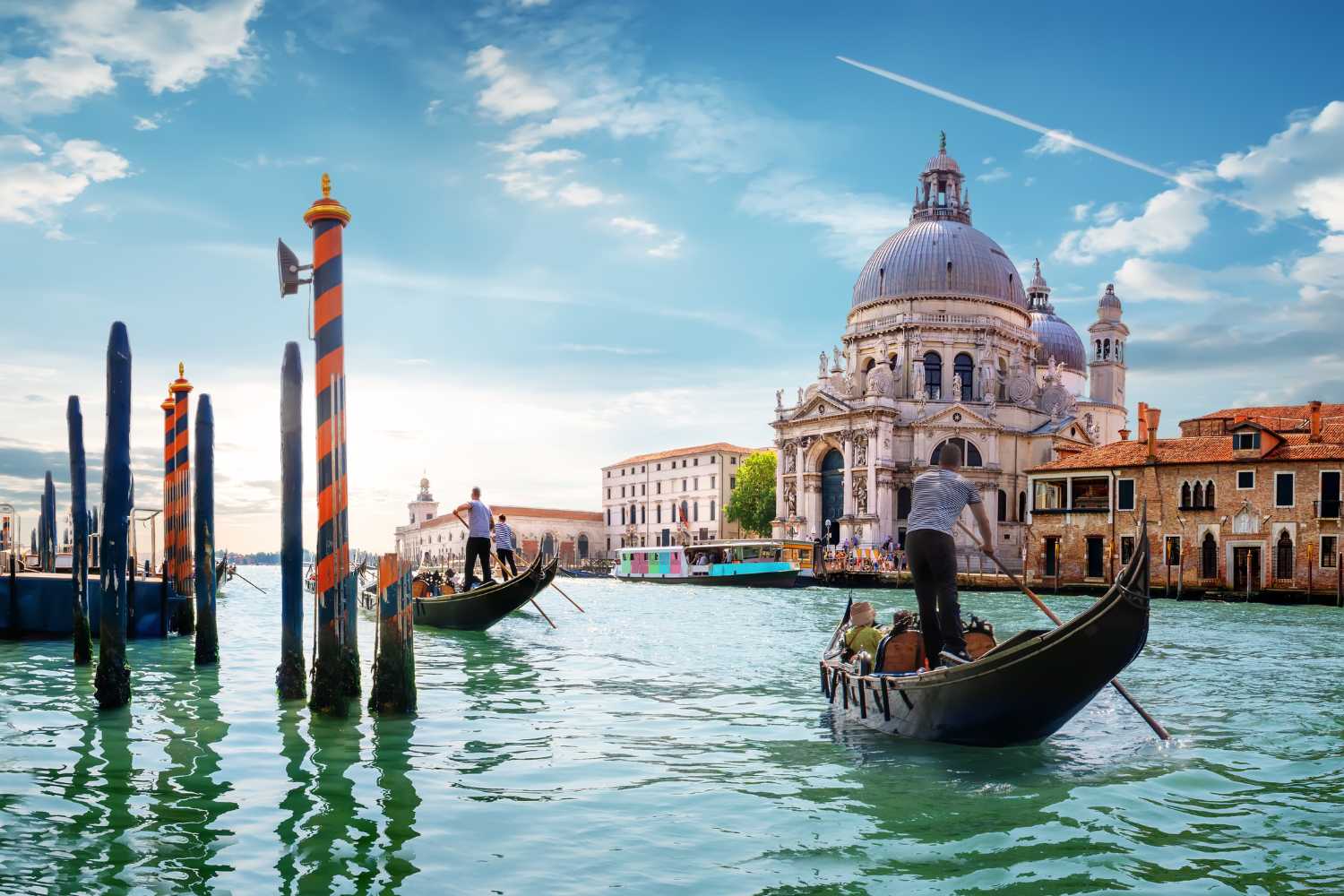
Also in 2025 it will be necessary, on some days of the year, to pay to access the historic city of Venice. In fact, the Municipality confirmed the continuation of the experimentation of the “access contribution”, introduced to manage daily tourist flows and preserve the balance of the lagoon city. The interested days pass From 29 of 2024 to 54 of 2025. Instead, the time slot remains unchanged: The ticket will be requested from 8.30 to 16.
How the entrance ticket works
The system maintains the main characteristics already seen in 2024: Those who go to Venice for a day visit – therefore without staying overnight in the municipality – will be required to pay a contribution, unless they fall into one of the numerous categories free. All visitors, including those who do not have to pay, will still have to register on a special online portal, indicating the motivation of the visit. The checks will be carried out in the main entrance points to the city, such as the Santa Lucia station and Piazzale Roma.
One of the news of 2025 concerns the cost: Those who do not book a visit at least three days in advance will pay 10 euros, double compared to the basic rate of 5 euros. The exact detail on how the days will not be counted has not yet been defined. Murano, Burano, Lido and the other islands of the Laguna are excluded from payment.
The dates of 2025: multiple days and weekend for a fee
The new phase of experimentation will start on April 18 and will end on July 27th. The Review days will be 54and will include a continuous first period from April 18 to May 4, followed by all weekends (including Friday) until the end of July. To these dates is added also on Monday 2 June and the days for the Redeemer Feast (from Friday 18 July to Sunday 21 July 2025), even if the party takes place in the evening.
Who has to pay (and who does not)
The contribution It applies to daily visitors who do not reside in Veneto, do not stay in Venice, are not in the city for work or study reasons and have not been invited by a resident. The definition of “daily visitor” may seem generic, but the regulation is rather detailed.
I am exempt The residents of the Municipality of Venice, their family members, those who own a house or pay a rent in Venice, university students enrolled in the city universities, commuters, and many other categories. There are also those who participate in sporting events, funeral, visits to admitted or detained relatives. Furthermore, each Venetian resident has the right to authorize friends and acquaintances to the end, communicating it through the dedicated portal.
The participants in the Nautical Salone (scheduled from 30 May to 2nd June) and the historic Vogalonga, which will take place on June 8, also specifically exempted for 2025.
Penalties: fake fines and statements
Who does not pay the contribution – or do not record as requested – risks one administrative sanction ranging from 50 to 300 eurosto which are added the 10 euros of the unrealized ticket. The regulation also provides for any criminal complaint for those who make false statements or submit mendacious documents. In 2024, no penalty was imposed, not even to those who, as a sign of protest, chose to self -communicate. For 2025, however, the local authorities have announced an unexpected of the checks, starting from April 18.
Action necessary to deal with the phenomenon of the Cestortourism
The measure, according to the words of the councilor for tourism Simone Venturini, represents a clear signal: “Venice is unique, fragile, and must be respected”. Not only that. It is also a way to bring home a few million euros, useful for maintenance and for managing the costs that a tourist flow so massive inevitably entails.
In this breast the numbers are clear: last year the program yielded around 3 million euros, a figure useful for covering operating expenses. This year they are aimed at higher: as mentioned, the days when the rate applies from 30 to 54. The goal? Dilation arrivals, avoid chaos on weekends and, perhaps, make someone more reflect before organizing a death and run in the Serenissima.
Unesco has already played the alarm bell: if things do not change, Venice could end up in the list of patrimony in danger. The phenomenon of hyperturism is a problem that grips different realities at a global level, and for this reason the Venetian model is observed with interest also abroad, with destinations such as others, Kyoto, Zermatt and Formentera, which take notes and evaluate whether to implement similar measures.
