

More than one teenager in 4 thinks it is common to suffer or witness discrimination due to sexual orientation, 22% sexist discrimination. Around one in six (16%) had their first sexual experiences not to feel different or different.
These are some of the data that emerge from the new report “Adolescents and sexuality” by Save the Children and conducted by IPSOS, whose numbers tell a complex reality. Over a third of adolescents report episodes of body shaming. At the same time, almost one in four consider pornography a realistic representation of sex and 17% think that self-producing pornographic content can be a way to get money. Only 12% give online sex the same value as live sex.
Two-thirds of the kids say they have already had sexual experiences. In most cases, curiosity, the desire for discovery and the need for intimacy prevail, but a non-negligible share reports social or partner pressure. There are also worrying signs on the health front: 82% have never had an HIV test and just 12% have been to a clinic, often due to shame, difficulty in accessing or lack of nearby facilities.
When looking for information, teenagers mainly turn to the web. Online sites and articles are the first source for both sexual practices and sexually transmitted infections, followed at a distance by books, friends and – for the older ones – pornographic content. Parents and family remain important points of reference, but not sufficient to fill the need for clear, scientific and accessible information.
On the adult side, a certain openness to dialogue emerges: three out of four parents feel comfortable talking about sexuality with their children. At the same time, concerns about sexually transmitted infections, toxic relationships, violence, binge drinking and revenge porn are also growing. It is no coincidence that over 90% believe it is useful to introduce compulsory emotional and sexual education courses at school.
And school is one of the central nodes. Less than half of the students declare having received structured sexual education, with strong territorial inequalities between North and South. When present, these are often short or sporadic interventions, even if the vast majority of those who participated consider them useful.
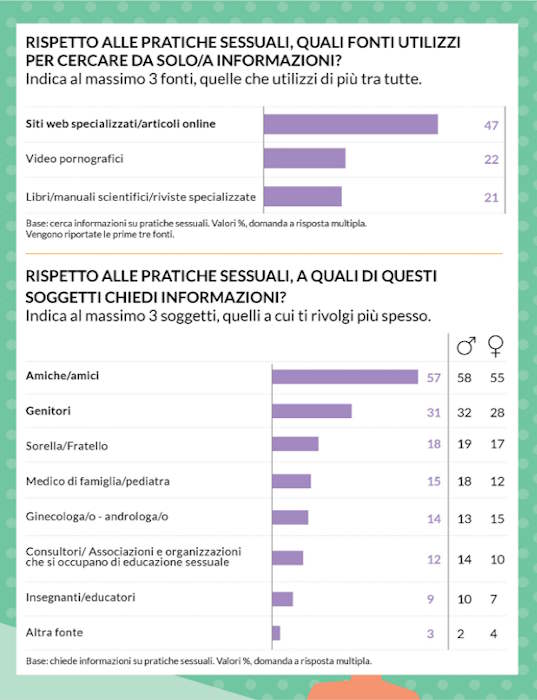
The picture that emerges is that of adolescents who experience sexuality between curiosity, positive emotions and new freedoms, but also between fragility, social pressures and a lack of adequate tools which too often affects the quality of relationships. This is why Save the Children calls for systemic, multidisciplinary and compulsory emotional and sexual education, in line with international standards, capable of addressing issues such as consent, respect, health, prevention of violence and safe use of digital technology.
Hence the #Facciamoloinclasse campaign was born, which involves young activists and Aurora Ramazzotti to ask for stable educational paths in schools and more scientific information on sexual health. An appeal that comes just as the data shows how urgent it is to offer girls and boys real tools to grow up aware, free and safe.
