
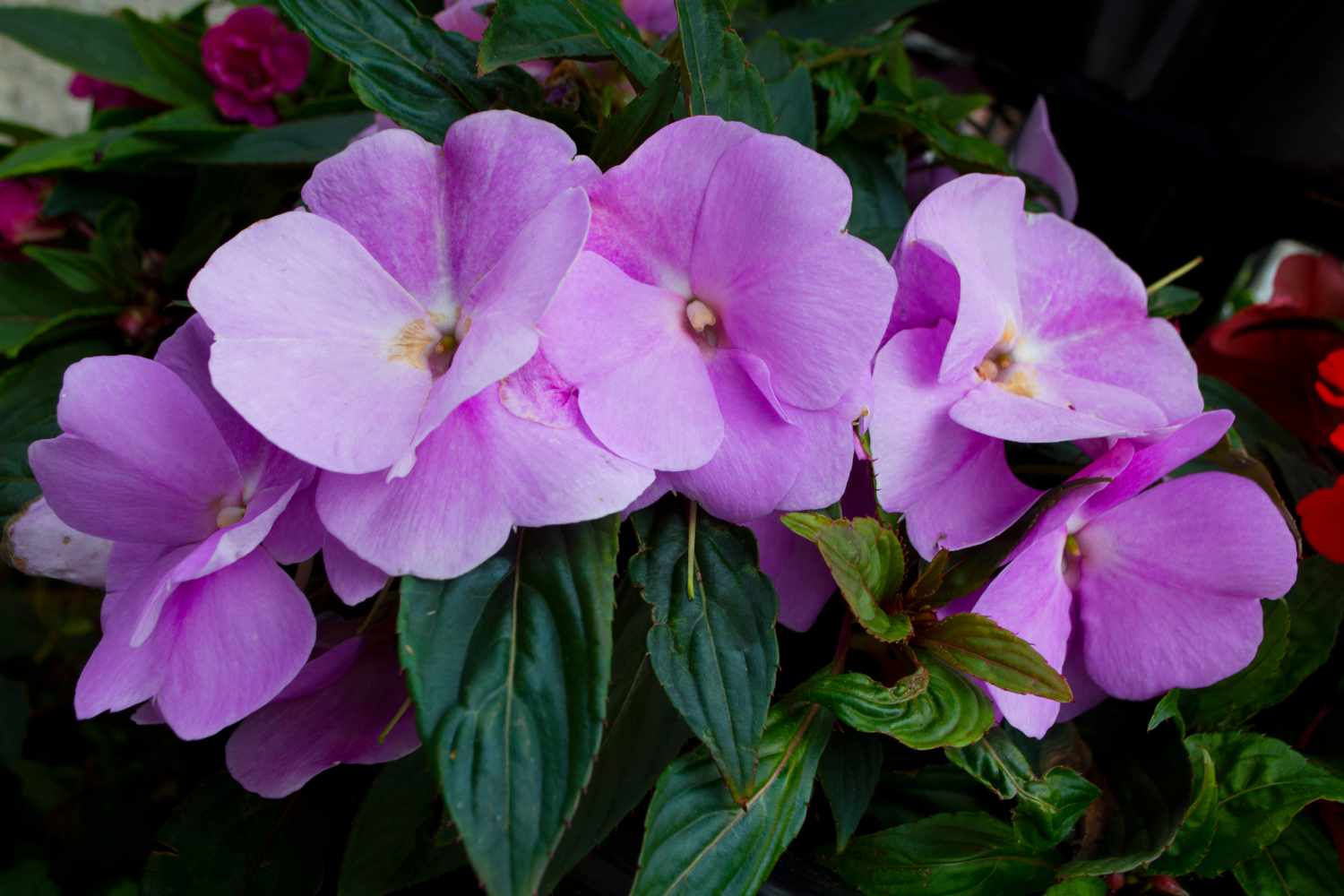
THE’Impatiens Walleriana He is the protagonist of our article: also known as “Glass flower“Or” glass plant “, is one of the most appreciated ornamental plants thanks to extraordinary beauty and ease of cultivation. The nickname”glass flower“Derives from crystalline delicacy of its flowers And from the almost ethereal transparency of the fleshy stems, which seem fragile like the glass itself, a peculiar characteristic which, combined with the ability to flourish even during the winter months, makes Wallerian impatics a very special plant for gardening lovers.
Description of the Wallerian Impatiens
Wallerian impatiens belongs to the family of Balsaminaceae and it is Originally from the Tropical Eastern Africaspecifically of countries such as Kenya, Malawi, Mozambique, Tanzania and Zimbabwe. Is one perennial herbaceous plant that in temperate climates it is often cultivated as annual due to its sensitivity to the cold. The plant reaches a maximum height of 40-50 centimeters and has fleshy and succulent drumsoften skewed with red, which give it that translucid appearance that recalls the glass.
The leaves they are long pigeoned, oval or elliptical, and vary from intense green to bronze, while i flowerswhich represent the real jewel of this plant, are flattened, to five petals, and can be simple or double. The chromatic range is vast: From white white to soft pink, from intense red to deep purple, from lively orange to two -tone and spiced variants. The scientific name “Impatiens” derives from Latin and means “impatience”, referring to the peculiar behavior of the fruits which, once ripe, open up to the slightest touch by throwing the seeds at a distance.
Variety of the glass flower
The world of Wallerian impatiens is rich in varieties and hybrids, the result of years of selection and hybridization. Among the most popular cultivars we find the series “Image“, A new generation of Wallerian impatiens characterized by greater resistance to peronospor and the ability to survive up to the first gels. These modern varieties can be cultivated both in full sun and in the shade and better tolerate adverse weather conditions.
The varieties “Fiesta“They are distinguished by double flowers and the extraordinary duration of flowering, while the cultivars”Sunpatiens“They represent an interesting evolution: these are hybrids developed specifically to resist the direct sun, overcoming one of the traditional limits of classical impatics. There are also dwarf varietiesperfect for small borders and vases, and climbing varieties such as L‘Impatiens Repensexcellent choice for suspended baskets.
Where to position the Wallerian impatiens
The most important aspect for success in cultivation of Wallerian Impatiens is the choice of the right exposure. This plant prefers the Positions in half shadow, or bright shadowa positive aspect, given that it can occupy those corners of the garden or balcony that receive little direct light. It is perfect for the windowsills addressed to the north, often underutilized with other species, and for all the shaded points of the terrace.
In the garden, Impatiens can be planted under high stem trees, to the meat or hedges, where it can benefit from filtered light for most of the day, Precious feature, useful for creating compositions in those areas where other flowery plants would struggle to thrive. The correct exposure guarantees leaves of a brilliant green, continuous production of buds and prevents stress caused by excessive heat.
What ground to use for the Wallerian impatiens
As for the ground, Wallerian impatics adapts to different types of soil, but prefers soft, fertile and well drained substrates. The pH can vary from neutral acid and slightly alkaline, demonstrating the considerable adaptability of the species. For vase cultivation, the ideal is to use a universal substrate of quality enriched with peat To maintain the right humidity without creating stagnation.
An optimal mixture? It could be composed of universal soil, peat and sand in equal partspossibly enriched with mature compost. It is fundamental ensure good drainage: Impathiens loves constant humidity but fears water stagnation that can cause radical rot. On the bottom of the pot it is always advisable to place a layer of expanded claybut also of the gravelto facilitate the outflow of excess water.
Wallerian Impatiens vase cultivation
Wallerian Impatiens’ pot cultivation is particularly rewarding and allows you to better manage environmental conditions. The repotting is carried out in the spring, when the roots have occupied all the available space, while for those who start from the seed, Sowing can be carried out in autumn or winter in a protected environmentusing a light peat and sand substrate kept constantly humid.
The seedlings can be transferred outside only when the night temperature stabilizes above 15 ° Cgenerally between April and May. During the growth, you will have to perform the top of the vegetative apices to encourage branching and obtain a more compact and flower plant. Multiplication can also take place by cutting, remember only to pay particular attention, so as not to damage the delicate stems of the plant.
When to water the Wallerian impatiens
Irrigation represents one of the most delicate aspects in the care of Wallerian Impatiens. During the vegetative periodfrom spring to late summer, The watering must be regular and abundant To keep the substrate constantly humid but never zuppo. In summer, on the hottest days, it may be necessary to water every two days, always checking the state of humidity of the soil with the finger.
It is important Avoid the direct nebulization of the leaves In order not to encourage the development of fungal diseases. The water must be administered directly to the ground, preferably in the less hot hours of the day. In winterwhen the plant is hospitalized, The irrigation must be significantly reducedwith the soil that must be just humid and paying particular attention to always empty the sauce to avoid stagnation.
When fertilizing Wallerian Impatiens
During the flowering periodwhich can extend from April to October and in addition to protected conditions, the Wallerian impatiens benefits from one regular fertilization. The ideal fertilizer is the specific liquid one for flower plants, rich in macroelements such as nitrogen, phosphorus and potassium, in addition to essential microelements such as iron, manganese, copper, zinc, boron and molybdenum.
The optimal fertilization frequency is Every 7-10 days during the growth seasonin which the fertilizer in irrigation water can be diluted. Alternatively, you can use a slow transfer granular fertilizer, to be distributed at the beginning of the season and integrate with monthly liquid fertilizations. It is important not to exceed with the doses to avoid any saline accumulations that could damage the roots.
The extraordinary winter flowering of the Wallerian Impatiens
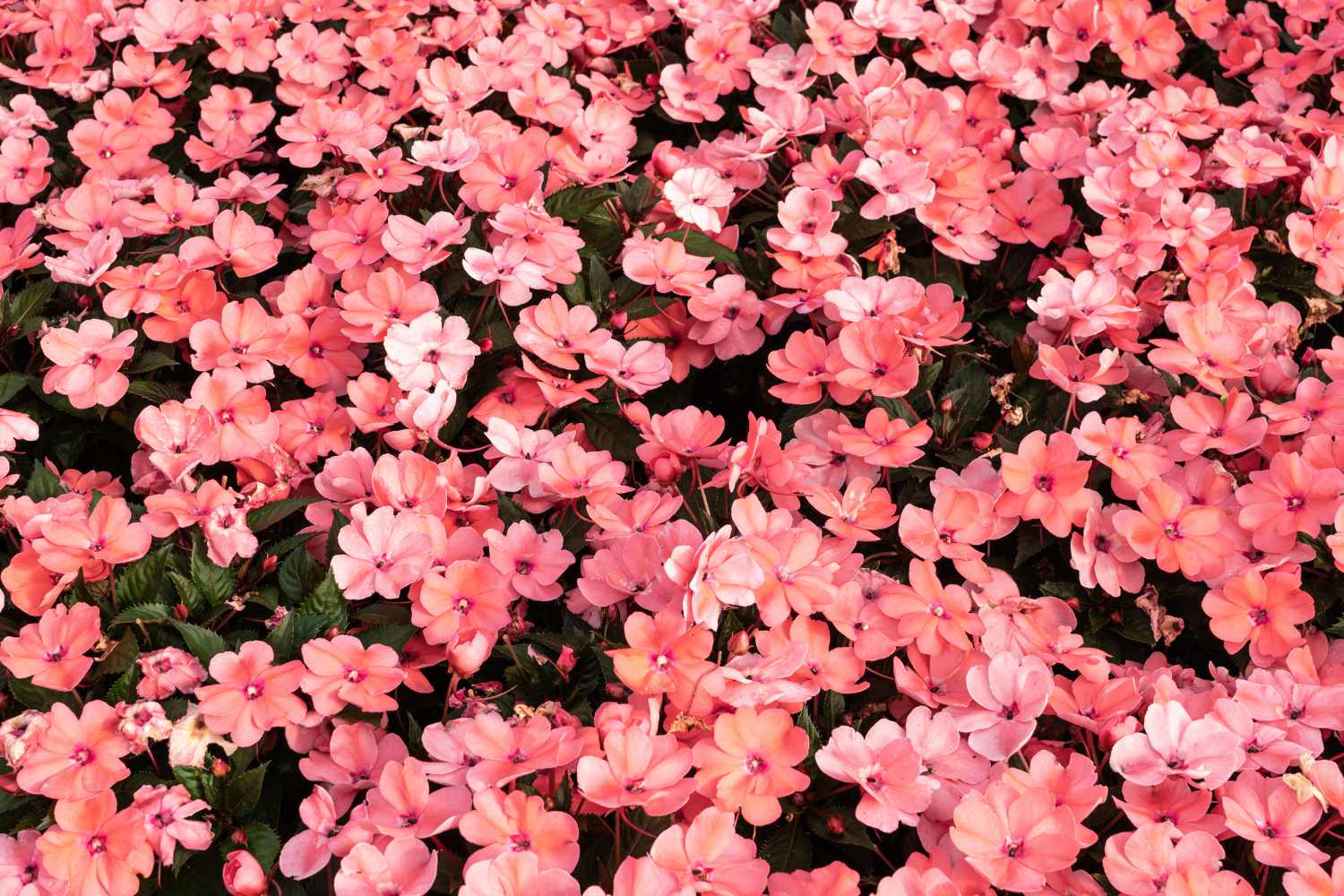
One of the most fascinating aspects of Wallerian Impatiens is his ability to flourish even during the winter monthsprovided that some fundamental conditions are respected. The key to success lies in maintenance of a constant temperature around 18 ° Ccondition that in the house can be easily guaranteed during the winter.
When the plant is hospitalized in the apartment before the arrival of the cold, and the conditions of temperature, humidity and light are optimal, Impatiens can continue its flowering without interruption.
To obtain a successful winter flowering, it is essential Place the plant in a bright but not exposed place to directOr, far from direct heat sources such as radiators and cold air currents. Environmental humidity can be increased by placing the plant on a saucer filled with wet gravel, in order to recreate a favorable microclimate.
Diseases and parasites of Wallerian Impatiens
Despite the general robustness, Wallerian Impathiens can be subject to some phytosanitary problems. The fungal diseases represent the main threat, favored by excesses of humidity and poor ventilation, such as the White sore (Oidio) which can attack leaves and stems, manifesting itself with pulverulent whitish spots, while the radical rot It is caused by water stagnation.
Among the parasitesthe most common we find the aphidswhich colonize the tender parts of the plant, and the red spiderwhich develops in dry heat conditions. The snails They represent a particular problem for plants grown outside, attracted by the tender consistency of the leaves. As always, prevention always remains the best strategy: to maintain the plant in the optimal condition of cultivation, avoid water stagnation and guarantee good ventilation.
For biological control, they can be used natural products Like vegetable antiparasitarian, horsetail extract or potassium soft soap. Against snails, it is effective to spread wood ash around the plants, or use specific traps.
Seasonal care of the Wallerian Impatiens
The seasonal management of the Wallerian Impatiens requires specific attention for each period of the year. In springwith the increase in temperatures, the period of greatest activity begins: it is the ideal time for repotting, the planting and the beginning of regular fertilizations.
Duringsummerthe attention focuses on constant irrigation and on the protection from the direct sun.
THE’fall It represents the critical period for deciding the fate of the plant: in the areas with mild climate it can remain outside with adequate protections, while in the colder areas it must be hospitalized before the temperatures go down under 13 ° C. In winterthe cure focuses on maintaining optimal environmental conditions to prolong flowering and prepare the plant for the new vegetative cycle.
There pruningwhen necessary, it is carried out by shortening the branches of a few centimeters a half summer To keep the plant compact and stimulate the production of new flowers. This operation, although involving the temporary loss of some flowers, is quickly compensated by an even more abundant flowering in the following weeks.
