
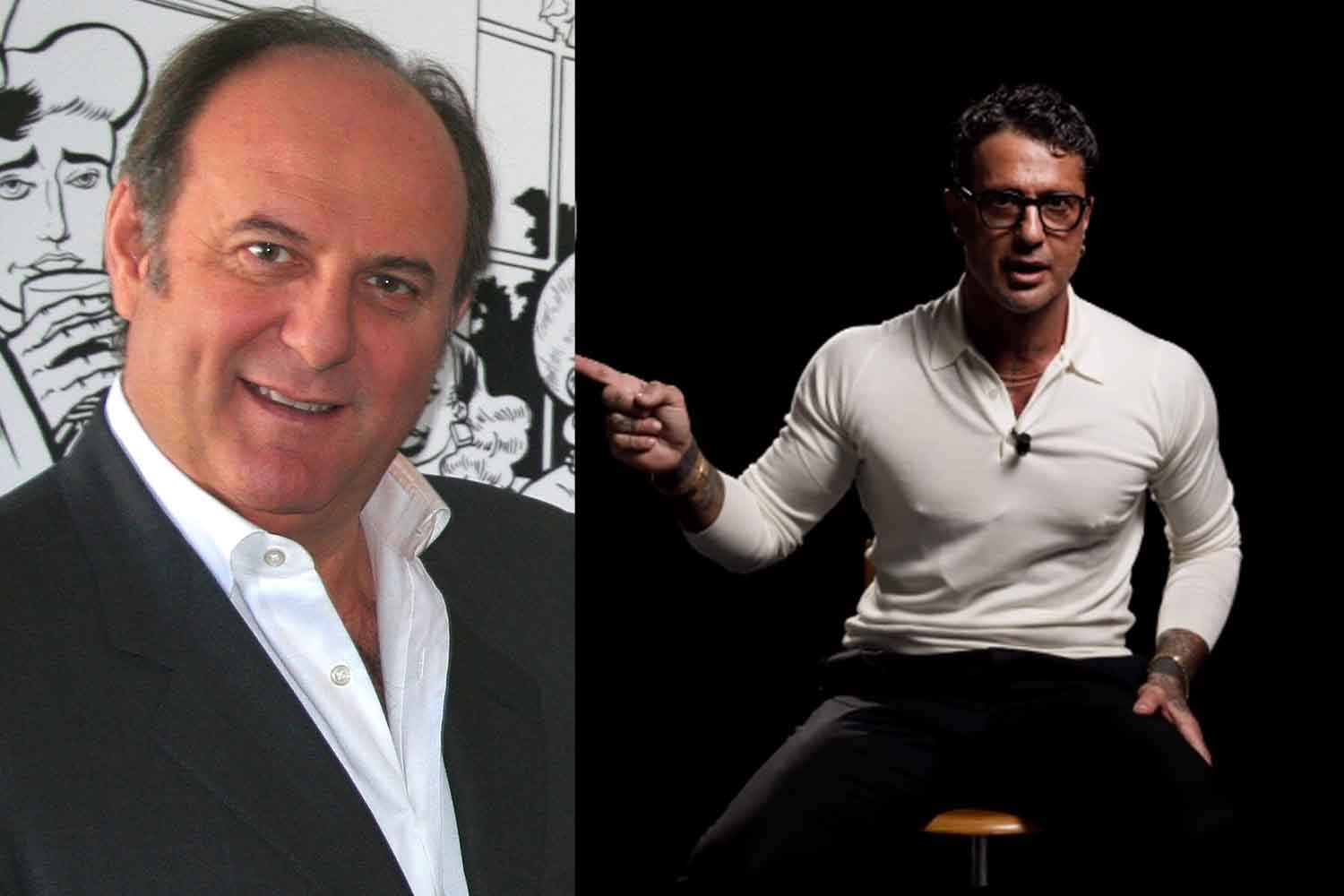
There’s this story that’s been going around on social media for days. Fabrizio Corona says something about Gerry Scotti: according to what the former paparazzi king told in his format Extremely falsethe host would have had relationships with all the letters of Passaparola, the famous early evening quiz broadcast between 1999 and 2008. A sensational statement which, in the space of a few hours, transformed the historic reassuring face of Italian television into a popular idol for a significant part of the male audience.
A hero. Someone who “made it”, a “bomber”, that’s it. No proof, mind you. Probably just hot air, bar gossip. Yet, many believed it. And the interesting thing? Nobody was scandalized.
Come on, are we still surprised by anything in this country? We’ve seen it all. Trials, scandals, controversies that go on for years. Powerful men at center stage, women in the background, popular consensus that resists everything. We know that script by heart. We have seen it repeated on television, in newspapers, in courts, in living rooms. For decades.
The applause starts in the comments. Sanctification. The coronation. The host becomes the symbol of a virility that drives “males” especially crazy. Age? Who cares. The physical appearance? Detail. Ethics? Which? Power takes all the space and wins hands down.
When status beats everything (literally)
You know that feeling when you see a successful man and think, “Well, he actually has a certain charm”? Here, it works like this. Social psychology explains it well. Male status increases perceived attractiveness even when physical appearance remains completely ordinary.
There is a 2019 study published in Personality and Individual Differences that confirms this in black and white. Men with high socioeconomic status are perceived as more attractive regardless of physical beauty. Power turns into something that makes you interesting. Worthy of attention. Desirable. This step happens automatically: success becomes synonymous with value and popularity erases everything else.
The uncomfortable question: what if it were a woman?
Let’s try to reverse the scene for a moment. Let’s imagine a sixty-year-old television presenter. Successful, popular, in every home at dinner time. Gossip comes out that she had flirtations with younger guys who worked on her show. Guys who have made careers today. Would the reaction be the same? The applause? Sanctification? The idea of winning cunning?
Probably not. We would probably use different words. Harder. More judgmental. Age would suddenly become relevant. The physical aspect would return to the center. Instead of being fascinating, power would become suspicious, embarrassing. Out of place.
And above all, the usual prejudice, which dies hard, would emerge: “who knows who she was with”. A phrase that weighs like a boulder only on women. Because in pure patriarchy, male sexual experience builds status, female sexual experience destroys it. Man accumulates. The woman is “consumed”.
This is not intended to be an attack on anyone: the gossip that is viral these days probably has no basis, but this is not the point. The point lies elsewhere.
We analyze our collective imagination: which stories we celebrate and which we judge, how male power is read as something attractive, virile, almost erotic. While female power must always be accompanied by something else to work. He must be beautiful, young, discreet, maternal at the right point. Never too much.
Naked power in the hands of a woman still creates discomfort: it is perceived as a threat, as something that goes against nature. Still, after centuries, as something to laugh at or condemn.
Mandatory beauty (only for half the population)
And the women in this story? They are in the background. They reinforce the scene without leading it. They become the framework that certifies: everything works. Here we enter interesting territory. The Harvard Kennedy School has published research examining how aesthetic norms for women serve to maintain social hierarchies. Beauty is required as a permanent requirement to access status. Men, on the other hand, are allowed to capitalize on power and success even with a belly and hair that goes away on its own.
The asymmetry is clear. Men can easily grow old, gain weight, dress as they please. Their value increases with the curriculum. Women must remain beautiful. Always. Anyway. At any age. The same study shows a fact worthy of attention. Men react to female status completely differently depending on perceived beauty. A beautiful and successful woman? Much desired. A successful woman with “average” beauty? Meh. Immediate emotional distance.
Male power works like an elevator going up. More status, more charm, more social consensus. Female power only works if accompanied by the right aesthetics. Otherwise it loses value. It deflates. Become invisible. Or worse: it becomes something to make jokes about.
This explains why in 2026 a man of power is still eroticized and celebrated. It explains why the same dynamic with roles reversed would create collective embarrassment. It explains why popular consensus only works one way. Male power is sexy by definition. Female power must ask permission.
Gossip as a cultural thermometer
Gossip tells much more than it seems. It tells what we really celebrate, what stories we continue to accept, what seems normal to us. When a well-known man is described as desirable, the story immediately transforms into confirmation of value. Without ethics, age or appearance. Power remains at center stage.
Eventually everything slips away. Always. We might think that in 2026 the language has changed, that we are more attentive, more aware. And it’s partly true. However, the profound dynamics remain surprisingly stable. The pattern updates, changes shape, lowers his voice. The structure remains intact.
The idolatry of male power lives in everyday emotions: in the need to believe that success makes you better, in the idea that certain things are normal. That they have always been like this. Scientific research helps us see these patterns. To recognize automatic mechanisms. To understand why some stories seem so natural to us even when we know something is jarring.
But perhaps we should look in the mirror, recognize these patterns in our spontaneous reactions, in the comments we make, in the laughs we escape, in the stories we continue to celebrate. In 2026, some stories work because they speak to emotions we’ve always known. Those who say that power is worth more than everything, who tell us that certain things are normal because “it has always been like this”.
And maybe that’s where we should start asking different questions.
You might also be interested in:
