
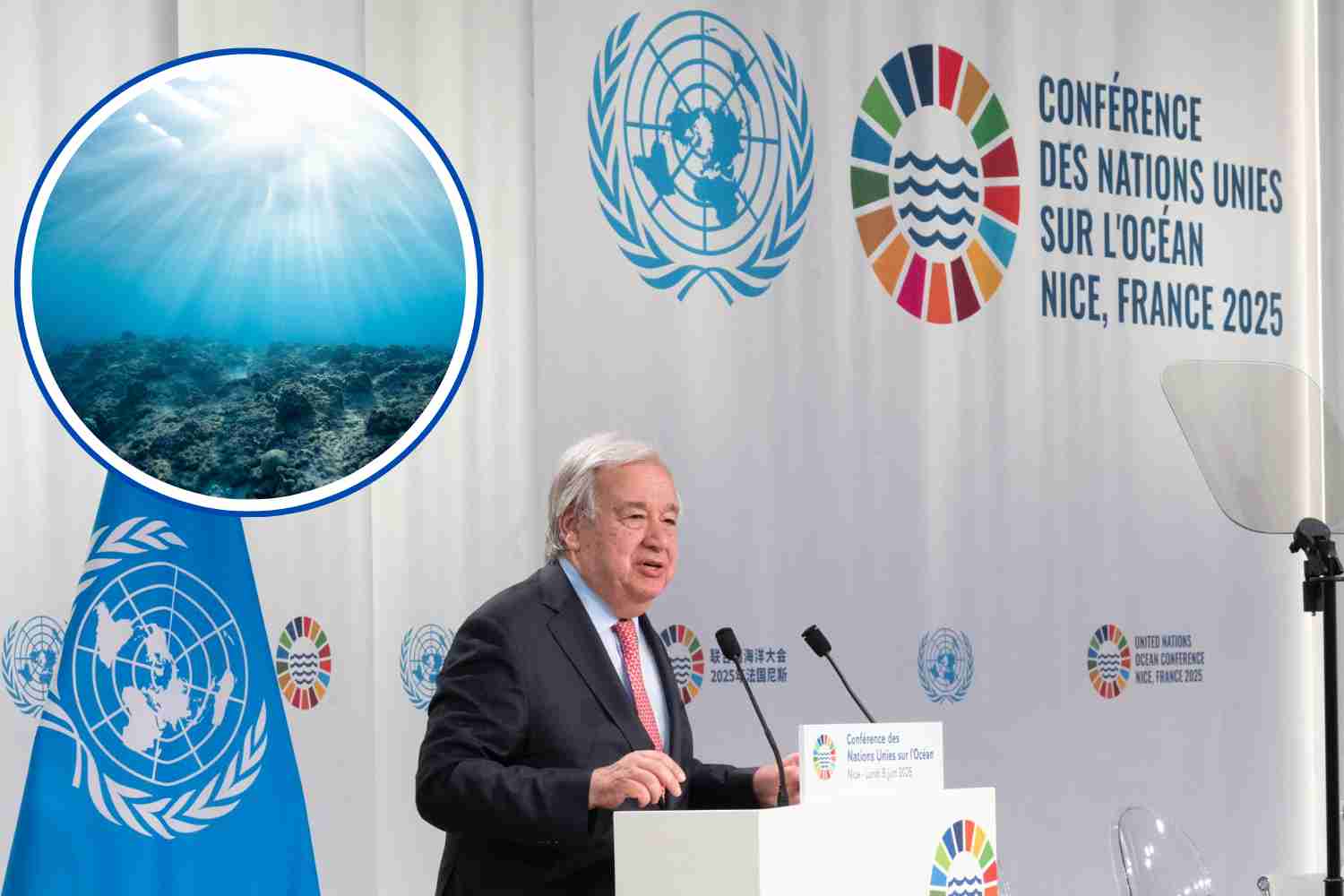
The alarm cry resonates strong and clear from the stage of the Third United Nations Conference on the Oceans in Nice. “The ocean is the last shared resource, but we are failing,” he said António GuterresSecretary General of the UN, inaugurating the summit that brings together over 120 countries until 13 June last Monday.
The ocean is the ultimate shared resource, year we’re failing it:
Fish Stocks Colping. Plastic Pollution Choking Ecosystems. Carbon Emissions Driving Ocean Acidification & Heating.
But we have the opportunity to restore Marine Abundance.
TODAY, AT THE THE @A Ocean Conference, i … pic.twitter.com/wddxzravf4
– António Guterres (@antononioguterres) June 9, 2025
The words of the Portuguese diplomat leave no room for interpretations: the oceans of the world are in deep crisis and “courageous commitments” are needed to reverse a course that leads to environmental disaster. The numbers that Guterres has presented to world leaders paint an alarming scenario: only 62% of world fish stocks still fall into the Safe biological limitsa dramatic collapse compared to 90% of the seventies.
But excessive fishing is only one of the threats that are literally suffocating the seas. Every year they end up in the oceans up to 12 million tons of plasticwhile 60% of marine ecosystems are degraded or exploited unsustainable. A picture that prompted the Secretary General to launch an urgent appeal: “I hope we can go from looting to protection”.
Guterres’ intervention catalyzed the attention of the 60 world leaders present, including the Brazilian president Luiz Inácio Lula da Silvathe Argentine one Javier Milei and the President of the European Commission Ursula von der leyen. The message was clear: the oceans are absorbing 90% of the excess heat produced by greenhouse gas emissions and are “folding” under more and more intense pressure.
The French president Emmanuel Macronwhich houses the summit together with Costa Rica, proposed an even more dramatic intervention: “While the earth burns, the ocean ribolle”. Macron insisted on the need for an international moratorium on the mining extraction of the seabed, defining “a madness to launch predatory economic actions that will devastate the seabed”.
The Nice conference represents a crucial moment for the global governance of the oceans. One of the main objectives is to achieve the 60 ratifications necessary to bring the international treaty on ocean resources into force, negotiated for over twenty years. According to the NGO High Seas Alliance49 ratifications had been reached on Monday evening, with another 11 ready “within a few weeks”.
The European Union responded to the emergency with a concrete ad: an investment of one billion euros in 50 world projects for marine sustainability. “We want to build a strong global alliance for the ocean,” said Von der Leyen, specifying that a third of the funds will go to research and scientific projects.
The Ocean Feeds Us, Cools Us and Connects Us to the World.
We Came To Nice to Work Together To Protect It – With Results!
The New High Seas Treaty Means Our Efforts Won’t Stop in National Waters.
And we invest in Research to make our ocean healthier ↓ https://t.co/y4ev8oyjv
– Ursula von der leyen (@vonderleyen) June 9, 2025
European projects will range from the promotion of sustainable fishing in Tanzania to the regeneration of mangrove forests in Guyana, up to the protection of corals and submarine meadows that support 20% of global fish stocks.
The situation is particularly critical for the communities that depend directly on the sea. As the President of Costa Rica Rodrigo pointed out Chaves Robles: “The ocean is talking to us: with the bleached coral reefswith storms, with wounded mangroves. There is no more time for rhetoric. “
The urgency is also dictated by the growing international competition for ocean resources. In April, the Trump administration It accelerated the mining activity in deep waters according to US legislation, circumventing international regulation efforts. A move that has given new impetus to the voices asking for a global moratorium.
The ambitious goal of the summit is to achieve the commitment “30 by 30“: Protect 30% of the oceans by 2030. Currently, according to the Marine Conservation Instituteonly 2.7% of the oceans are actually protected by destructive activities.
The stakes are high: the raising of the seas could soon “submerge the delta of the rivers, destroy the crops and swallow the coasts, threatening the survival of many islands”, warned Guterres. The final message of the Secretary General resonates as a ultimatum: “”.
Nice’s action plan, which will be adopted on Friday, will have to transform words into concrete facts. Because, as Von der Leyen recalled, “the ocean is our ally, but if we neglect it, if we treat it without respect, it will turn against us”.
