
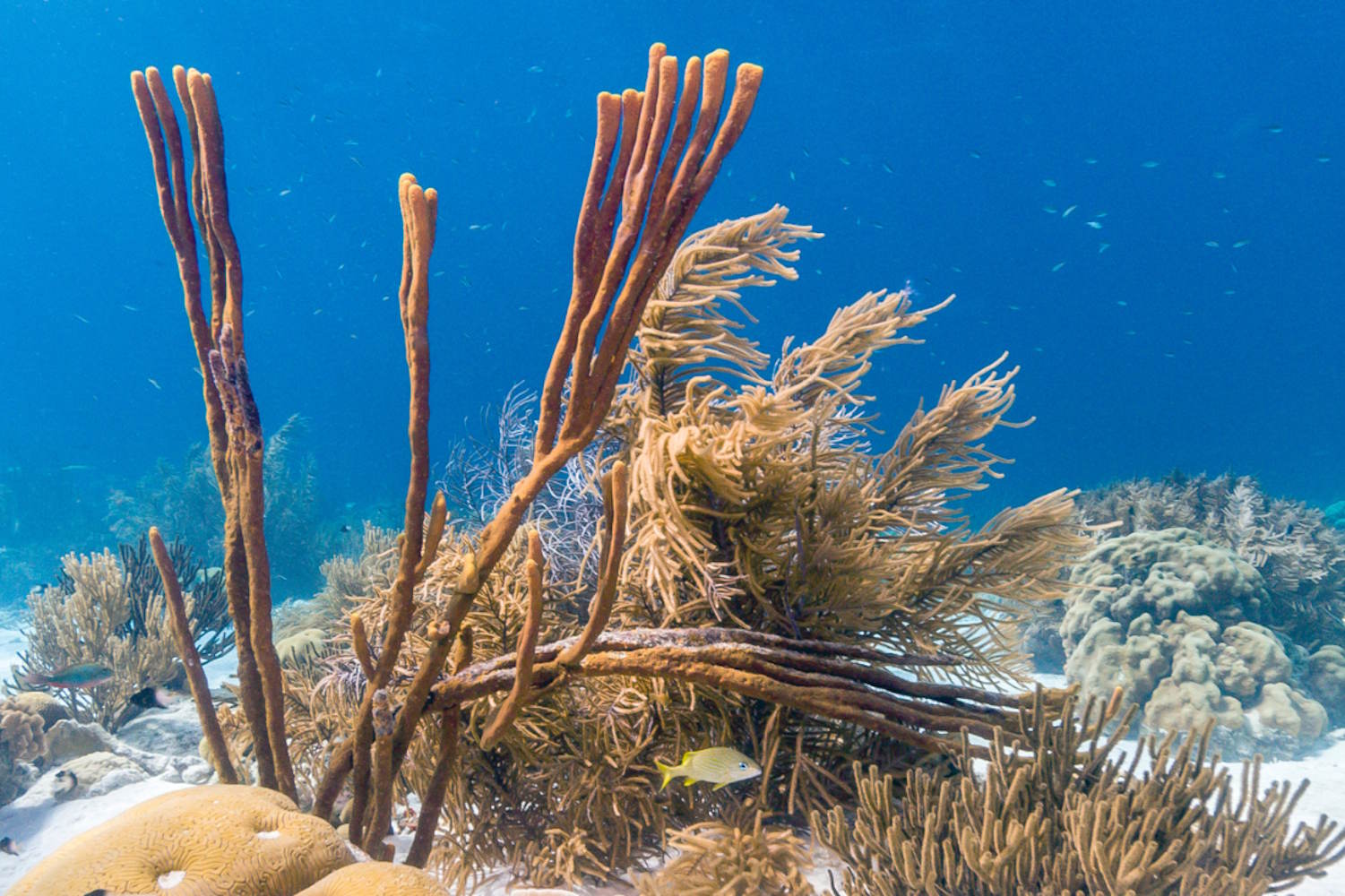
Climate change weighs like a boulder on the Caribbean coral reef: the coverage of corals has in fact decreased by 48% since 1980, while that of macroalgae has increased by 85% in the same period: these are the sad monitoring results reported in the new report by Global Coral Reef Monitoring Network (GCMRN).
The GCMRN is an operational network ofInternational Coral Reef Initiative (ICRI), and found that these environmental changes are largely due to heat stress, overfishing and climate change-induced diseases.
Risks to the environment and health
The monitoring results show in particular that the cover of hard corals has decreased by 48% from 1980 to 2024, which means that this species now occupies half of the benthic cover they occupied in 1980. And we take into account that the reefs subject to these checks cover 24,230 km², equal to 9.7% of the global extension of coral reefs.
The decrease peaked in 1998 (-9.0%), one in 2005 (-17.1%) and another in 2023 (-16.9%), due to bleaching events induced by thermal stress. In fact, the hard coral population has shifted from branched species to more massive species, thus reducing the structural complexity of Caribbean coral reefs.
Macroalgae cover meanwhile increased by 85% from 1980 to 2024 due to declines in herbivorous species (e.g. parrotfish and sea urchins) and increases in nutrients. And all this while the average sea surface temperature in coral reef areas of the Caribbean increased by +1.07 °C between 1985 and 2024, due to climate change, with a warming rate of +0.27 °C per decade.
The number of people in the Caribbean living within 20 km of coral reefs increased 27.6% from 2000 to 2020 regionally, an increase of 13 million people.
As the GCRNM reports, coral reefs generate $6.2 billion annually in the Caribbean, with reef-related tourism accounting for 23% of overall tourism spending and more than 10% of the region’s gross domestic product (GDP).
With degradation, their ability to provide food, and protect coasts from storms and hurricanes is compromised. The number of people living within 20 km of coral reefs has increased by 27.6% since 2000 (13 million more people), which has not only increased pressures, but also dependence on these systems, increasing the number of people at risk due to the reduction
Can we still do something?
Despite the scale of the decline, the report highlights evidence of recovery where local pressures are managed effectively. Protected or well-managed coral reefs show greater coral cover, greater biodiversity and greater resilience to thermal stress.
The report also outlines five priority recommendations for governments, partners and the private sector to strengthen the resilience of coral reefs and protect coastal livelihoods:
- integrate coral reefs into national climate and biodiversity strategies, including coral reef targets in Nationally Determined Contributions (NDCs), National Adaptation Plans (NAPs) and National Biodiversity Strategies and Action Plans (NBSAPs);
- reduce greenhouse gas emissions, improve water quality and reduce local pressures, including by regulating coastal development, managing fisheries and tackling pollution;
- expand and strengthen territorial management, supporting effective marine protected areas (MPAs), other effective territorial conservation measures (OECMs) and locally managed marine areas (LMMAs), and identifying resilient “hope points”;
- maintain and improve coral reef monitoring by standardizing regional protocols and encouraging open, interoperable and replicable data principles;
- Support scalable coral reef restoration by integrating thermotolerant genotypes and innovative financing models.
Wanting is power, as long as man understands that perpetuating policies that are harmful to the environment and the climate damages ourselves.
All results are available at this link.
