
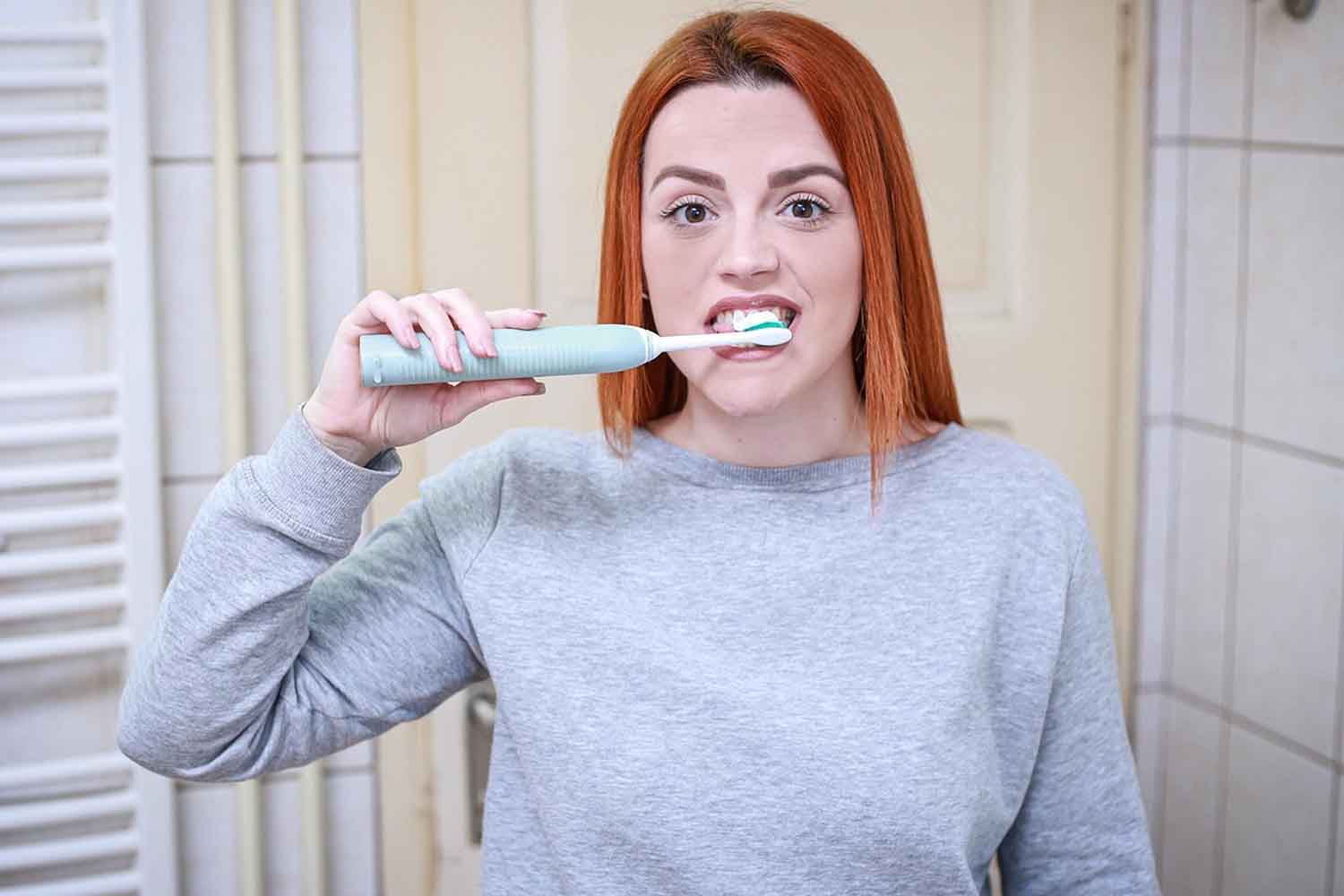
Throughout our life they taught us to wash our teeth in a certain way: toothpaste on the toothbrush, two minutes of brushing, rinsing and off. But according to the most recent dental searches, this routine must be revised: after brushing the teeth you have to spit the excess toothpaste, but do not rinse your mouth with the water. A small modification that can make a big difference in dental health, because it allows fluorine to remain longer on the teeth, strengthening the enamel and reducing the risk of caries.
The mouth is a complex ecosystem: the teeth are covered with bacteria that form the dental plaque, a biofilm that feeds on sugars and produces acids. These lower the pH of the dental surface and, if the process exceeds the natural ability of remineralization, the enamel begins to demineralize.
The fluorine contained in toothpaste intervenes precisely on this mechanism: it slows down the loss of minerals during acid attacks and accelerates the repair when the pH returns to rise. Furthermore, in the presence of fluorine, reminisceralization produces fluoratapitis, a mineral much more resistant to acidity than normal enamel. Not only that: fluorine also has an antibacterial effect directed against microorganisms that cause caries.
The problem arises when, after washing the teeth, it rinses with water. At that moment, in fact, the concentration of fluorine dilutes and eliminates that toothpaste had left in the mouth, frustrating much of its protective effect. The saliva still contributes to maintaining a certain balance, but cannot replace the effectiveness of fluorine.
For this reason, several studies have confirmed that spitting without rinse is the best strategy to prolong the action of fluoride and guarantee continuous protection during the day.
What scientific research say
Clinical studies carefully evaluated the impact of rinse with water after the use of fluorine toothpaste. The results were consistent: rinse significantly reduces the amount of fluorine that remains in the mouth.
An important experiment conducted at the University of Gothenburg, Sweden, has shown that the more water is used for rinsing, the more fluorine levels decrease quickly. It was enough to compare those who made three abundant rinses with those who made a single reduced rinse: in the first case the fluorine was almost completely removed.
Another 2009 study observed that those who rinsed with water returned to basal fluoride levels already after half an hour, while those who simply spit still maintained effective protection. Subsequent research confirmed that the fluorine detained in the mouth does not enter the blood, remaining localized and safe.
However, there is no lack of clear studies. A trial conducted in Lithuania on over 400 children has not shown significant differences between those who rinsed and who did not. However, in that case, the positive impact of daily washing under supervision with fluorine toothpaste was so strong as to mask any differences. The conclusion is that the most important factor remains brush the teeth correctly; Do not rinse is one more step that can increase protection.
The official recommendations of dentists all over the world
The guidelines of the main health organizations are surprisingly uniform.
The British National Health Service (NHS) clearly invites to spit the toothpaste and not rinse immediately after washing, underlining that the water would eliminate the benefits of fluoride.
In the United States, the American Dental Association (Ada) also gives the same advice: spit and not rinse. The same indications come from university and research bodies in Europe, Asia and America.
Why are we used to rinsing and when does it make sense to do so?
The reason why most people continue to rinse is simple: so it was taught by children. In the case of the little ones, this precaution makes sense, because a child risks jeopardizing toothpaste accidentally, which contains fluorine. This is why they are recommended to rinse after brushing.
In adults, however, the risk of ingestion is practically null and the research confirm that the fluorine remains localized in the mouth, without systemic side effects. For this, it is useful to reconsider this habit as adults and modify your behavior to derive greater benefits on dental health.
Wash your teeth twice a day remains the basis of good oral hygiene. However, if you want to maximize the protective effect of the fluorine, the best strategy is to spit the toothpaste without rinse. It is a simple gesture that increases the protection of the enamel and further reduces the risk of caries.
Don’t you want to lose our news?
You may also be interested in:
