
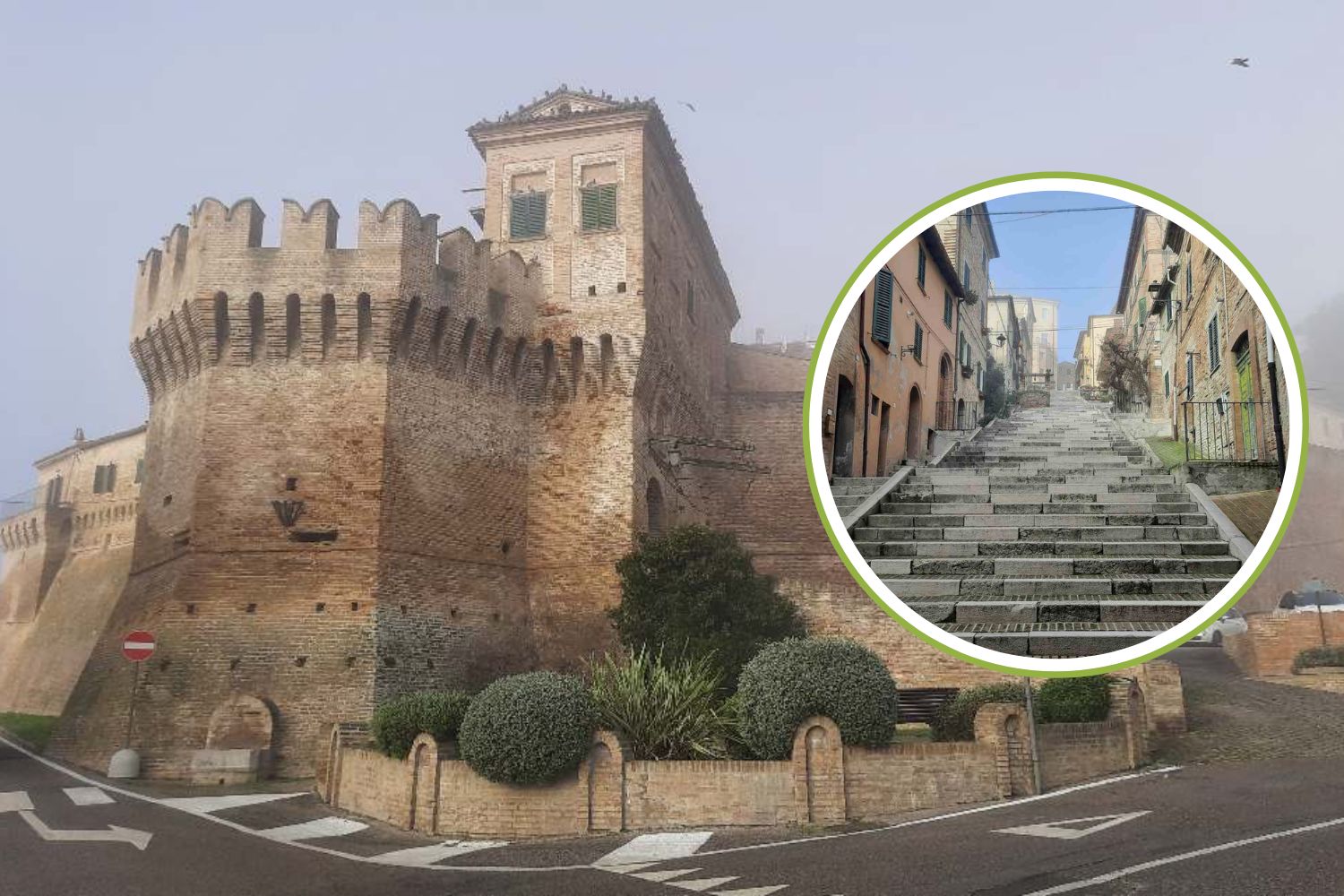
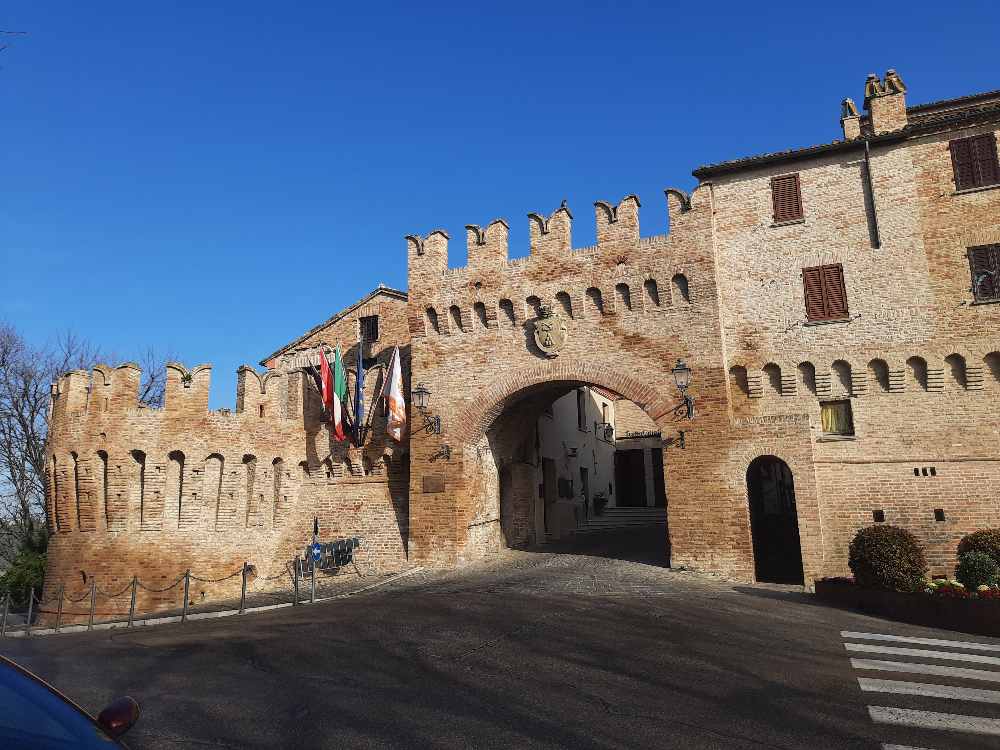
We visited Corinaldo, in the province of Ancona, one of those villages that don’t need special effects to impress. Here everything passes through the fifteenth-century walls, compact and continuous, which surround the historic center for almost a kilometre. Bastions, towers, fortified gates and the crenellated spur attributed to Francesco di Giorgio Martini tell a military story that is still legible, without tourist forcing. It is no coincidence that the village is recognized with the Orange Flag of the Italian Touring Club and is included among the most beautiful villages in Italy.
La Piaggia, the symbolic staircase of the village
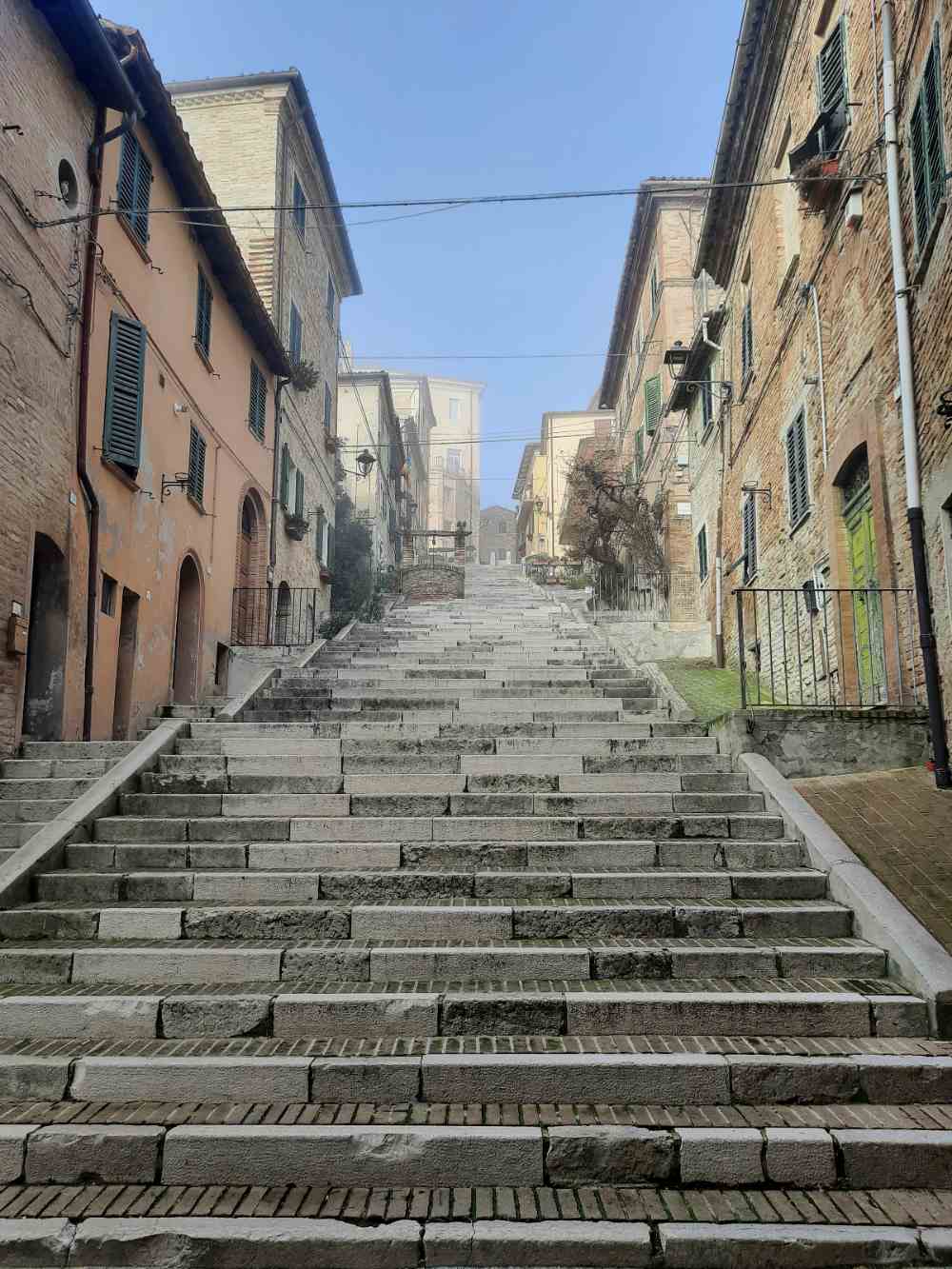
Entering from the western side, we followed the course of the streets which went from narrow to gradually more regular, until we came across the Piaggia, the symbolic staircase of the town. A staircase that seems infinite and cuts the village in two, making it unique. Precisely for this reason Corinaldo is renamed the town of a hundred stairs.
The Polenta Well
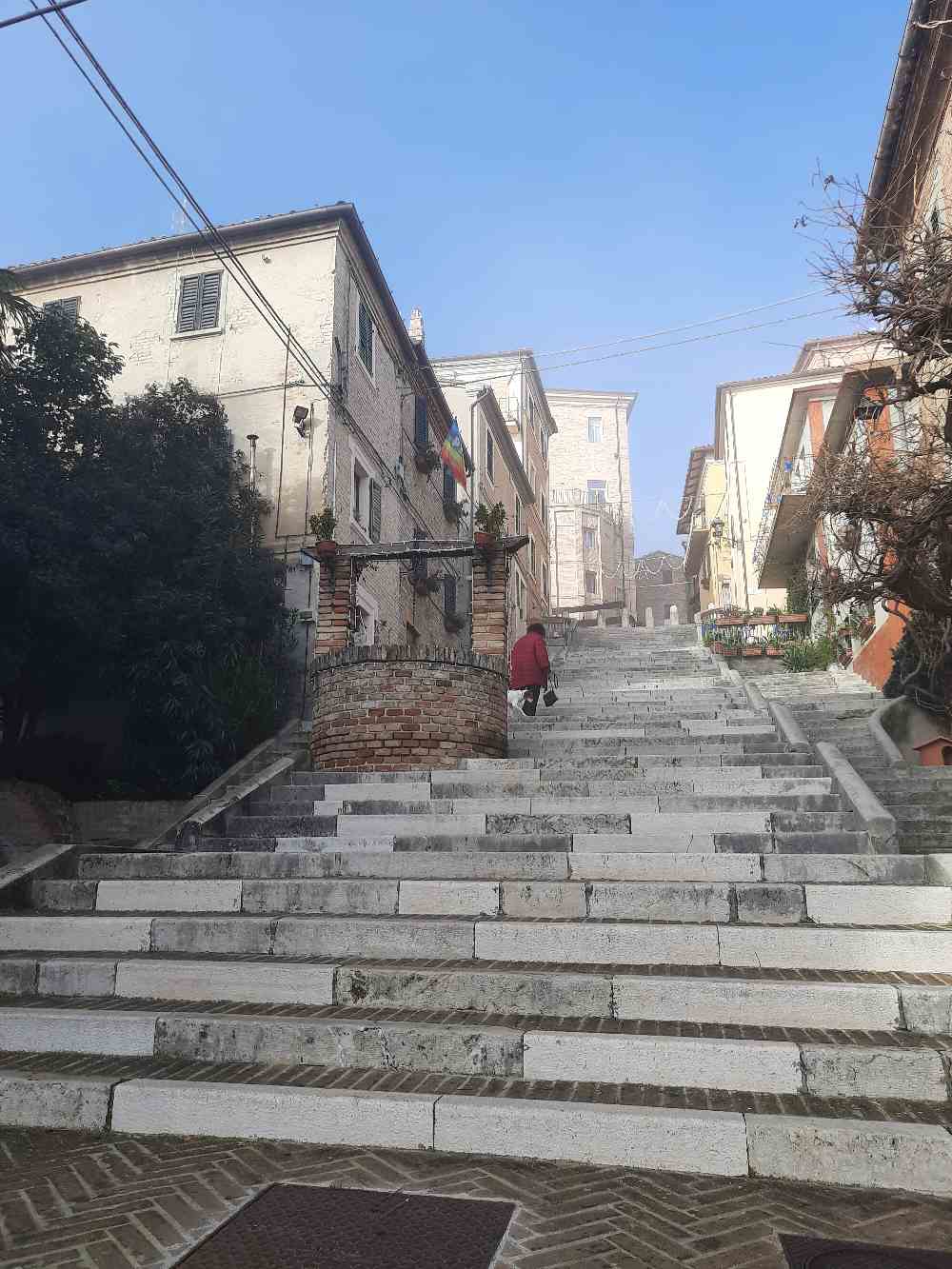
They are not a simple urban connection, but a true vertical monument that leads to the top of the hill. Halfway along the route you come across the Pozzo della Polenta, linked to a popular legend that has become part of the local identity. It is from here that the Contesa del Pozzo della Polenta was born, the historical re-enactment that every July involves over 300 participants and transforms the center into an open-air theatre.
The Night of the Witches
But Corinaldo is not just medieval walls and silence. In addition to the Contesa, there is another event that animates the town which for years has also been known as the town of madmen and witches, a nickname born from the most playful and visionary soul of the village. Since 1998 it has hosted the Witches’ Night, an event that has helped transform it into a true Italian Halloween capital.
In this period, for a few days, the streets of the historic center change their face: scenographic displays, fantastic characters, traveling shows and initiatives for all ages appear. Concerts, markets, themed taverns and workshops for children coexist with more evocative installations, such as the famous Tunnel of Fear, which has become one of the most recognizable events of the event. A free event open to all.
The Goldoni theatre
In the heart of the historic center we entered the Carlo Goldoni Theater, a space that surprises for its history and functionality. Originally it was equipped with an ingenious system that allowed the stall to be raised or lowered according to needs. After the restoration in 2005, the theater returned to being a point of reference for the community, with a program that ranges from drama to concerts, from dance to shows for children. A concrete example of how a small village can keep its cultural offer alive.
Santa Maria Goretti and the sanctuary
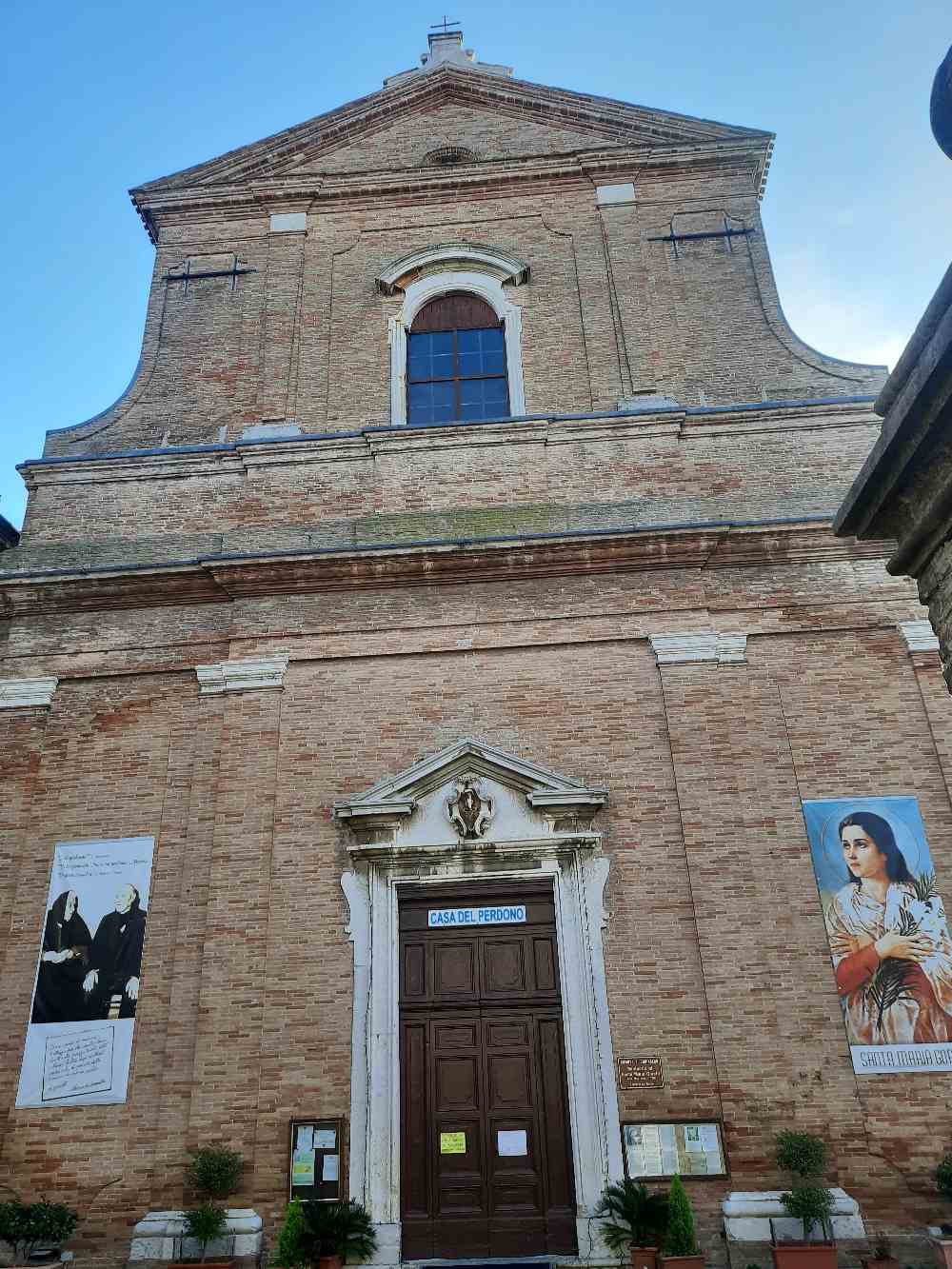
Corinaldo is also the birthplace of Santa Maria Goretti. A visit to her home and the diocesan sanctuary dedicated to her, a destination for constant pilgrimages, is therefore unmissable. The sanctuary fits soberly into the urban fabric and preserves a memory that is still deeply felt. The presence of this place of worship adds a spiritual dimension to the village that coexists with the historical and civil one, without overlapping.
Walls, towers and walkways characterize this village
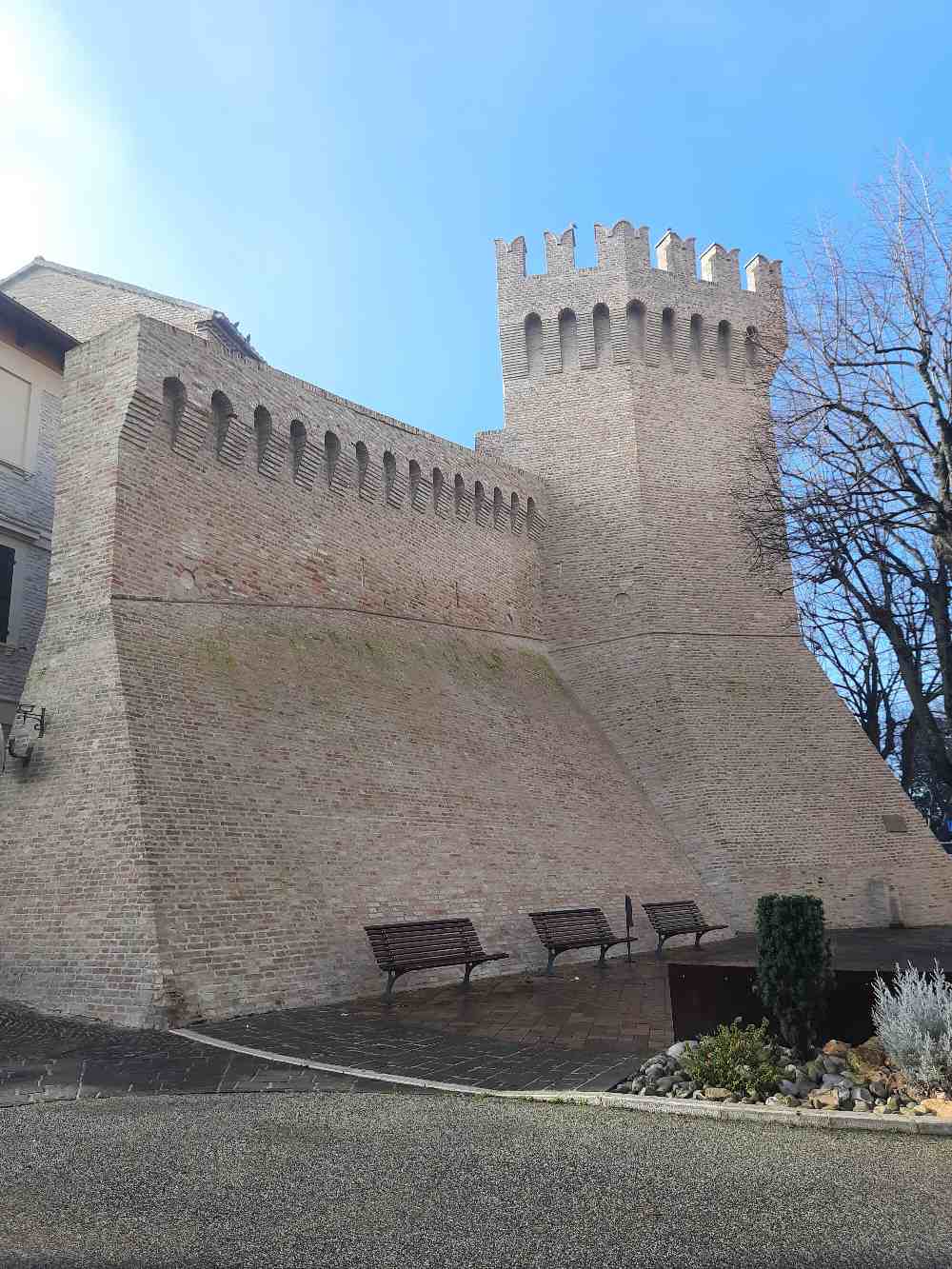
Walking along the city walls, you can see the continuity of the fourteenth and fifteenth century fortifications, among the best preserved in the region. The historic gates – Santa Maria del Mercato, San Giovanni and Porta Nova – mark the accesses to the village, while the towers and walkways tell of the defensive organization of Corinaldo. From above, the view opens onto the countryside cultivated with vineyards and olive groves, from which identifying products such as Verdicchio dei Castelli di Jesi and local extra virgin olive oil are born.
Leaving Corinaldo, the feeling is that of a place where time has stopped. The walls, the stairs, the popular stories and the cultural spaces coexist, maintaining a rare balance between protection and daily life. It is a village that can be visited calmly, without obligatory itineraries, and which gives back a lot, fully embodying the spirit and beauty of the Marche region.
You might also be interested in:
