
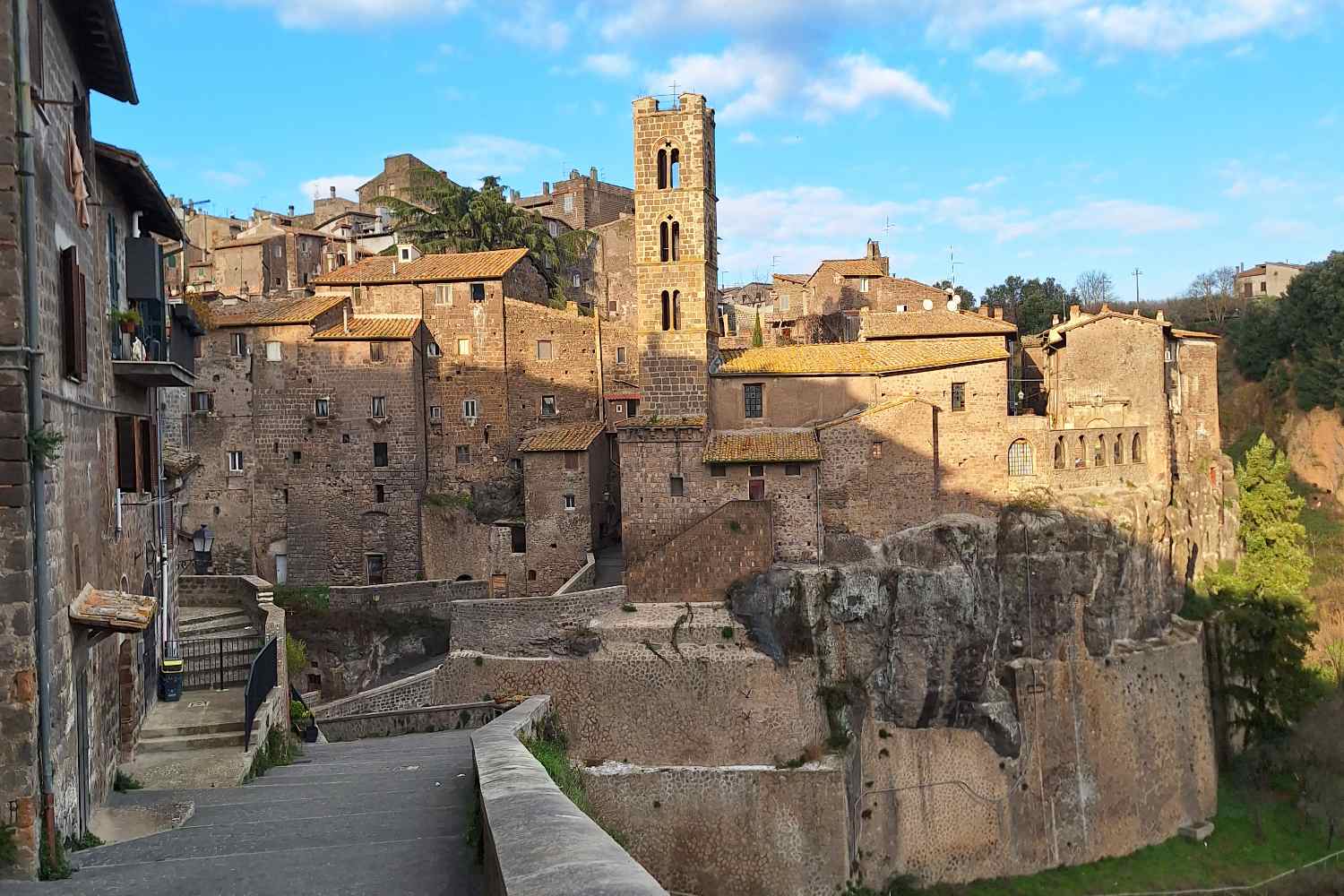
It’s Sanremo week and while the lights of the Ariston come on for the final that will proclaim this year’s winner, we have returned with our memories and our hearts to a place that knows something about emotions: Ronciglione, the town that gave birth to Marco Mengoni, winner of two Festivals.
Perched on a tuff spur in the heart of Tuscia, this village in the province of Viterbo is much more than a postcard. It is a mix of stone, silence and panoramas that tell a thousand-year-old story. Founded around 1045, Ronciglione retains an authentic soul, suspended between the Middle Ages and the Renaissance, where every alley seems to hold a secret.
The charm of the medieval quarter
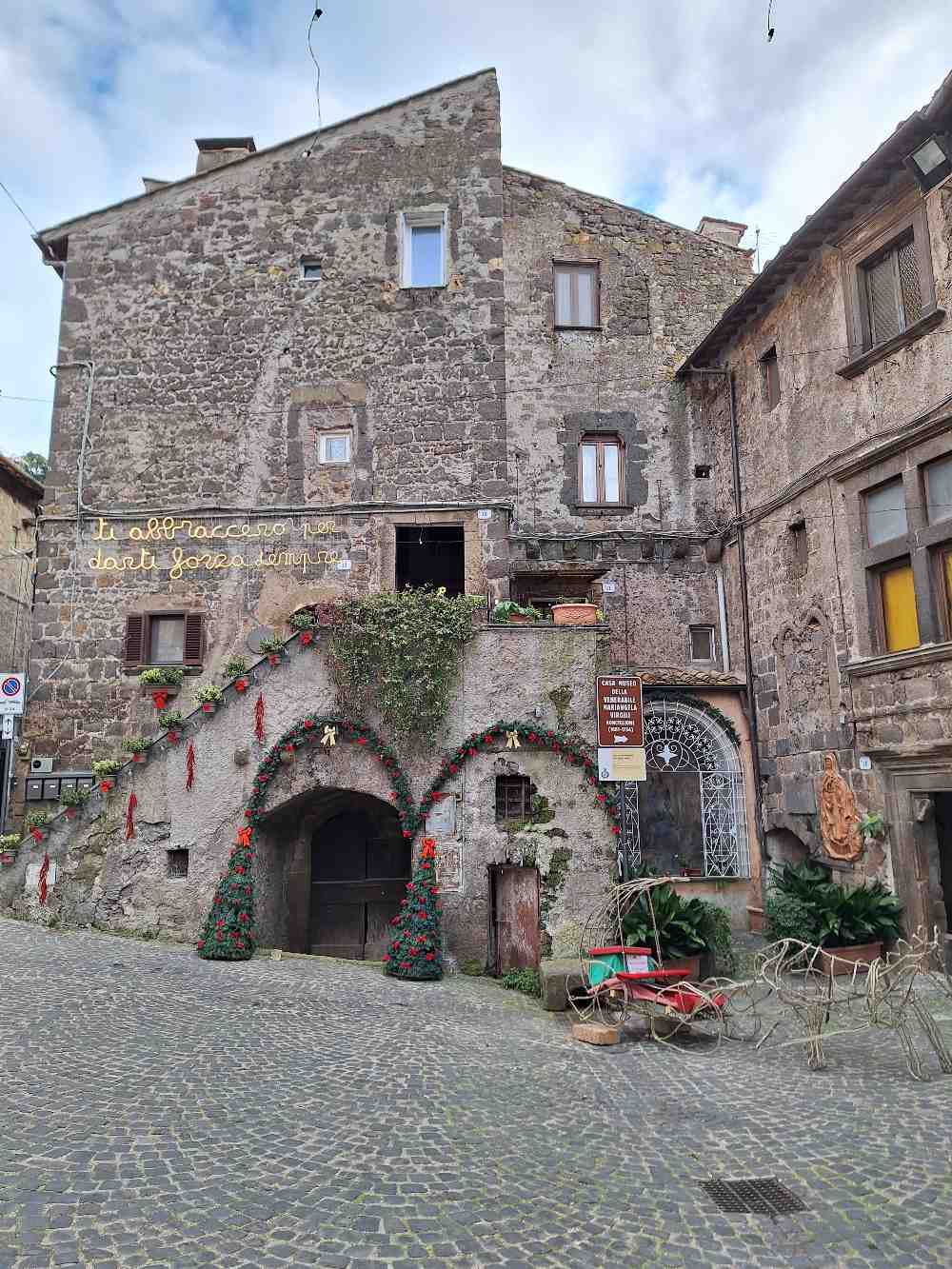
Our itinerary started from Borgo di Sotto, the oldest part. Here the tuff houses huddle together, arches and stairways chase each other, flowers and plants soften the facades. Walking among these ups and downs is an immersive experience: time slows down, the noise fades away, only the rough beauty of the ancient stones remains.
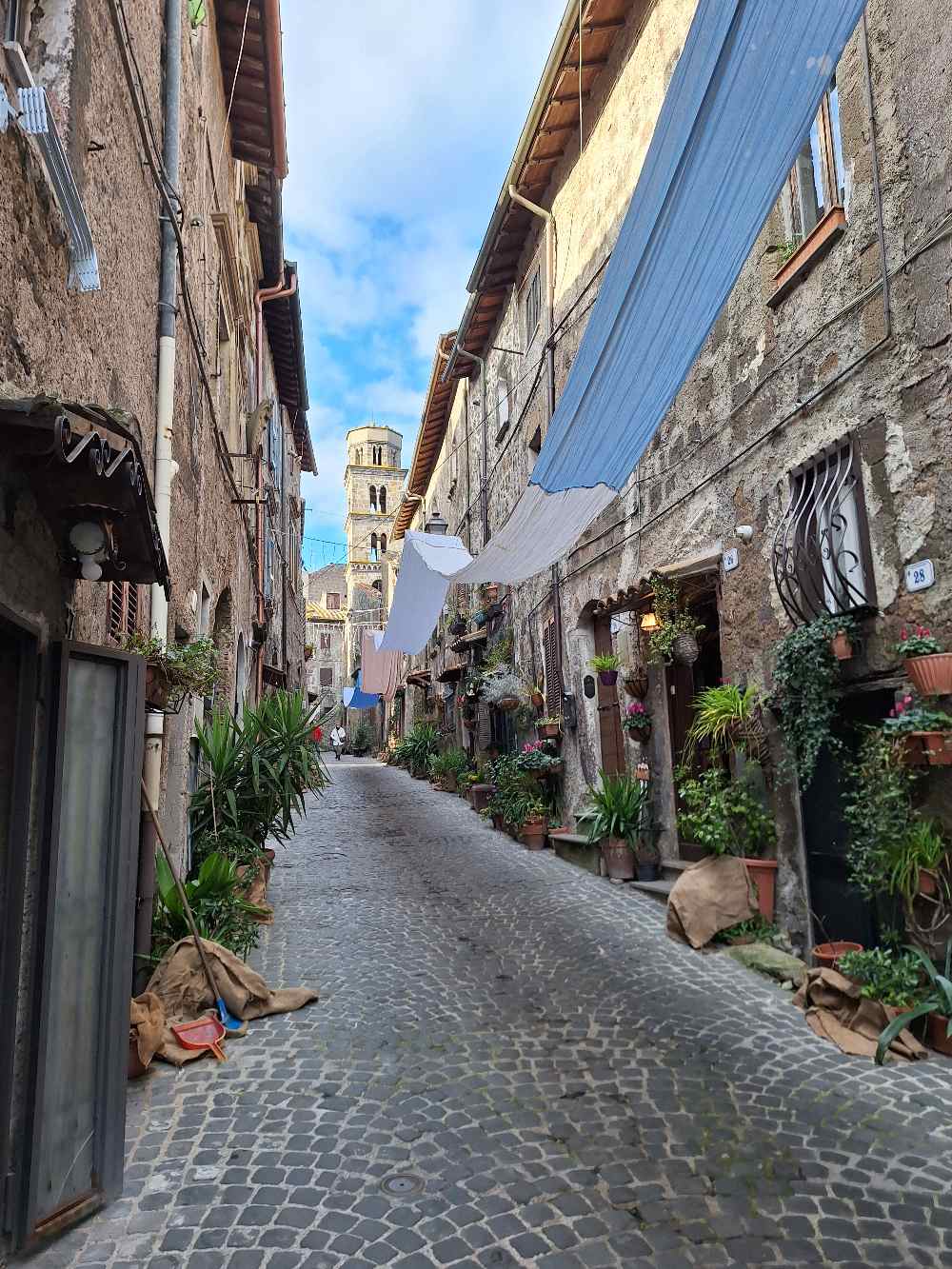
Among the unmissable stops is the Church of Santa Maria della Provvidenza, an 11th century building with a single nave and wooden trusses. Not far away, the viewpoint offers an open view of the Rio Vicano valley: one of those views that remain in your memory.
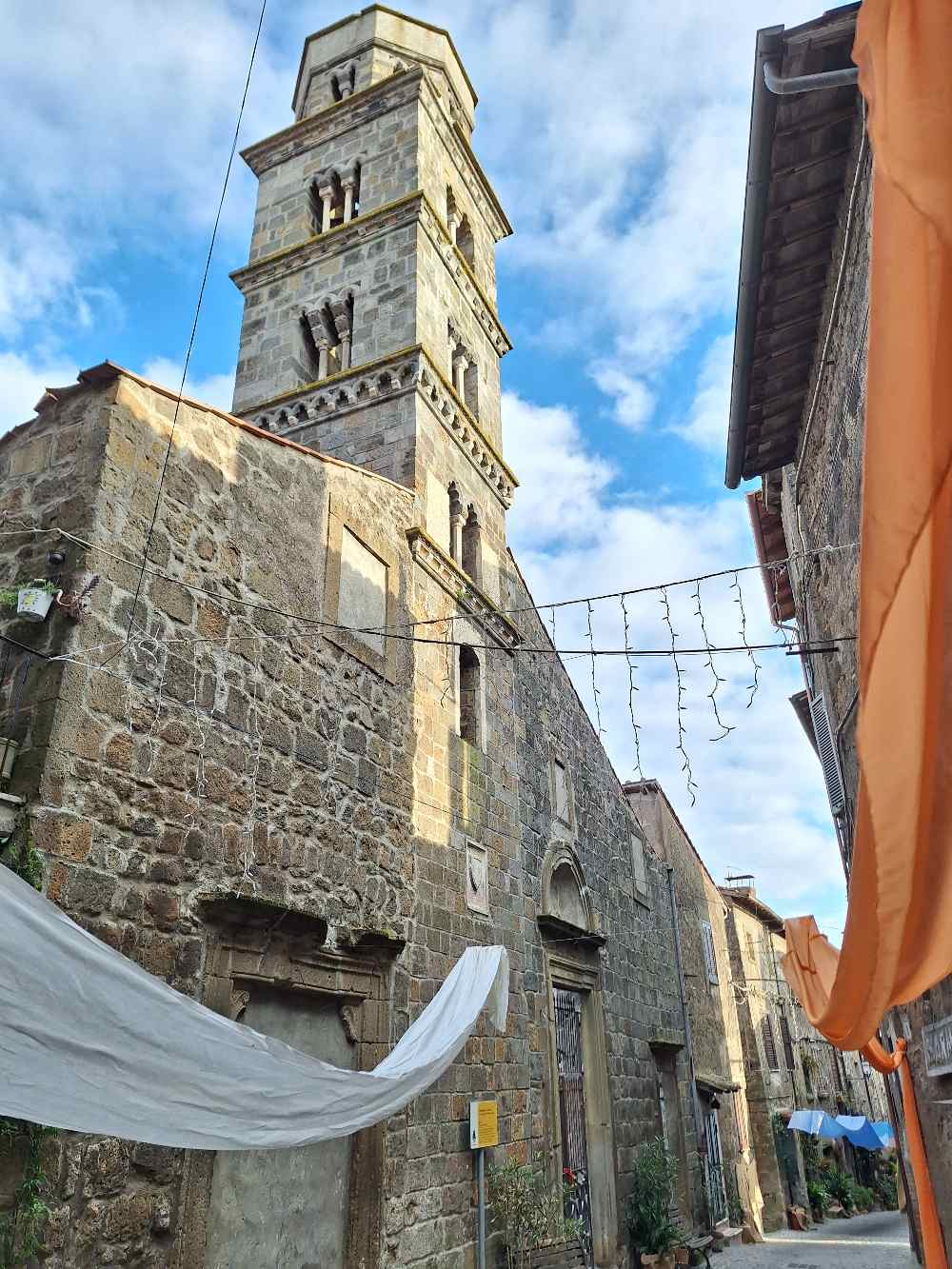
Going up towards Borgo di Sopra, you come across the romantic Vicolo del Bacio, a small iconic corner perfect for a souvenir photo. And then the Romanesque bell tower of Sant’Andrea, with the remains of columns and capitals that tell of a stratified past.
The Renaissance heart and the symbols of Farnese power
Ronciglione changes face in the Renaissance part, linked to the powerful Farnese family, who between the sixteenth and seventeenth centuries transformed the village into a productive and cultural centre. The Cathedral of Saints Peter and Catherine dominates the square, built in the seventeenth century, with precious works of art and a dome that stands out among the roofs. In front, the scenographic Unicorn Fountain, an elegant Renaissance work attributed to Vignola: three unicorns sculpted in sandstone pour water into the basins below, a symbol of strength and purity.
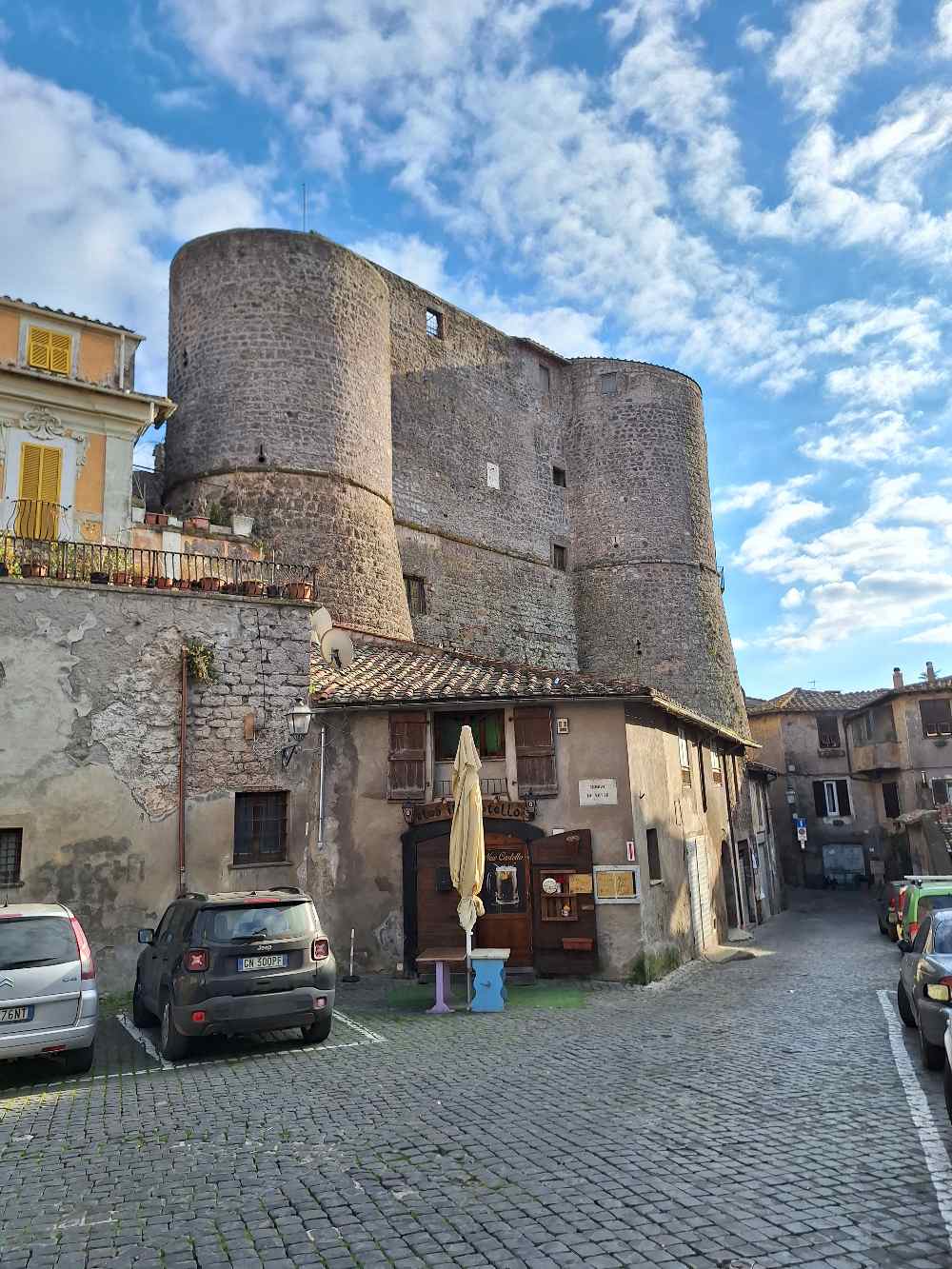
Continuing along Via Roma you come across Porta Romana, an imposing seventeenth-century entrance that marks the border between eras and atmospheres. And not far away stands the Rocca, also known as “I Torrioni”: a medieval fortified complex expanded over the centuries, today an exclusive location but still capable of evoking the power and disputes of the past.
Borgo dei Borghi 2023
Every corner of Ronciglione offers an unexpected glimpse: a hidden garden, a sunny square, a decorated window. It is a compact village, which can be visited in one day, but capable of staying inside for much longer. It is no coincidence that in 2023 it was elected Borgo dei Borghi, a recognition that turned the spotlight on this jewel of Tuscia. An award that adds to the title of one of the most beautiful villages in Italy and which has consolidated its tourist identity.
The illuminations with Mengoni’s songs
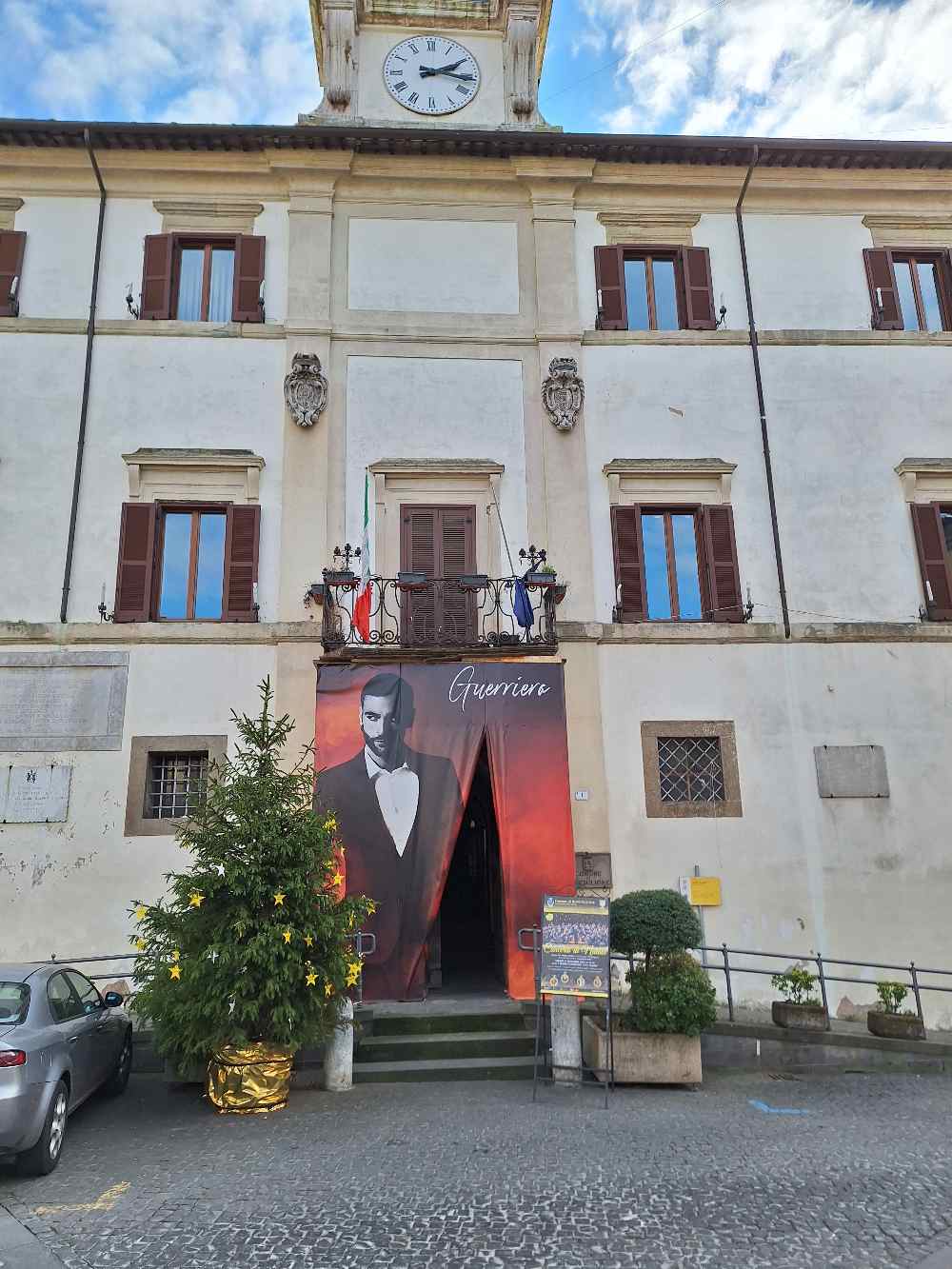
And in this week in Sanremo, while Italian music is celebrated, we cannot help but remember that Marco Mengoni grew up among these alleys. His phrases scattered around the country on the illuminations and his giant posters tell of a profound bond between artist and territory. Visiting Ronciglione means experiencing a journey made of history, traditions, panoramas and a pinch of musical pride.
You might also be interested in:
