
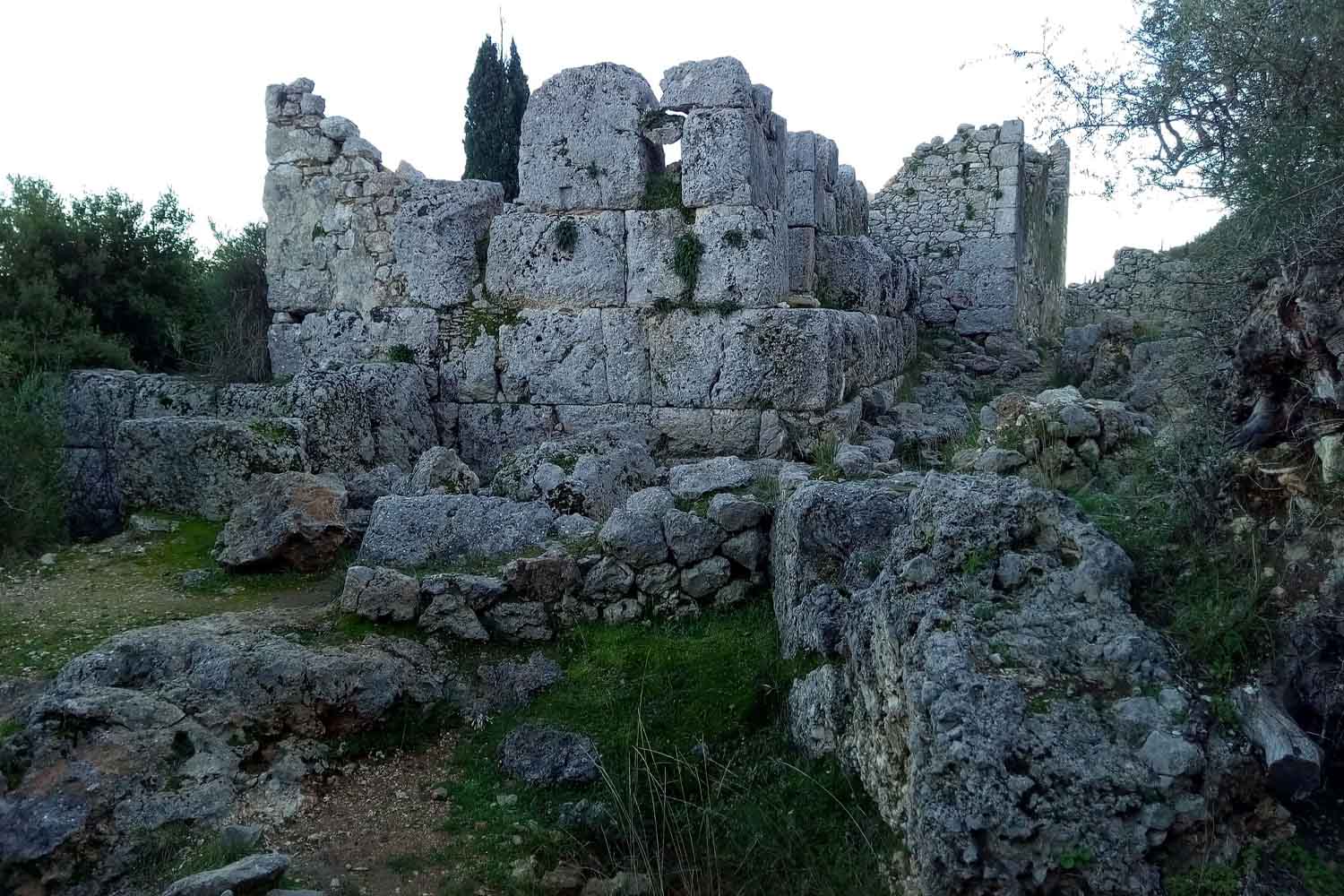
On the harsh northern heights of Ithaca, between the olive trees and the deep silences of ancient stones, Archaeologists have perhaps identified the Odysseionthe sanctuary dedicated to Ulissethe cunning and tireless hero of theOdyssey. The site, known for over two centuries such as the “School of Homer”, houses The tangible traces of a heroic cult which has gone through eras and empires, surviving for over a millennium.
To guide the excavations is Professor Emeritus Giannos G. Lolostogether with Christina Marambea of the University of Ioannina, with the support of the Ministry of Greek culturewhich officially announced the discovery in early June. The archaeological project is the result of research that began in 2018, but which have roots in decades of previous studies.
The site develops on two terraces connected by stairs carved in the rock. On the upper terrace There is a widening tower of the III century BC; In the lower oneInstead, a large rectangular structure emerges flanked by niches for votive offers. But it is under these remains that something older and surprising is hidden.
A Mycenaean cistern and fragments with the name of Ulysses confirm the cult
Digging beyond the Hellenistic and Roman levels, archaeologists brought to light a cistern carved in the rockdating back to the XIV-XIII ACC, Mycenaean era: The time in which, according to tradition, the Trojan war would take place. According to Marambea, it is One of the few similar cisterns throughout the Aegeanwhich strengthens the hypothesis that The place had a central role in the management of water resources and surrounding ports.
But to make the discovery truly unique Registration: well 14 printed tiles and engraved fragments report The name of Ulysses In ancient Greek – ΟδυCecceoc And Οδυccei – forms that indicate possession or direct dedications. These finds reveal a persistent and profound cult, in which the hero was not just a literary characterbut a religious and cultural point of reference for the communities that lived (or visited) the island.
In the same site it was found A small bronze bust which resumes the monetary iconography of Ulysses of the IV-III century BC, strengthening the link between myth and civic identity. To complete the picture there are Ritual vases, over 100 Greek and Roman coins, fusaiole, frame weights and 34 votive fragmentsclear testimony of personal devotion, even feminine, perhaps linked to the figure of Peelopeexample of loyalty and expectation.
A sacred place already in the Neolithic, long before the Homeric hero
The hill of Agios Athanasios was frequented well before the Mycenaean era. Archaeologists found Verce tools and ceramic fragments dating back to the final Neolithiciandatable between the V and the IV Millennio AC a fact that changes the perspective: even before the myth was born, the place was already sacred.
The sanctuary, now identified With safety like the Odysseionis mentioned in A decree of the second century AC of Magnesiawhich also describes the Odysseiasports and artistic competitions celebrated in honor of the hero. Obvious sign that Ulysses had become a civic as well as legendary figure.
Even if modern historians agree that Ulysses has never really existedthis discovery reminds us that: The myth was aliveembodied in rites, registrations, offers and pilgrimage trips. Ordinary people went up those stairs dug in the rock to ask for protection, make thanks or simply remember.
This discovery invites us to rethink the border between imagination and reality: Sometimes the myths have a precise place, made of stones, silences and memory. And it is precisely there that we find them, sculpted in the heart of history.
Νέα σημαντικά στοιχεία για την ιστορική και πολιτισμbox εηλι many της ιθάκης oney emergence έχουν προκύψει από το νέο ερευνηzzi.
Posted by υπουργείο πολιτισμού on tuesday, June 10, 2025
