
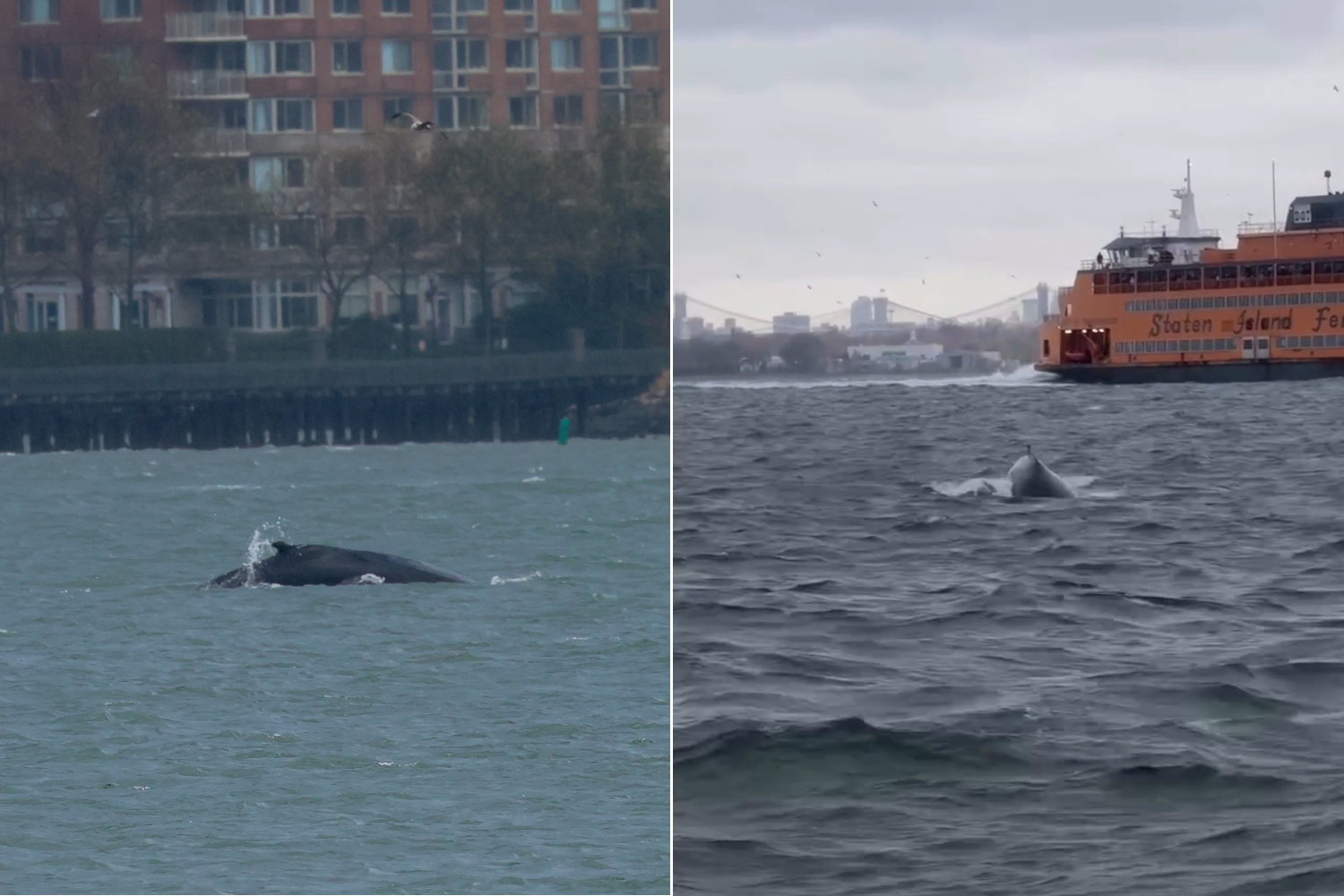
A young humpback whale interrupted the daily frenzy of New York by giving spectacular jumps, tail flicks and splashes of water in the stretch of the Hudson River between Pier 40, in the West Village neighborhood, and the Chelsea Piers, along the western bank of Manhattan. The unusual guest attracted hundreds of citizens and tourists, while the crews of the tourist boats notified each other via radio and the district president Brad Hoylman-Sigal relaunched the shots provided by the Gotham Whale organization on social media. Biologists are now collecting photos and videos from citizens to compare the unique caudal fin drawings with their own databases and officially identify the specimen, which appears in excellent health.
Why humpback whales are returning to hunt in the Hudson Estuary
The ascent of a whale along the final part of the Hudson does not indicate disorientation at all, but rather the ecological richness of an estuary connected to the Atlantic Ocean where fresh and salt water mix. The young cetacean was in fact observed while performing the so-called lunge feeding, opening its enormous mouth wide to swallow large schools of menhaden, small fish similar to herring that represent a fundamental dietary step before the winter migration towards the Caribbean.
After decades of absence, the recovery of populations following the ban on commercial hunting, the reduction of marine pollution and ocean warming have transformed New York waters into a real staging area: from 2011 to August 2026, Gotham Whale cataloged over 500 different individuals, recalling famous precedents such as the specimen nicknamed Gotham in 2016 and the sighting near the Statue of Liberty in December 2020.
Gotham Whale and NOAA collision warning
If the return of large marine mammals represents an extraordinary victory for urban biodiversity, swimming in the heart of one of the busiest bays in the world exposes the cetacean to very serious dangers. Commuter ferries, merchant ships and pleasure boats can in fact cause fatal collisions, entrapment in fishing nets or acoustic disturbances capable of compromising the animal’s orientation. To ensure safe coexistence, Gotham Whale and the federal agency NOAA have invited all commanders navigating in the area to drastically reduce speed, pay maximum attention to blowing on the surface and maintain a minimum safety distance of at least 90 meters from the whale.
