
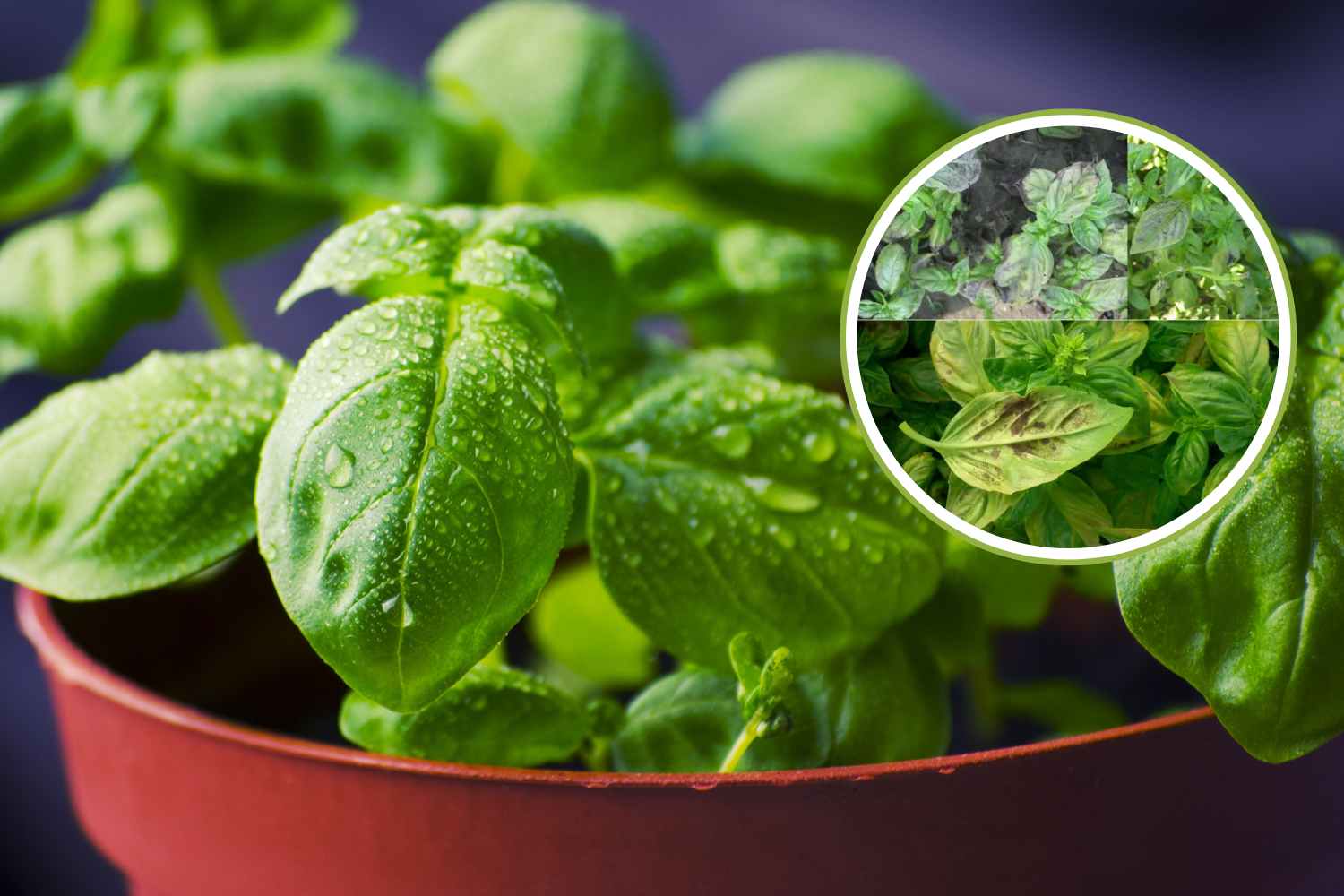
If you too cultivate basil, you know how much one of the most sensitive plants to environmental conditions is. An oscillation of humidity is sufficient, a wrong irrigation, or an inadequate exposure so that the leaves begin to change its appearance. Among the most frequent signals, we can trace a thin white patina that deposits on the leaf surface, often misunderstood and underestimated. Is it mold? Is it a fungal disease? Or a natural phenomenon? The answer, as often happens in botany, is variable, and depends on various factors.
It is not always mold: it can only be a saline residue
In some circumstances, what looks like a worrying patina is actually a simple side effect of saline breathing. As is the case for many other herbaceous plants, the basil expels excess water through the leaves, a process known as a guita. If the water that is absorbed by the ground contains mineral salts in high concentrations – often due to an irrigation with hard water or for excessive use of fertilizers – these salts are deposited on the leaf surface in the form of small white spots.
The phenomenon is harmless, albeit unsightly. It can be attenuated by choosing decalcified and rainwater for irrigation, and using fertilizers in a thrifty way, only when necessary. In these cases, the leaves have no deformations or signs of necrosis, and the plant overall remains healthy.
When to worry: the Mildiu of the basil
The situation in the presence of the Peronospora Belbahriia fungal pathogen responsible for the Mildiu of basil, particularly aggressive in humid and not very ventilated environments. The disease initially manifests itself with small chlorotic patches on the upper page of the leaves, followed by a whitish and/or grayish patina on the lower page, consisting of myelli and spores. The leaves yelling, afflicted and fall prematurely, compromising the entire plant.
According to the University of Massachusetts of Amherst, the sportshohopper Belbahrii peronospor takes place at temperatures between 10 ° C and 25 ° C (50 ° F and 78 ° F) and with a humidity relating to 85%. The spores are produced at the end of structures called Sporangiòfori, which emerge from the stoma of the infected leaves. These spores are dispersed by the wind and water, and can germinate on wet leaves at temperatures between 5 ° C and 28 ° C (41 ° F and 83 ° F), infecting the vegetable tissue within 4 hours. The latency period between the infection and the appearance of the symptoms varies from 5 to 10 days, depending on the temperature and exposure to light.
In addition, studies published on the American Phytopathological Society indicate that at the optimal temperature of 18 ° C, sporting takes 7.5 hours with a relative humidity equal to or greater than 85%, with 3 hours necessary for the emergency of the sporangiòfori.
In case of suspicion, it is advisable to immediately eliminate the affected leaves and suspend the night irrigation, to limit the permanence of water on the leaves. There are preventive treatments based on copper or natural extracts of horsetail and propolis, even if their use must respect the indications for food use, especially if the basil is intended for fresh consumption.
Oidio: another possibility, even if less frequent
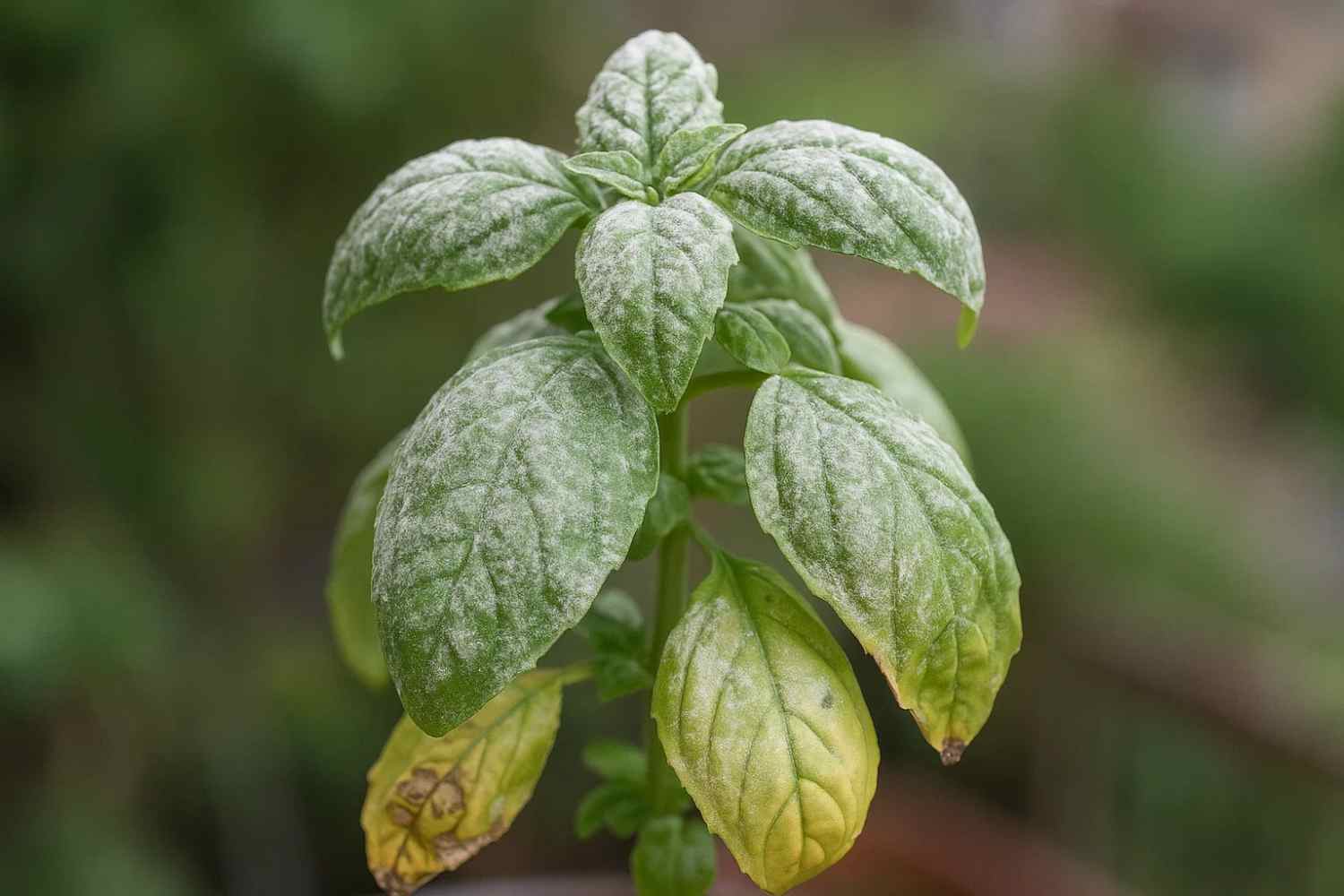
Sometimes the white patina can be caused by Oidio, another parasitic mushroom that affects numerous plant species, even if it is not particularly common on basil. Unlike Mildiu, the Oidio presents itself on the upper page of the leaves with a farinous white powder, easily distinguishable from the saline residue for the consistency and the tendency to expand quickly in dry conditions. Also known as “white bad”, it is a fungal disease caused by different kinds of such Elysiphe.
How to distinguish phenomena? Eye to the details
Understanding the real cause of the white patina is essential to intervene correctly, and avoiding errors that can worsen the situation. Here are some useful signals:
Prevention and good practices
Regardless of the cause, the best defense remains prevention. Basil is a plant that loves the full sun, well -drained soil and regular but not excessive irrigation, so remember to avoid wet the leaves and prefer the morning hours for watering. In addition, a constant air exchange and a good cultivation rotation are essential to reduce the onset of mushrooms.
For those who grow in pots, it is useful to regularly remove the older leaves, avoid the use of stagnant sauce and monitor the possible appearance of anomalous signs. In case of doubt, it is better not to consume compromised leaves, even if the causes should be harmless, as in the case of mineral salts.
Don’t you want to lose our news?
