
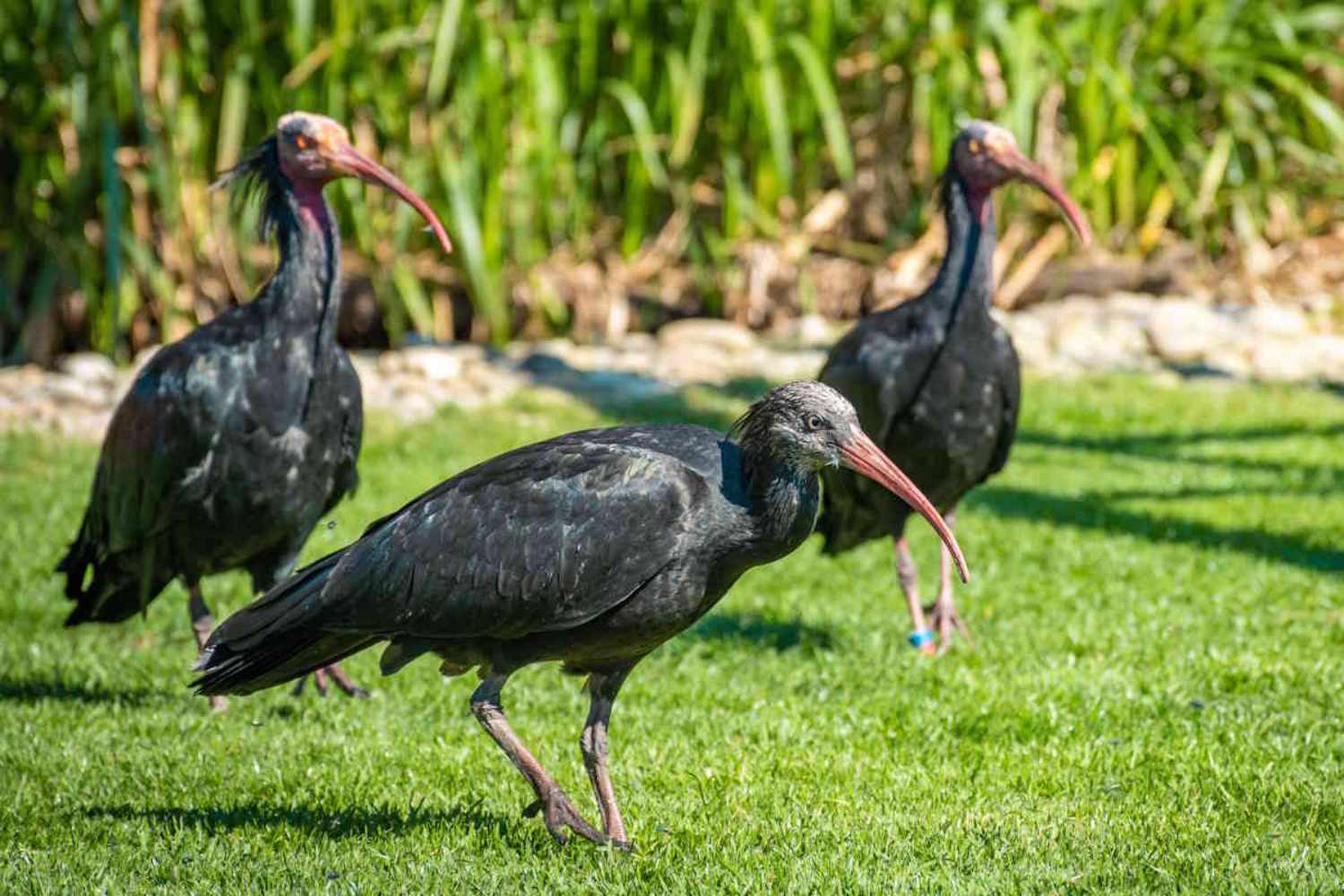
A small group of Northern Bald Ibises, a rare and protected species, is attracting attention at the American air base in Aviano. The colony, which has grown in recent years to around 30 individuals, has found a favorable environment for feeding and resting in the large grassy areas of the airport.
The presence of these birds, however, is not without consequences: the risk of bird strikes, or the impact between birds and aircraft during take-offs and landings, represents a real problem for pilots and passengers. Wildlife protection and flight safety thus become two priorities to be carefully reconciled.
The aim is to move the colony
In recent days, a meeting was held at the airport command to define a shared action plan between civil, military and scientific authorities. The objective is twofold: to limit nesting within the base and to guide the natural movement of the colony towards safer areas in the medium term.
The planned strategies include dissuasion techniques already used with other species, capable of reducing the settlement of ibises and preventing a further increase in the numbers present. At the same time, some pairs will be transferred to booster aviaries about 20-25 kilometers from the base, to facilitate their return to more suitable areas for nesting.
A rare species to be protected
Northern Bald Ibises are a fragile species, with a worldwide population of around one thousand individuals. A central role in their conservation is played by the Oasi dei Quadris of Fagagna, an international center which hosts 66 ibises in an aviary and coordinates the free population, made up of around 170 birds.
Every year many of these specimens migrate towards central Italy together with ibises coming from Austria, reaching wintering areas in Tuscany, such as the Orbetello area. The Aviano base plan therefore fits into a broader context of environmental protection, where the protection of the species coexists with the operational needs of a strategic military airport.
A possible coexistence
In the last two years, the stable presence of a dozen specimens from the Fagagna Oasis and around 20 from Austria has made the need for targeted interventions clear. The new nesting site in the north-western Friulian plain must be adequate to guarantee food and shelter, reducing dependence on the airport.
In this way, the coexistence between wildlife and airport activities can become a reality: ibises find a safe habitat, while pilots and passengers continue to fly without risk. The Aviano experience aims to represent a model of collaboration between science, institutions and defence, where the protection of biodiversity and operational security can travel in the same direction.
You might also be interested in:
