
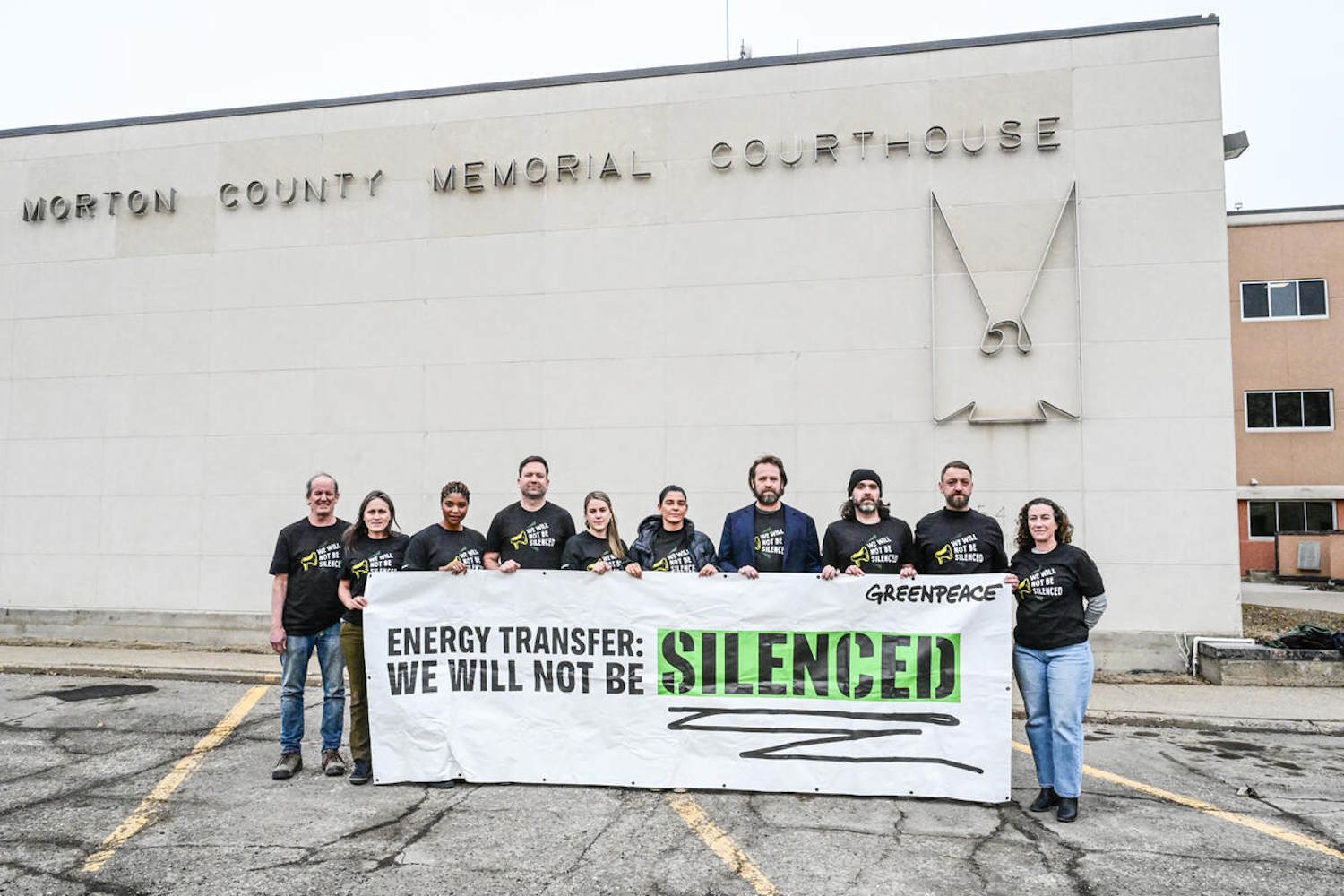
Three hundred and forty-five million dollars. This is the amount that a North Dakota district court ordered Greenpeace USA and International to pay to the oil giant Energy Transfer. A huge amount. A figure which, if confirmed, could bring one of the best-known environmental organizations in the world to its knees. At stake is not only the financial future of Greenpeace, but a precedent that could weigh on all climate activism.
But what is really happening? It all starts from Standing Rock. Let’s go back, in fact, to 2016. Thousands of people – at the forefront of the Sioux indigenous communities – opposed the construction of the Dakota Access Pipeline, the pipeline intended to cross sacred territories and waters near the Standing Rock Reservation. The images went around the world: camps, prayers, peaceful resistance, police charges, arrests. A movement that soon became a global symbol of the fight against fossil infrastructures and for climate justice.
But, according to Energy Transfer, operator of the pipeline, those protests were orchestrated by Greenpeace. An accusation that the organization has always rejected, calling it unfounded.
Why 345 million?
The Morton County jury had already reached a verdict in March 2025. Now the court has issued the final sentence: while rejecting some parts of the verdict, it still awards hundreds of millions of dollars to the company.
Greenpeace announces battle: it will ask for a new trial and, if necessary, will appeal to the North Dakota Supreme Court. According to the lawyers, there is no concrete evidence demonstrating that the organization directed the protests. And the decision, they argue, would be vitiated by the admissions of provocative testimonies and the exclusion of elements favorable to the defense.
The point is not just economic. Greenpeace speaks openly about SLAPP (Strategic Lawsuit Against Public Participation), that is, lawsuits filed to stifle dissent, inundate activists and organizations with legal fees, and discourage public participation. It’s not a detail: if speaking out against a fossil project can cost hundreds of millions of dollars, who will dare to do it tomorrow?
For this reason, Greenpeace International, based in the Netherlands, has also launched legal action in Europe against Energy Transfer, invoking the new anti-SLAPP directive of the European Union. An important test to understand whether large corporations will be able to continue to use courtrooms as an instrument of pressure against civil society.
Is Greepeace really in danger of bankruptcy?
The figure is such that it could have very serious consequences on budgets. But Greenpeace does not retreat, but rather relaunches: “We will not be silenced,” said International Executive Director Mads Christensen.
The node is larger than a single organization. Here a game is being played that concerns freedom of expression, the right to protest, the possibility for citizens and communities to oppose projects that they believe are harmful to the environment and health.
In short, the story is not over. And whatever the outcome of the appeal, one thing is already clear: the conflict between large fossil interests and climate movements is increasingly being fought even in the courtrooms.
