
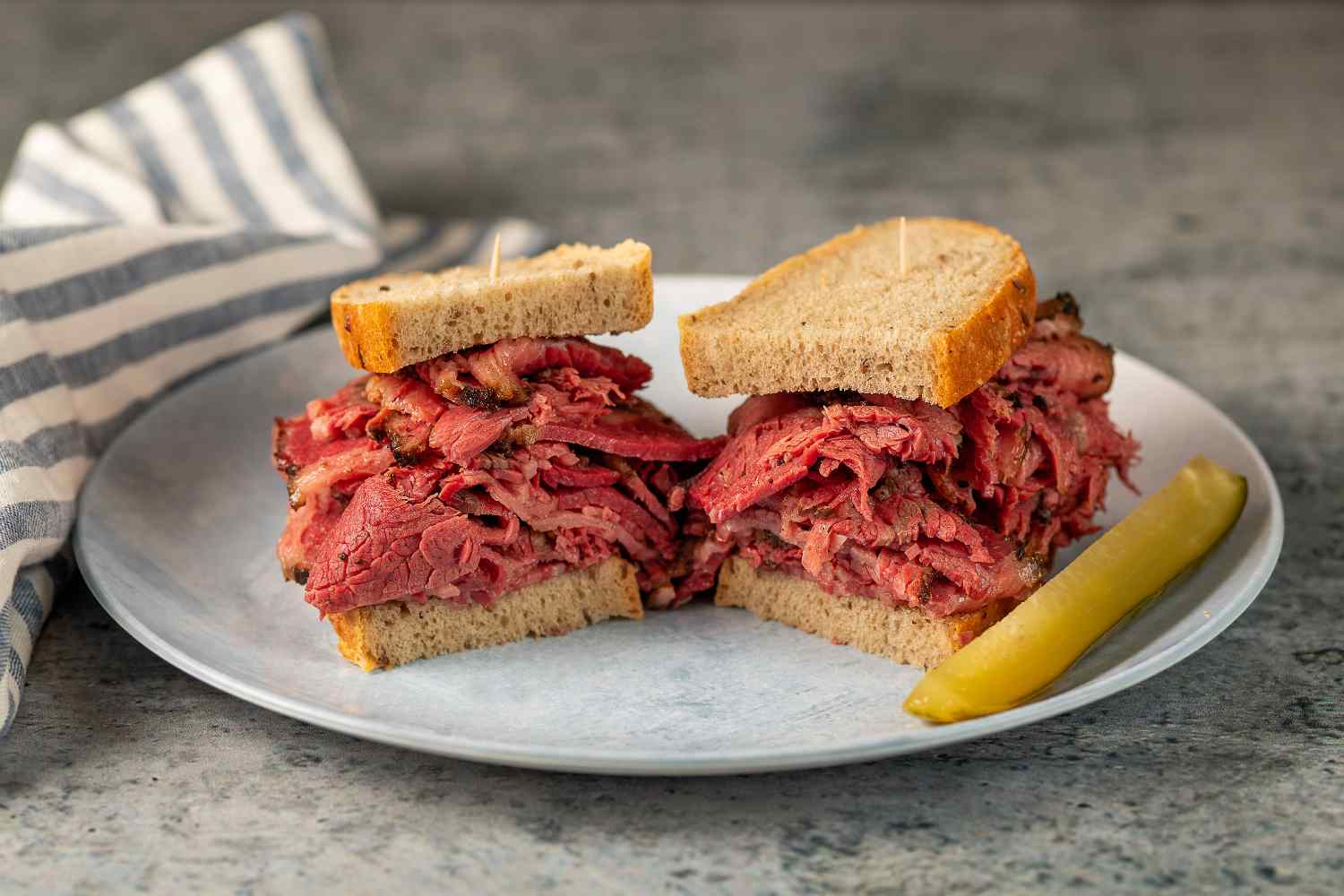
In recent times, Pastrami has become a fixed presence in the menus of trendy premises, in food trucks and even supermarkets. But behind this apparent “new” gastronomic trend, a more complex reality is hidden that deserves to be analyzed: issues related to health, environment and animal welfare that often go unnoticed behind the charm of gastronomic marketing.
What really is Pastrami?
Pastrami is a preparation of meat – traditionally beef – which is subjected to an elaborate processing process that provides different stages: salting, spicken with a mix of spices that includes coriander, black pepper and garlic, cold smoking and finally steam cooking. This process, which can last several weeks, gives meat its characteristic intense, smoked and spicy flavor.
The historical origins
Pastrami has its roots in the Jewish-Roman culinary tradition. The conservation technique was born from the practical need to preserve the meat before the advent of modern refrigeration. The preparation came to the United States with the migratory waves of the late 19th century and the beginning of the 1900s, particularly stable in New York where it became a pillar of the gastronomy of the Jewish delights.
The famous delicatessen of New York, like Katz’s Delicatessen (opened in 1888), made Pastrami Sandwich an icon of American food culture. The traditional Sandwich provides thick slices of PastraMi served on rye bread with mustard and pickles.
The modern production process
Today the production of Pastrami generally follows these steps:
Regional and modern variants
While the classic version uses beef, there are variants that use other meats such as turkey, lamb or even salmon. In recent years, Plant-Based versions have also emerged that use seitan, mushrooms or legumes to replicate textures and flavor.
Nutritional aspects
From a nutritional point of view, Pastrami is rich in proteins (about 25g per 100g) and contains B vitamins, iron and zinc. However, it also has a high sodium content (about 1200mg per 100g) and saturated fats. The processing process involves the use of preservatives as nitrite and nitrates.
The classification of the WHO
The World Health Organization has classified the worked red meats, a category that includes Pastrami, as probably carcinogenic for man (group 2a). Epidemiological studies have highlighted an association between the regular consumption of worked meat and the increase in the risk of colon-recto cancer. Research suggests that this risk is linked to chemical compounds that are formed during processing and conservation processes.
Vegetable alternatives
The market responded to the growing environmental and health sensitivity with the Plant-Based alternatives that imitate the flavor and textures of traditional Pastrami. These products use ingredients such as pea proteins, wheat gluten (seitan), fungus fungus and traditional spices to recreate taste experience without the impact of the meat.
Pastrami’s success in the contemporary menus raises questions that go beyond the simple gastronomic pleasure. While celebrating the return of traditional flavors, it is important to consider the wider implications of our food choices.
The growing popularity of this product represents, in a sense, yet another normalization of practices that involve significant consequences: for public health, through the consumption of products classified as probably carcinogenic; for the environment, through an industry with a high ecological impact; for animal welfare, through intensive breeding systems.
Pastrami is not simply a trendy sandwich or an innocent return to the “tradition”. It is rather a symbol of how gastronomic marketing can transform problematic industrial products into desirable culinary experiences, distinguishing attention from their real implications.
The real question is not if the Pastrami is good or bad, but if we are willing to make aware food choices, considering the complete impact of what we eat.
Maybe the time has come to ask us: is it really worth it, for an “instagrammable” sandwich?
