
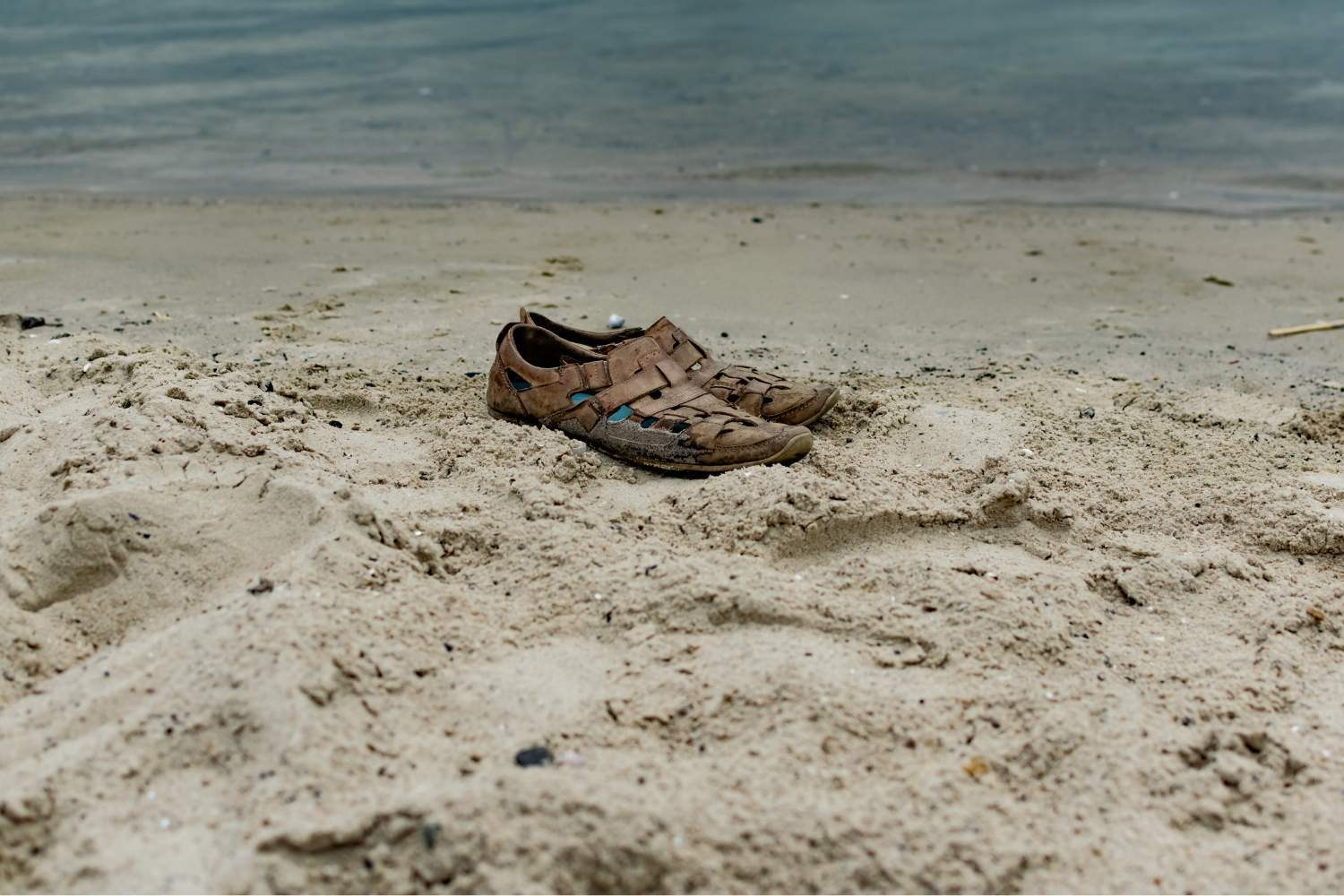
It has already been said that it has become a cemetery. It’s been said for years. Yet, the Mediterranean continues to return us corpses, bodies of migrants who just wanted a little peace. But they didn’t know, unfortunate people, that we have to hold onto this little patch of land, that we have to close the doors and the borders and the windows, just in case a breath of wind that smacks of humanity comes in.
Today’s news is that there are at least 12, 13, 15 – we don’t know – the corpses that, in the last 10 days, the storms have brought back to the surface, there between the beaches of Calabria and Sicily, where in the summer lucky children build sand castles. Paola, Scalea, Amantea, Tropea and then Pantelleria, San Vito lo Capo: don’t the names of these places sound familiar to you, where you lounge on a sunbed in August? It’s merciless, don’t you think?, that today the waves vomit unrecognizable bodies, naked or with shreds of clothing, onto that same shoreline.
Rags of disintegrated human.
The last body was recovered in these hours right in Tropea. Some students spotted two bodies floating in the waves:
Initially we thought of two distinct bodies. In reality it is only one. Or rather what remains of a man – says the commander of the Tropea Coast Guard, Giuseppe Durante. He was beached, with the life jacket still around his lower body, then the sea picked him up and brought him back into the waves. And when the boys saw him in the sea again, with that orange life jacket, they thought of a second body.
Meanwhile, the Paola Prosecutor’s Office has started investigations and the most probable hypothesis is that they are migrants who fell into the sea from a ship that sank probably due to Cyclone Harry, without anyone knowing about it. The Public Prosecutor’s Office of Vibo Valentia has ordered an autopsy on the bodies found on the beaches of the Cosenza Tyrrhenian Sea.
The bill in Italy
While the central Mediterranean route continues to be the most lethal for those fleeing from North Africa to reach Europe (according to the IOM, the International Organization for Migration, more than 450 people lost their lives in the past January alone), the recent bill on immigration approved by the Council of Ministers on 11 February has rekindled the conflict between the Italian Government and the humanitarian organizations operating in sea rescue in the central Mediterranean. According to a joint note signed by at least nine NGOs active in the Libyan route – including SOS Humanity, Mediterranea Saving Humans, SOS Méditerranée, Doctors Without Borders and Open Arms – the text contains elements that risk progressively excluding humanitarian ships from rescue operations.
The main criticism of the organizations is clear: these are not measures to govern migratory flows, but tools designed to hinder – and in extreme cases block – civil rescue at sea, with potentially lethal effects for those crossing the Mediterranean.
What the bill provides (and why it is controversial)
The Government, for its part, defends the measure as consistent with the new European Pact on migration and asylum and with the need to strengthen border control and national security, judging the measures to be compatible also from the point of view of international law.
In a joint statement, the associations reiterate that the rules will not reduce departures or the risks of the journey, but on the contrary will increase the danger of the route and the victims, and underline that the de facto restrictions imposed in recent years – from the assignment of distant ports to the obligation to return after a single rescue – had already reduced the operational capacity of civilian ships.
At the same time, they affirm their intention to continue saving lives in compliance with international law, accusing the bill of criminalizing both people on the run and those who try to help them. And if they’re not right…
